
Crotalaria impressa
Crotalaria impressa
- Native to:
- Djibouti, Eritrea, Ethiopia, Somalia, Sudan-South Sudan, Yemen
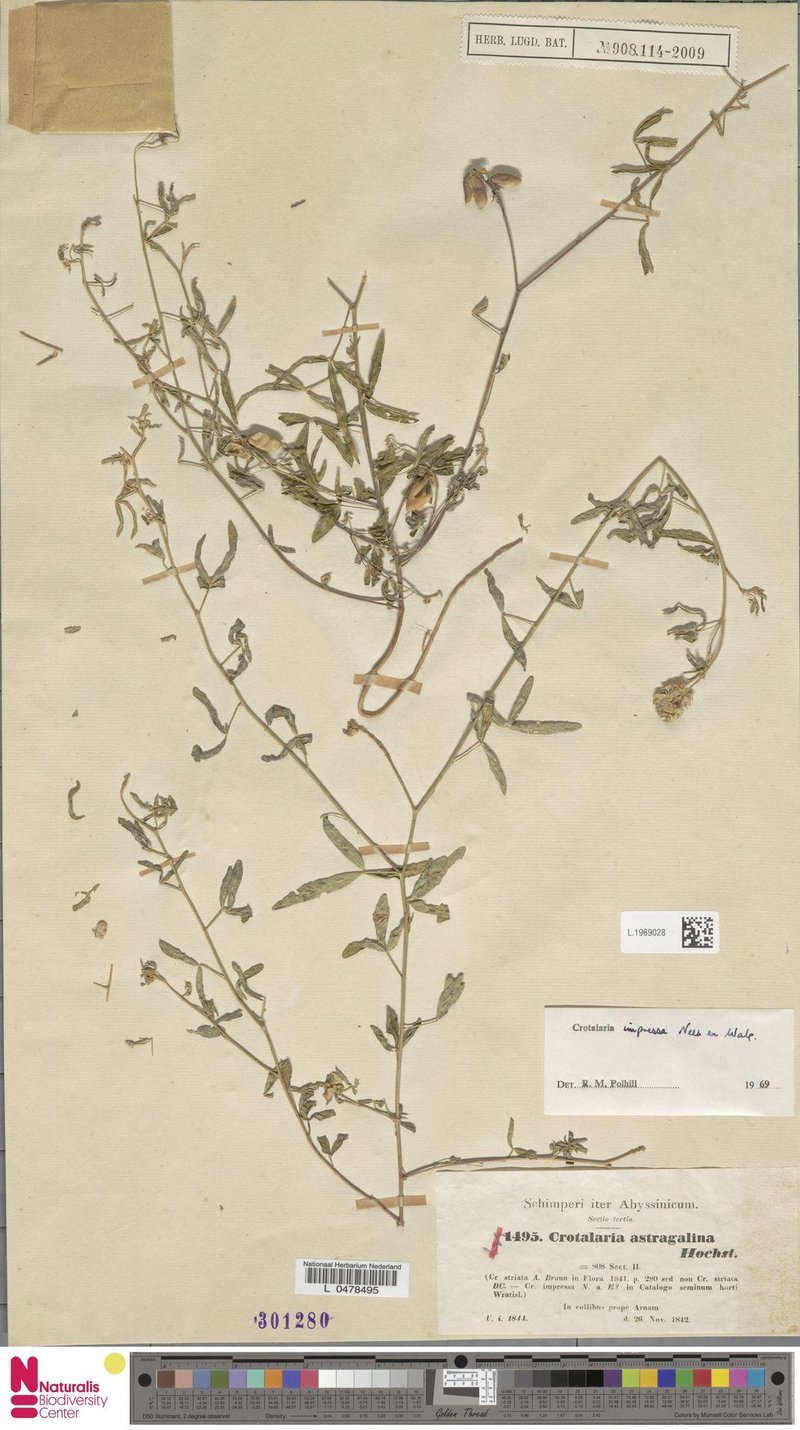
Nees ex Walp.,Nees ex Walp.,Nees ex Walp.,Loudon, Jane (Webb), Mrs., 1807-1858,Hooker, William Jackson, Sir,Philosophical Society of Adelaide, South Australia,Mueller, Ferdinand von,Academia Caesarea Leopoldino-Carolina Germanica Naturae Curiosorum,Hitchcock, A. S. (Albert Spear), 1865-1935,Plenck, Joseph Jacob, Ritter von, 1738-1807,Loudon, Mrs. (Jane), 1807-1858, author Orr & Company, publisher Stewart and Murray, printer,Smith, John Donnell,

Taxonomy
- Division:
- Magnoliophyta | - Flowering plants
- Family:
- Fabaceae
- Genus:
- Crotalaria
- Species:
- Crotalaria impressa
- USDA Symbol:
- CRIM8
Growth Characteristics
- Height:
- 150 cm
- Light Requirements:
- Full Sun
- Drought Tolerance:
- High
- Bloom Months:
- jun,jul,aug,sep
- Bloom Colors:
- yellow
Garden & Ecology Notes
- Wildlife Value:
- bees, butterflies
Soil Requirements
- Soil Type:
- sandy, well-drained, nutrient-poor soil
- pH:
- 5.5 - 6.5 (slightly acidic to neutral)
- Drainage:
- excellent drainage required
- Moisture:
- dry to moderate
- Notes:
- native to dry, open habitats
Propagation & Germination
- Stratification:
- None required
- Germination Time:
- 7–21 days
- Notes:
- Seeds germinate readily without pretreatment; scarification may speed germination.