
Wili Wili
Erythrina sandwicensis
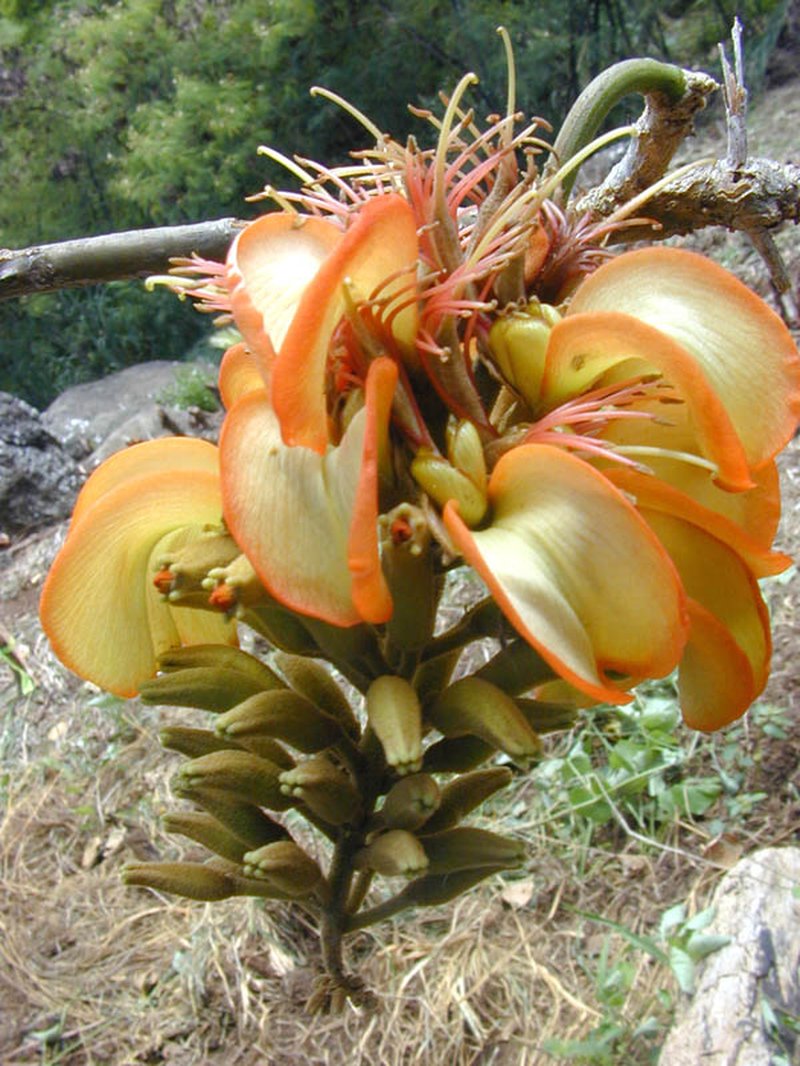
Marshman at en.wikipedia / Eric Guinther
Taxonomy
- Division:
- Magnoliophyta | - Flowering plants
- Family:
- Fabaceae
- Genus:
- Erythrina
- Species:
- Erythrina sandwicensis
Growth Characteristics
- Life Cycle:
- Perennial
- Growth Habit:
- Tree
- Height:
- More than 40 ft
- Light Requirements:
- Full Sun
- Bloom Months:
- mar, apr, may
- Bloom Colors:
- red
Native Range
United States: Hawaii
Host Plant for Caterpillars
Carob moth (Ectomyelois ceratoniae), 🛑Hawaiian grass leafroller (Omiodes monogona), Terastia meticulosalis
Soil Requirements
- Soil Type:
- well-drained, sandy or rocky soil
- pH:
- 6.0 - 7.5 (slightly acidic to neutral)
- Drainage:
- excellent drainage required
- Moisture:
- dry to moderate
- Notes:
- native to dry, coastal regions of Hawaii
Germination Information
Pre-treatment: Scarify the hard seedcoat of wiliwili using a nail clipper, being careful not to damage the germ or the inner part of the seed. Soak the scarified seeds overnight in room temperature water. If any seeds do not imbibe water, they may be nicked and soaked again.
Establishment: Overwatering can lead to damping off with wiliwili seedlings. Seeds are mature when the pod turns brown and the seeds become hard with a shiny seed coat. The plant is native to the dry leeward slopes of all main Hawaiian islands, up to 600 m (1,950 ft).
Source: npn.rngr.net