
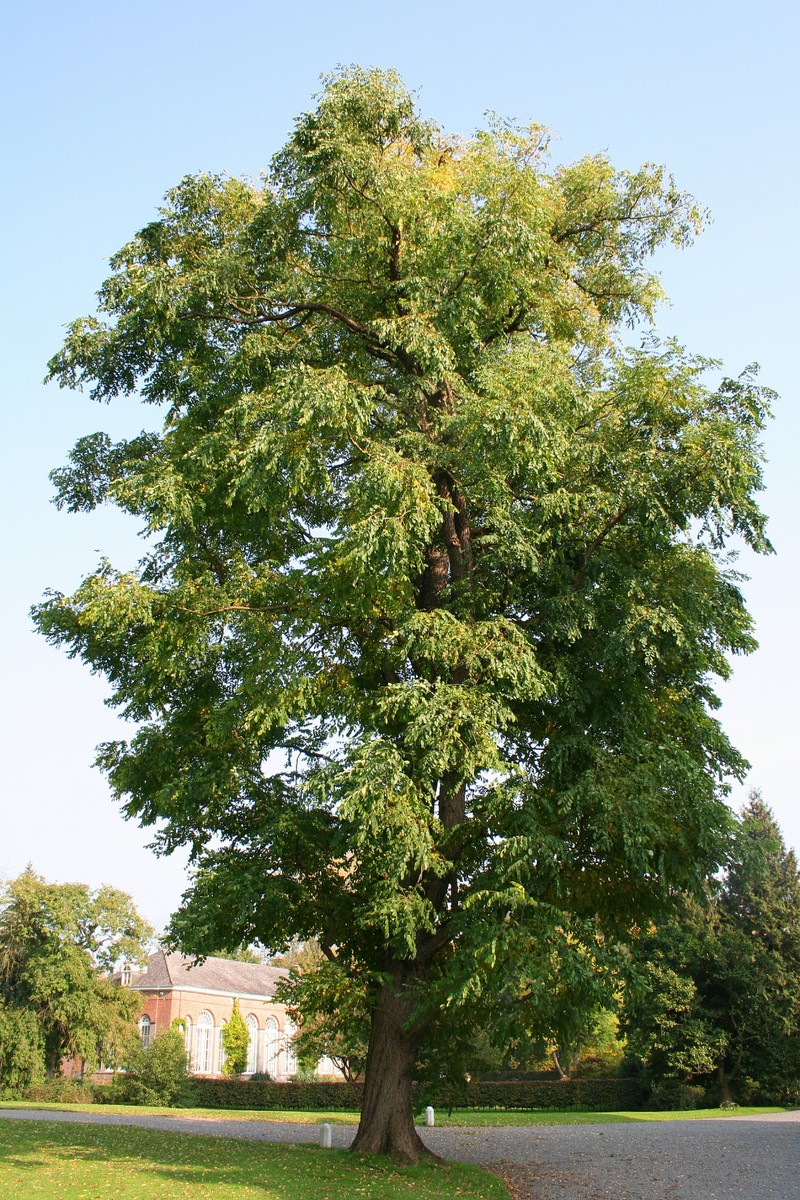
Kentucky Coffeetree
Gymnocladus dioicus
Taxonomy
- Division:
- Magnoliophyta | - Flowering plants
- Family:
- Fabaceae
- Genus:
- Gymnocladus
- Species:
- Gymnocladus dioicus
Growth Characteristics
- Life Cycle:
- Perennial
- Growth Habit:
- Tree
- Height:
- More than 40 ft
- Light Requirements:
- Full Sun, Part Shade, Shade
- Drought Tolerance:
- High
- Bloom Months:
- jun
- Bloom Colors:
- White, Green, Brown
Native Range
United States: Alabama, Arkansas, Connecticut, Delaware, Georgia, Iowa, Illinois, Indiana, Kansas, Kentucky, Massachusetts, Maryland, Maine, Michigan, Minnesota, Missouri, Mississippi, North Carolina, North Dakota, Nebraska, New Jersey, New York, Ohio, Oklahoma, Pennsylvania, South Carolina, South Dakota, Tennessee, Texas, Virginia, Wisconsin, West Virginia, Canada: Ontario
Host Plant for Caterpillars
Soil Requirements
- Soil Type:
- rich, well-drained loamy soil
- pH:
- 6.0 - 8.0 (neutral to slightly alkaline)
- Drainage:
- excellent drainage required
- Moisture:
- dry to moderate
- Notes:
- prefers deep soils in river valleys
Germination Information
Pre-treatment: Seeds are scarified with concentrated sulfuric acid 1:1 (v:v) acid to seeds for 120 minutes. After acid treatment, seeds are thoroughly rinsed in water to remove residual acid.
Establishment: Seeds are purchased from local people who collect within a 50 mile radius of the nursery. Legumes are 15 to 25 cm (6 to 8 in)long, each containing 4 to 8 dark brown to black, hard oval seeds. The Kentucky coffee tree naturally occurs in rich bottomlands from New York, Pennsylvania, southern Ontario, and Minnesota southwards to eastern Nebraska, Oklahoma, Kentucky and Tennessee. It is widely planted elsewhere in the south and central United States as an ornamental. Seed sources are from south central Missouri.
Source: npn.rngr.net