
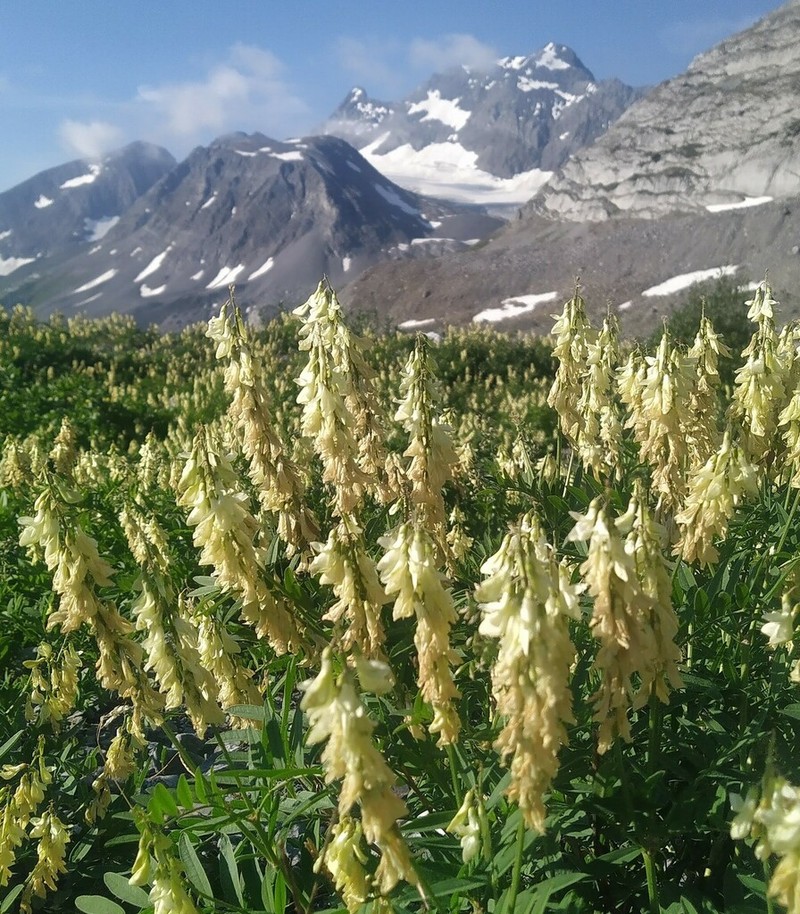
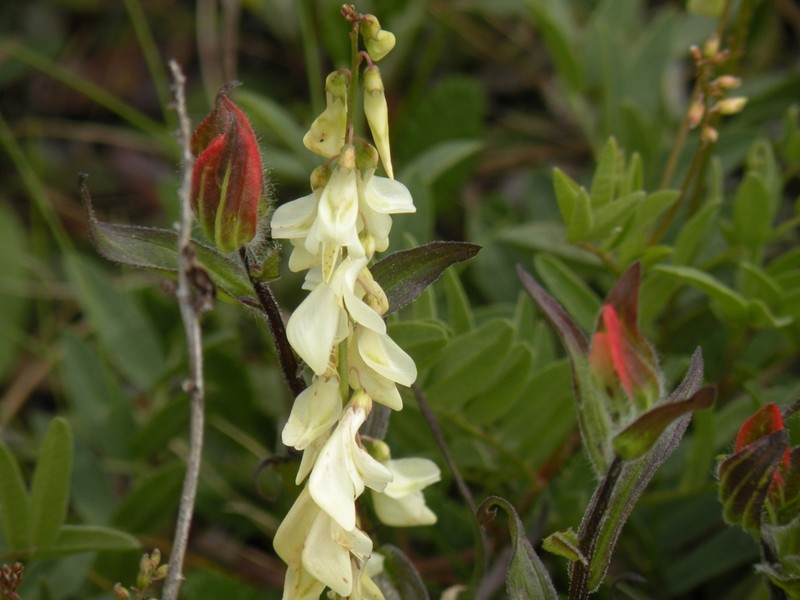
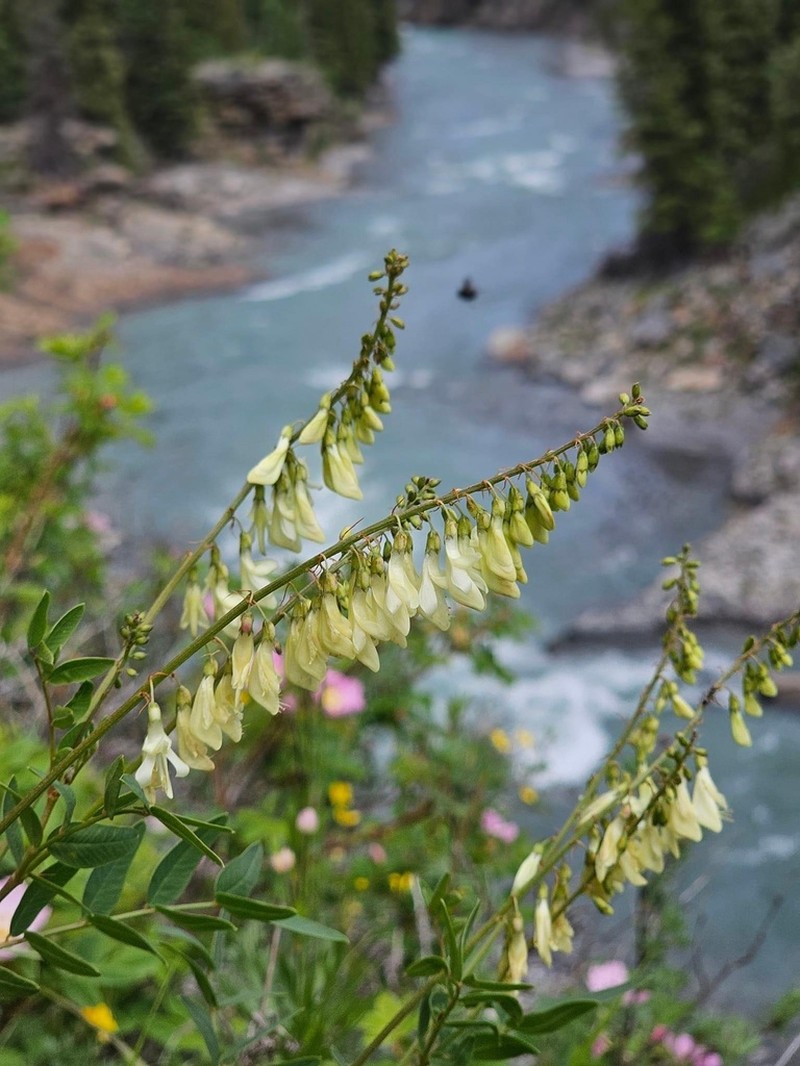
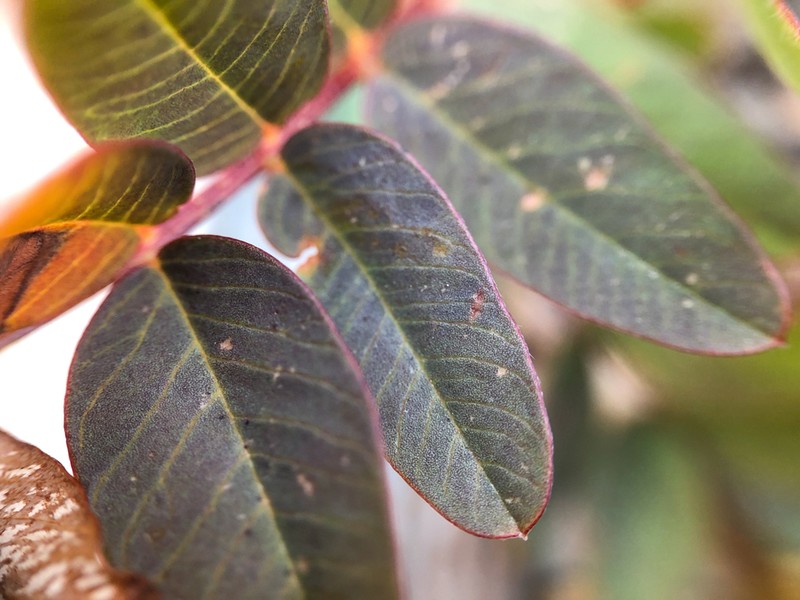
White Sweetvetch
Hedysarum sulphurescens
- Native to:
- Canada, United States
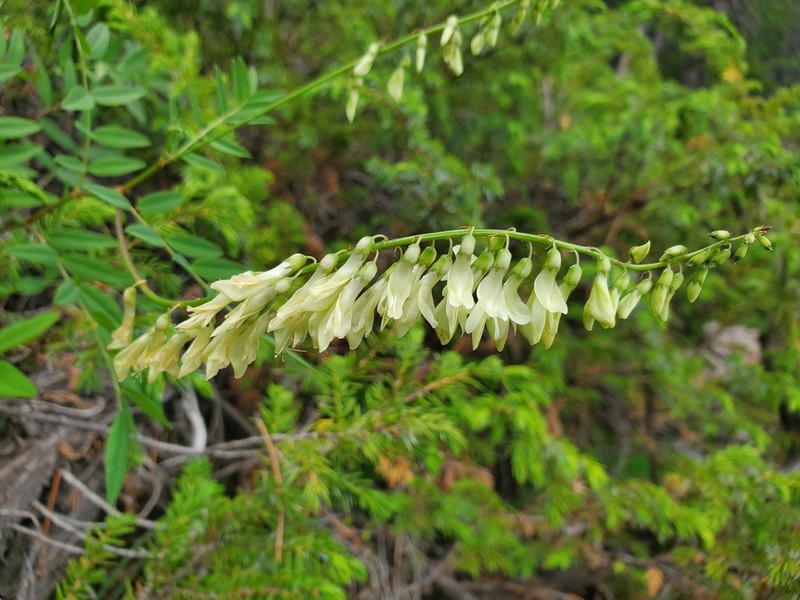
iNaturalist: © herbsinthygarden (iNaturalist #294960882)
Taxonomy
- Division:
- Magnoliophyta | - Flowering plants
- Family:
- Fabaceae
- Genus:
- Hedysarum
- Species:
- Hedysarum sulphurescens
- USDA Symbol:
- HESU
Growth Characteristics
- Life Cycle:
- Perennial
- Growth Habit:
- Forb/herb
- Height:
- 60 cm
- Light Requirements:
- Full Sun
- Drought Tolerance:
- Medium
- Bloom Months:
- jun,jul,aug
- Bloom Colors:
- yellow, cream
Wildlife Benefits
- Bees:
- ★☆☆☆☆ Documented bee visitation (GBIF)
- Butterflies & Moths:
- ★★☆☆☆ Documented Lepidoptera association (GBIF)
Reported Fauna Sightings
Bees: Yellow head bumble bee (Bombus flavifrons)
Garden & Ecology Notes
- Wildlife Value:
- bees, butterflies
Soil Requirements
- Soil Type:
- well-drained, sandy or gravelly soil
- pH:
- 6.0 - 7.5 (slightly acidic to neutral)
- Drainage:
- excellent drainage required
- Moisture:
- dry to moderate
- Notes:
- native to rocky slopes and open woods
Propagation & Germination
- Stratification:
- Cold/moist stratification required — 30–60 days
- Germination Time:
- 14–30 days
- Notes:
- Seeds benefit from cold stratification for 4-8 weeks; germination occurs in 2-4 weeks at 20°C.
Pre-treatment: Seeds are subjected to an 85 day cold moist stratification or no stratification. Seeds are inoculated with Rhizobium at time of sowing.
Establishment: Seeds are hand collected in late August when loments turn tan. Seeds are red-brown at maturity and are stored in paper bags prior to cleaning. The plant occurs in open wooded slopes to the alpine; from east slope of the Cascades to Alberta, Montana and Wyoming.
Source: npn.rngr.net