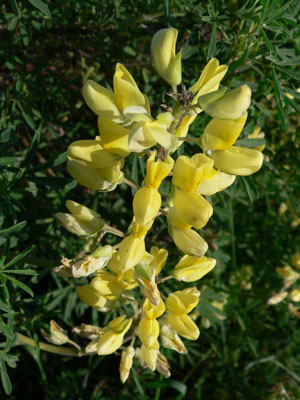
Taxonomy
- Division:
- Magnoliophyta | - Flowering plants
- Family:
- Fabaceae
- Genus:
- Lupinus
- Species:
- Lupinus arboreus
Growth Characteristics
- Life Cycle:
- Perennial
- Growth Habit:
- Shrub , Subshrub
- Height:
- 4-6 ft
- Light Requirements:
- Full Sun
- Drought Tolerance:
- High
- Bloom Months:
- mar, apr, may, jun
- Bloom Colors:
- Yellow, Blue
- Landscaping Shrub:
- Yes
Native Range
United States: California, Oregon, Washington, Canada: British Columbia
Keystone Species Ranking
- Caterpillar Keystone:
- ★★☆☆☆
Based on number of butterfly and moth species using this genus as host plant (Source: National Wildlife Federation)
- Bee Keystone:
- ★★★★☆
Based on number of native bee species using this genus for pollen and nectar (Source: National Wildlife Federation)
Host Plant for Caterpillars
Chionodes braunella, Chionodes sp. B, cosmopolitan walshia moth (Walshia miscecolorella), Epinotia infuscana, Genista Broom Moth (Uresiphita reversalis), Grapholita edwardsiana, orange tortrix moth (Argyrotaenia franciscana), Platyprepia virginalis, Pulse pod borer (Etiella zinckenella), Wandering Tiger Moth (Spilosoma vagans), Western tussock moth (Orgyia vetusta), Silvery Blue (Glaucopsyche lygdamus), 🛑Xerces blue (Glaucopsyche xerces)
Reported Fauna Sightings
Bees: Crotch bumble bee (Bombus crotchii), Crotch bumble bee (Bombus crotchii), Obscure bumble bee (Bombus caliginosus), Obscure bumble bee (Bombus caliginosus), Two-form bumble bee (Bombus bifarius), Two-form bumble bee (Bombus bifarius), Yellow-faced bumble bee (Bombus vosnesenskii), Yellow-faced bumble bee (Bombus vosnesenskii)
Soil Requirements
- Soil Type:
- sandy, acidic, nutrient-poor soil
- pH:
- 5.5 - 7.5 (slightly acidic to neutral)
- Drainage:
- excellent drainage required
- Moisture:
- dry to moderate
- Notes:
- thrives in coastal dunes and sandy areas
Germination Information
Pre-treatment: Seeds are gently rubbed with 320 grit sand paper until seed coat is visibly eroded and then soaked overnight before sowing.
Establishment: Seeds are collected between June and September. Mature pods are brown and are manually collected before they split and release seeds. The plant is native from Sonoma to Ventura counties and has been naturalized as far north as British Columbia. It is found below 100m elevation.
Source: npn.rngr.net