
Pacific Lupine
Lupinus lepidus
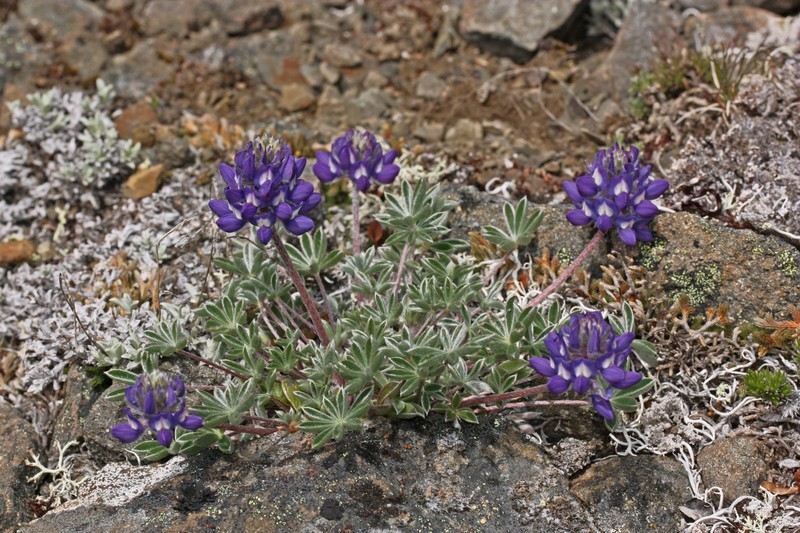
Taxonomy
- Division:
- Magnoliophyta | - Flowering plants
- Family:
- Fabaceae
- Genus:
- Lupinus
- Species:
- Lupinus lepidus
Growth Characteristics
- Life Cycle:
- Perennial
- Growth Habit:
- Forb/herb
- Height:
- 2-3 ft
- Light Requirements:
- Full Sun
- Bloom Months:
- may, jul
- Bloom Colors:
- blue, purple
Native Range
United States: Alaska, Oregon, Washington, Canada: British Columbia
Keystone Species Ranking
- Caterpillar Keystone:
- ★★☆☆☆ Based on number of butterfly and moth species using this genus as host plant (Source: National Wildlife Federation)
- Bee Keystone:
- ★★★★☆ Based on number of native bee species using this genus for pollen and nectar (Source: National Wildlife Federation)
Reported Fauna Sightings
Bees: Brown-belted bumble bee (Bombus griseocollis), Brown-belted bumble bee (Bombus griseocollis), Central bumble bee (Bombus centralis), Central bumble bee (Bombus centralis), Fuzzy-horned bumble bee (Bombus mixtus), Fuzzy-horned bumble bee (Bombus mixtus), Indiscriminate cuckoo bumble bee (Bombus insularis), Indiscriminate cuckoo bumble bee (Bombus insularis), Red-belted bumble bee (Bombus rufocinctus), Red-belted bumble bee (Bombus rufocinctus), Two-form bumble bee (Bombus bifarius), Two-form bumble bee (Bombus bifarius), van Dyke bumble bee (Bombus vandykei), van Dyke bumble bee (Bombus vandykei), Yellow-faced bumble bee (Bombus vosnesenskii), Yellow-faced bumble bee (Bombus vosnesenskii)
Soil Requirements
- Soil Type:
- sandy, well-drained, nutrient-poor soil
- pH:
- 5.5 - 7.0 (slightly acidic to neutral)
- Drainage:
- excellent drainage required
- Moisture:
- dry to moderate
- Notes:
- Commonly found in open, rocky areas
Germination Information
Pre-treatment: Placement in a warm growth chamber or greenhouse
Establishment: This species is generally distributed in the northwestern portions of the United States (Oregon, Washington & Alaska) and the far western quadrant of Canada.
Source: npn.rngr.net