
Hairy Bigleaf Lupine
Lupinus prunophilus
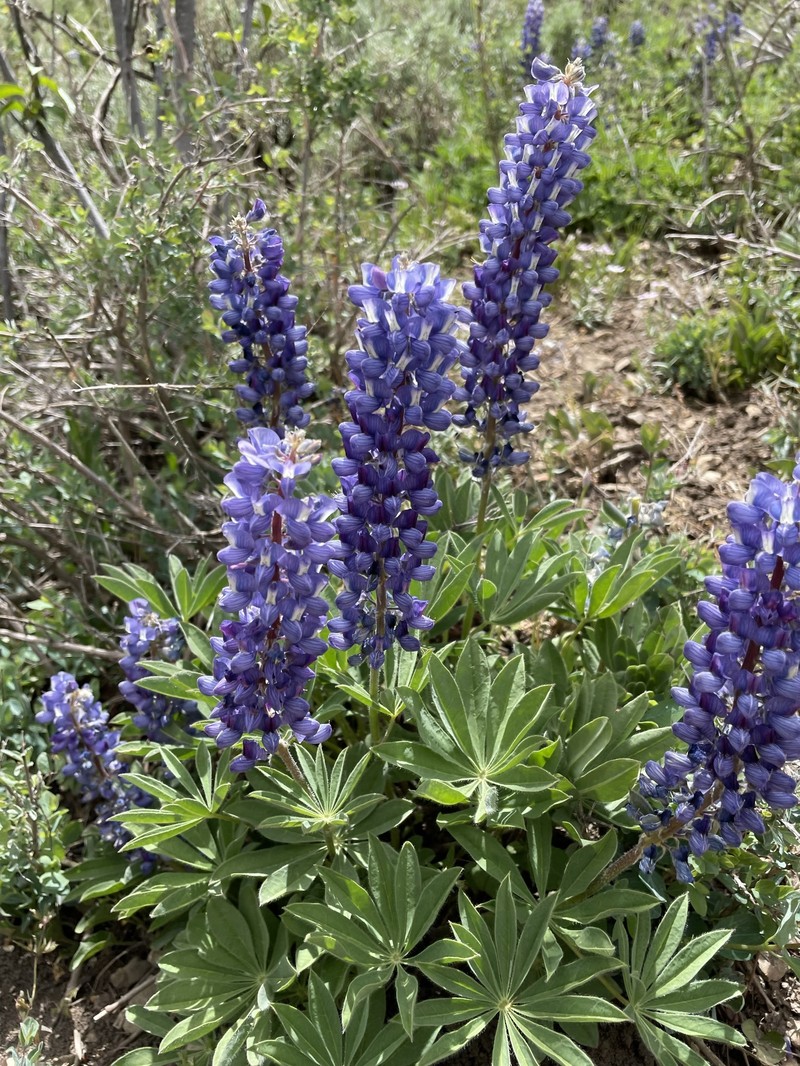
Taxonomy
- Division:
- Magnoliophyta | - Flowering plants
- Family:
- Fabaceae
- Genus:
- Lupinus
- Species:
- Lupinus prunophilus
Growth Characteristics
- Life Cycle:
- Perennial
- Growth Habit:
- Forb/herb
- Height:
- 3-4 ft
- Light Requirements:
- Full Sun
- Drought Tolerance:
- High
- Bloom Months:
- mar, apr, may, jun, jul, aug
- Bloom Colors:
- blue, purple
Native Range
United States: California, Colorado, Idaho, New Mexico, Nevada, Oregon, Utah, Washington, Wyoming
Keystone Species Ranking
- Caterpillar Keystone:
- ★★☆☆☆ Based on number of butterfly and moth species using this genus as host plant (Source: National Wildlife Federation)
- Bee Keystone:
- ★★★★☆ Based on number of native bee species using this genus for pollen and nectar (Source: National Wildlife Federation)
Host Plant for Caterpillars
Hystrichophora paradisiae, yellow stoneroot borer (Papaipema pertincta), Hecla sulphur (Colias hecla), Mountain Clouded Yellow (Colias nastes), Silvery Blue (Glaucopsyche lygdamus), Western Blue (Plebejus icarioides)
Soil Requirements
- Soil Type:
- sandy, well-drained, nutrient-poor soil
- pH:
- 5.5 - 7.0 (slightly acidic to neutral)
- Drainage:
- excellent drainage required
- Moisture:
- dry to moderate
- Notes:
- native to arid regions, prefers open, sunny areas
Germination Information
Pre-treatment: Seed is placed in boiling water for 1 minute, then placed on moistened blotter paper in a Petri dish to imbibe for a week. Seed is refrigerated during this period to retard fungal growth. Imbibed seed is inoculated with rhizobium and mycorrhizae before planting.
Establishment: Lupine pods shatter when ripe, requiring collection while the seed is still green. Harvested lupine seeds and pods have high moisture content and must be quickly spread out to dry. Seed typically dries to between 5 and 7 % of the initial green bulk weight.
Source: npn.rngr.net