
Hollowleaf Annual Lupine
Lupinus succulentus
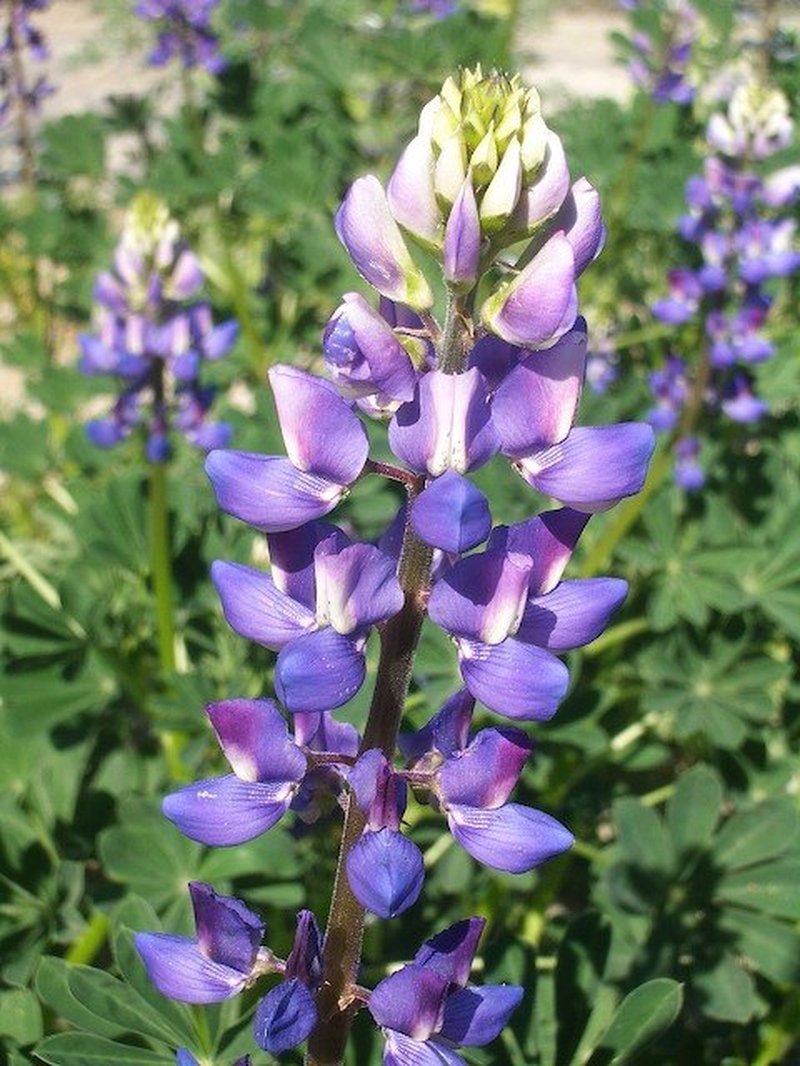
Taxonomy
- Division:
- Magnoliophyta | - Flowering plants
- Family:
- Fabaceae
- Genus:
- Lupinus
- Species:
- Lupinus succulentus
Growth Characteristics
- Life Cycle:
- Annual
- Growth Habit:
- Forb/herb
- Height:
- 3-4 ft
- Light Requirements:
- Full Sun
- Drought Tolerance:
- High
- Bloom Months:
- feb, mar, apr, may
- Bloom Colors:
- Blue, Purple
Native Range
United States: Arizona, California
Keystone Species Ranking
- Caterpillar Keystone:
- ★★☆☆☆ Based on number of butterfly and moth species using this genus as host plant (Source: National Wildlife Federation)
- Bee Keystone:
- ★★★★☆ Based on number of native bee species using this genus for pollen and nectar (Source: National Wildlife Federation)
Host Plant for Caterpillars
Orange Sulphur (Colias eurytheme), Silvery Blue (Glaucopsyche lygdamus), West Coast Lady (Vanessa annabella), Western Blue (Plebejus icarioides)
Reported Fauna Sightings
Bees: Black-tailed bumble bee (Bombus melanopygus), Black-tailed bumble bee (Bombus melanopygus), Crotch bumble bee (Bombus crotchii), Crotch bumble bee (Bombus crotchii), Yellow bumble bee (Bombus fervidus), Yellow bumble bee (Bombus fervidus), Yellow-faced bumble bee (Bombus vosnesenskii), Yellow-faced bumble bee (Bombus vosnesenskii)
Soil Requirements
- Soil Type:
- rich, well-drained loamy soil
- pH:
- 6.0 - 7.5 (slightly acidic to neutral)
- Drainage:
- excellent drainage required
- Moisture:
- consistently moist
- Notes:
- Common in coastal and riparian areas
Germination Information
Pre-treatment: Surface sterilize seed coats with a 5 minute 5% bleach solution soak. Follow this with a 2 hour hot water scarification treatment to maximize germination rates.
Establishment: Arroyo lupine is an annual species found throughout southern California and the Channel islands. It inhabits open grassy slopes and rocky ridges. Pods are hand collected when fully matured, typically from late May to June.
Source: npn.rngr.net