
Manycolored Lupine
Lupinus versicolor
- Native to:
- Mexico, United States
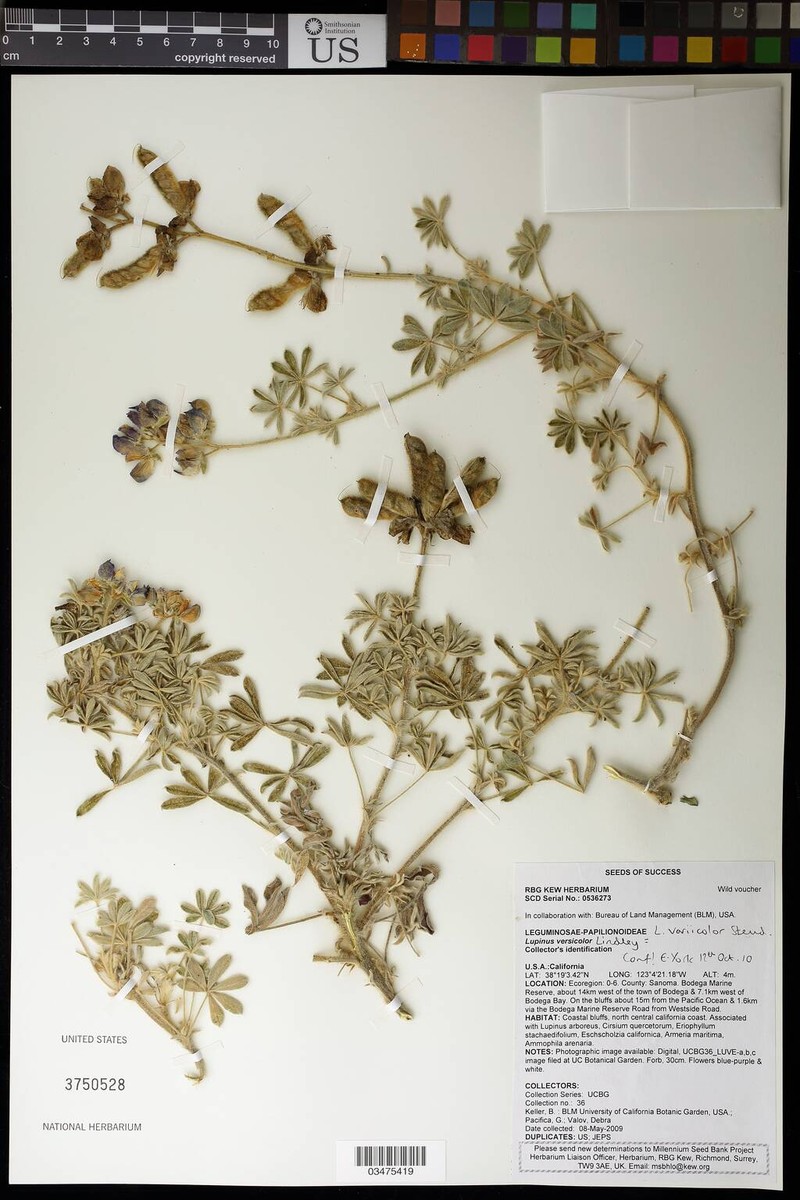
GBIF: Ingrid P. Lin
Taxonomy
- Division:
- Magnoliophyta | - Flowering plants
- Family:
- Fabaceae
- Genus:
- Lupinus
- Species:
- Lupinus versicolor
- USDA Symbol:
- LUVE
Growth Characteristics
- Life Cycle:
- Perennial
- Growth Habit:
- Forb/herb , Subshrub
- Height:
- 60 cm
- Light Requirements:
- Full Sun
- Drought Tolerance:
- Medium
- Bloom Months:
- apr,may,jun,jul
- Bloom Colors:
- blue, purple, white
Wildlife Benefits
- Bees:
- ★☆☆☆☆ Documented bee visitation (GBIF)
- Butterflies & Moths:
- ★☆☆☆☆ Documented Lepidoptera association (GBIF)
- Caterpillars:
- ★☆☆☆☆ Recorded caterpillar host plant (HOSTS Database)
Keystone Species Ranking
- Caterpillar Keystone:
- ★★★★☆ Butterfly & moth species supported by this genus (NWF)
- Pollen Specialist Bee Keystone:
- ★★☆☆☆ Native pollen specialist bee species supported by this genus (NWF)
Host Plant for Caterpillars
Garden & Ecology Notes
- Wildlife Value:
- bees, butterflies
Soil Requirements
- Soil Type:
- sandy, well-drained, nutrient-poor soil
- pH:
- 5.5 - 7.0 (slightly acidic to neutral)
- Drainage:
- excellent drainage required
- Moisture:
- dry to moderate
- Notes:
- native to coastal areas with poor soil fertility
Propagation & Germination
- Stratification:
- Cold/moist stratification required — 14–30 days
- Scarification:
- Seed coat scarification required before sowing
- Germination Time:
- 14–30 days
- Notes:
- Scarify seed coat and cold stratify for 2-4 weeks to break dormancy.
Pre-treatment: Wash seeds in a 5% bleach solution for 1 minute, then dry. Place seeds in a sterile rock tumbler with sterile, sharp edged rocks and tumble for 72 hours. If seeds are not scratched, tumble for another 36 hours. Remove seeds and soak in fresh water overnight. Seeds which have imbibed are ready to sow. Seeds which remain hard should be tumbled for another 72 hours.
Establishment: Seeds are collected between April 1st and July 1st. Mature pods are brown. Pods can be collected early if at least 4 inches of stem is collected with the pods. Pods will dry and open at room temperature. Seed is greenish brown at maturity. L. versicolor is found below 1,000 feet elevation; from Humboldt County to San Luis Obispo, California.
Source: npn.rngr.net