
Clapperton's Parkia
Parkia biglobosa
- Native to:
- Benin, Burkina, Cameroon, Central African Republic, Chad, Gambia, Ghana, Guinea, Guinea-Bissau, Gulf of Guinea Is., Ivory Coast, Mali, Niger, Nigeria, Senegal, Sierra Leone, Sudan-South Sudan, Togo
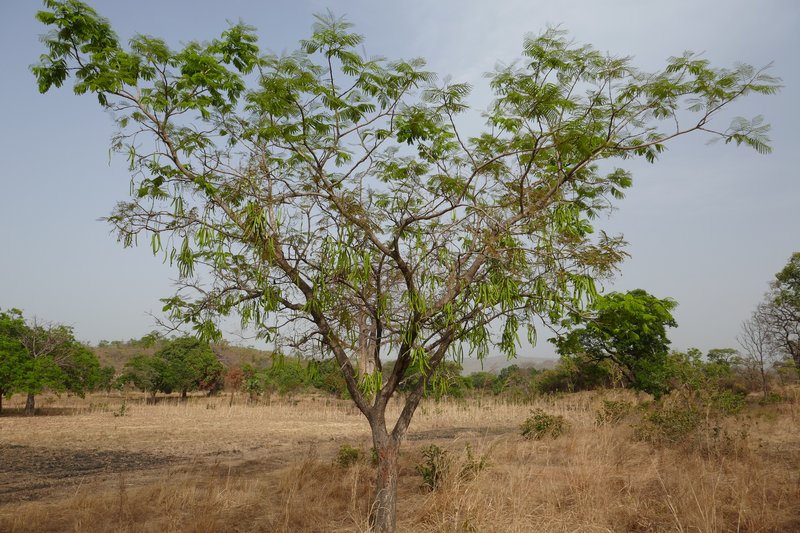
Vitellaria (de.wikipedia.org),Ji-Elle,Ji-Elle,Vitellaria (de.wikipedia.org),Ji-Elle,Vitellaria (de.wikipedia.org),Vitellaria (de.wikipedia.org),Ji-Elle,Ji-Elle,Ji-Elle,Ji-Elle,Ji-Elle,Ji-Elle,Marco Schmidt [1] (www.senckenberg.de),Ji-Elle

Taxonomy
- Division:
- Magnoliophyta | - Flowering plants
- Family:
- Fabaceae
- Genus:
- Parkia
- Species:
- Parkia biglobosa
- USDA Symbol:
- PACL9
Growth Characteristics
- Height:
- 3000 cm
- Light Requirements:
- Full Sun
- Drought Tolerance:
- High
- Bloom Months:
- jan,feb,mar
- Bloom Colors:
- red, pink
Garden & Ecology Notes
- Wildlife Value:
- birds, mammals
- Fire Ecology:
- Fire adapted — tolerates or benefits from fire
- Fire Notes:
- Mature trees are fire-tolerant; fire may promote seed germination by cracking hard seed coats.
Soil Requirements
- Soil Type:
- fertile, well-drained loamy soil
- pH:
- 5.5 - 7.5 (slightly acidic to neutral)
- Drainage:
- excellent drainage required
- Moisture:
- dry to moderate
- Notes:
- prefers deep soils with good fertility
Propagation & Germination
- Scarification:
- Seed coat scarification required before sowing
- Germination Time:
- 7–21 days
- Notes:
- Seeds require scarification (nicking or hot water treatment) to break physical dormancy.