
Bristly Locust
Robinia hispida
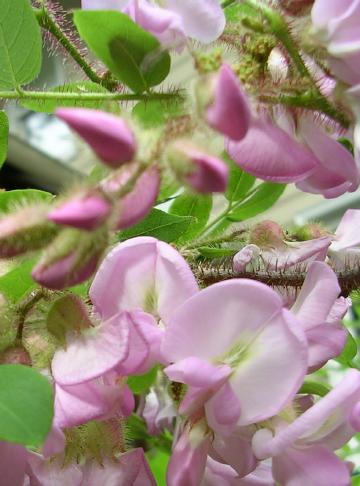
Taxonomy
- Division:
- Magnoliophyta | - Flowering plants
- Family:
- Fabaceae
- Genus:
- Robinia
- Species:
- Robinia hispida
Growth Characteristics
- Life Cycle:
- Perennial
- Growth Habit:
- Shrub , Tree
- Height:
- 8-12 ft
- Light Requirements:
- Full Sun
- Drought Tolerance:
- Medium
- Bloom Months:
- apr, may, jun, jul
- Bloom Colors:
- Red, Pink
- Landscaping Shrub:
- Yes
Native Range
United States: Alabama, Arkansas, California, Colorado, Connecticut, Delaware, Florida, Georgia, Iowa, Illinois, Indiana, Kansas, Kentucky, Louisiana, Massachusetts, Maryland, Maine, Michigan, Minnesota, Missouri, Mississippi, North Carolina, Nebraska, New Hampshire, New Jersey, New Mexico, New York, Ohio, Oklahoma, Oregon, Pennsylvania, Rhode Island, South Carolina, Tennessee, Texas, Utah, Virginia, Vermont, Washington, Wisconsin, West Virginia, Canada: Nova Scotia, Ontario
Keystone Species Ranking
- Caterpillar Keystone:
- ★★☆☆☆ Based on number of butterfly and moth species using this genus as host plant (Source: National Wildlife Federation)
Host Plant for Caterpillars
Reported Fauna Sightings
Soil Requirements
- Soil Type:
- rich, well-drained loamy soil
- pH:
- 5.5 - 7.0 (slightly acidic to neutral)
- Drainage:
- excellent drainage required
- Moisture:
- dry to moderate
- Notes:
- prefers open woodlands and rocky slopes
Germination Information
Pre-treatment: None required
Establishment: Plants can be found on dry, well-drained, moist, sunny or shaded areas. In the Great Smoky Mountains National Park, plants were found on ridges of cliffs on fairly dry soils. Bristly locust is found throughout most of the continental United States, except for Idaho, Montana, North and South Dakota, Colorado, Nevada and Arizona.
Source: npn.rngr.net