
New Mexico Locust
Robinia neomexicana
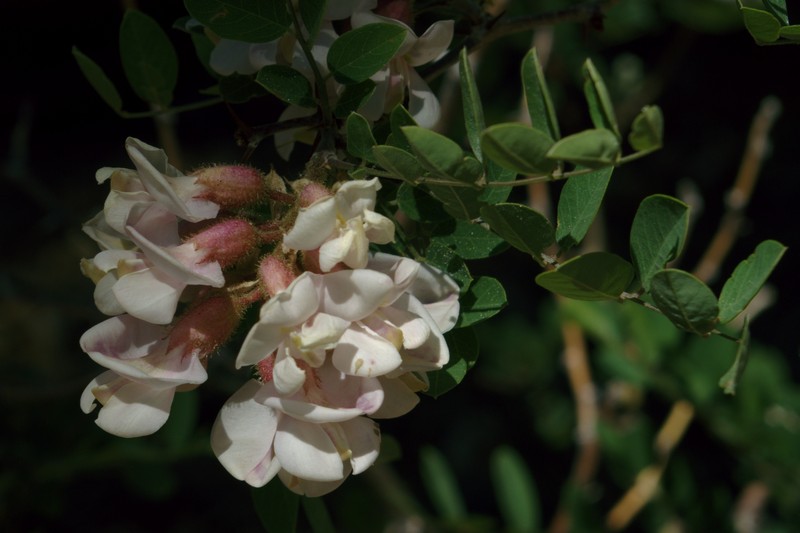
Taxonomy
- Division:
- Magnoliophyta | - Flowering plants
- Family:
- Fabaceae
- Genus:
- Robinia
- Species:
- Robinia neomexicana
Growth Characteristics
- Life Cycle:
- Perennial
- Growth Habit:
- Shrub , Tree
- Height:
- 20-40 ft
- Light Requirements:
- Part Shade
- Bloom Months:
- apr, may, jun, jul, aug
- Bloom Colors:
- White, Red, Pink, Purple, Brown
- Landscaping Shrub:
- Yes
Native Range
United States: Arizona, California, Colorado, New Mexico, Nevada, Texas, Utah, Wyoming
Keystone Species Ranking
- Caterpillar Keystone:
- ★★☆☆☆ Based on number of butterfly and moth species using this genus as host plant (Source: National Wildlife Federation)
Host Plant for Caterpillars
Agonopterix sanguinella, Cecropis moth (Automeris cecrops), Euclea dolliana, Leucoptera robinella, oak leafminer (Chrysaster ostensackenella), Oslar's eacles (Eacles oslari), tricolor buckmoth (Hemileuca tricolor), Mexican yellow (Eurema mexicana), Silver-spotted Skipper (Epargyreus clarus)
Reported Fauna Sightings
Bees: Nevada bumble bee (Bombus nevadensis), Nevada bumble bee (Bombus nevadensis)
Soil Requirements
- Soil Type:
- rocky, well-drained sandy loam
- pH:
- 6.0 - 8.0 (slightly acidic to neutral)
- Drainage:
- excellent drainage required
- Moisture:
- dry to moderate
- Notes:
- commonly found in arid and semi-arid regions
Germination Information
Pre-treatment: Scarification using dry tumbling with grit and pea gravel for 5 to 7 days. Soaking/Leaching in a rubber-lined rock tumbler jar with tap water, changing water daily to remove any inhibitors.
Establishment: Seeds collected in Grand Canyon National Park, Arizona. No stratification required. The duration of tumbling for the soaking/leaching process is based on the appearance of the seed and the leach water.
Source: npn.rngr.net