
Desertsenna
Senna armata
- Native to:
- Mexico, United States
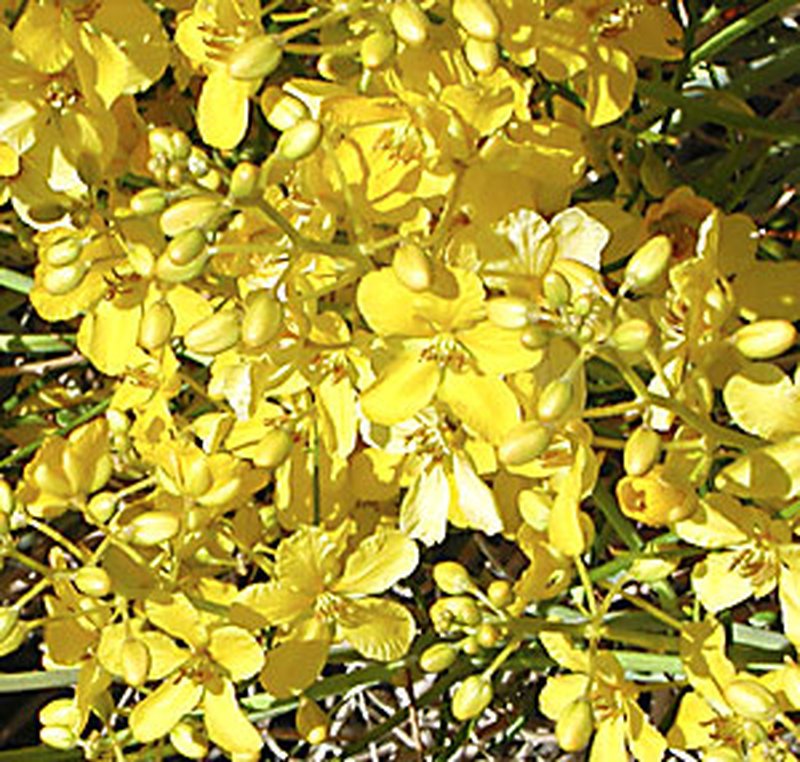
Unknown author Unknown author
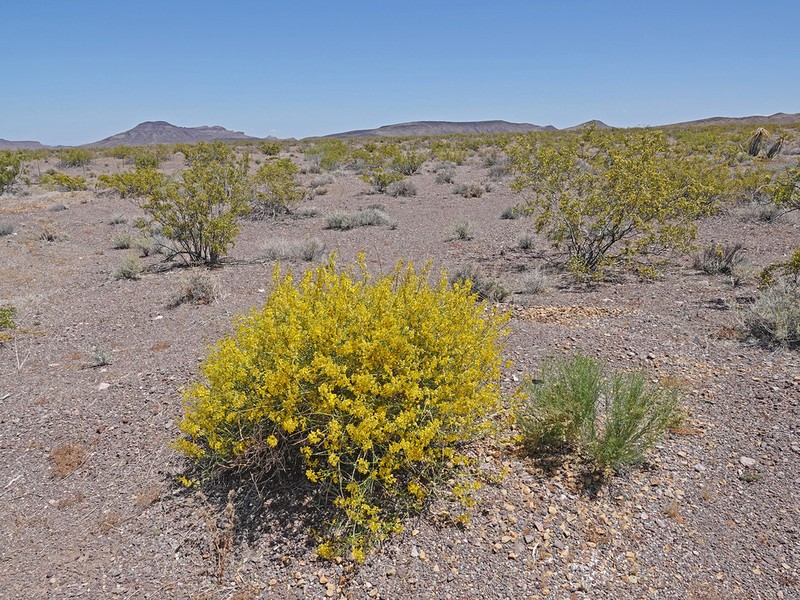
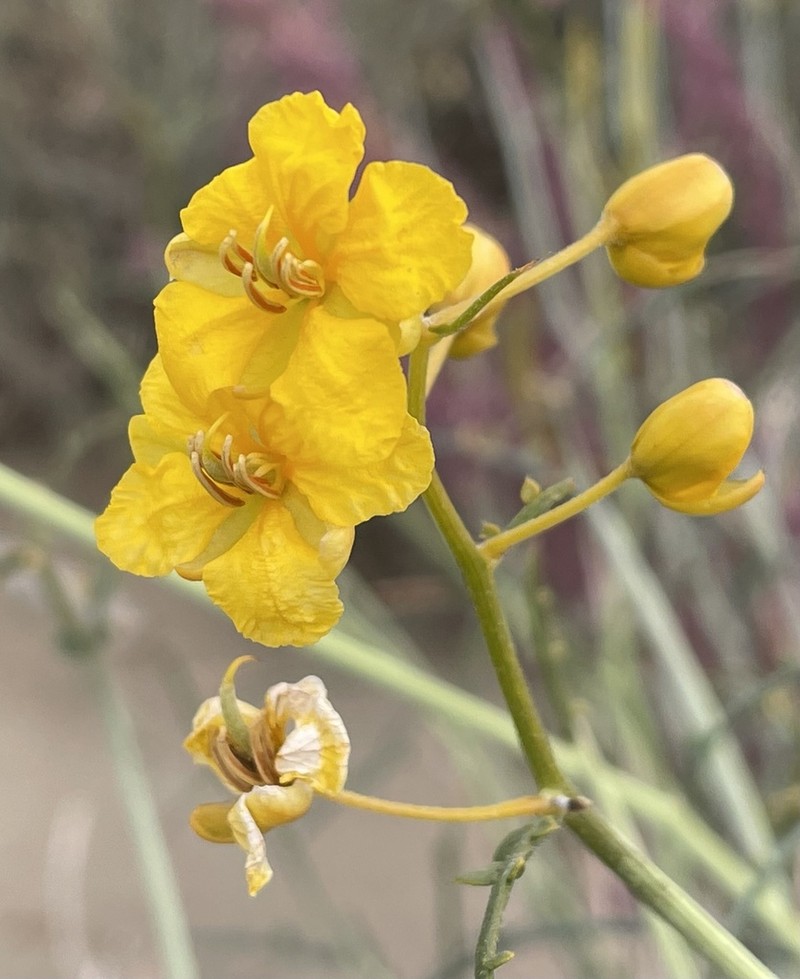
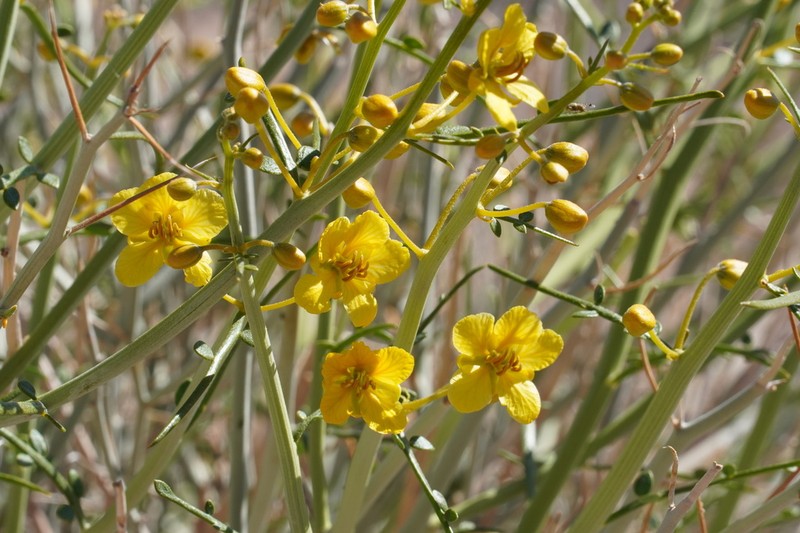
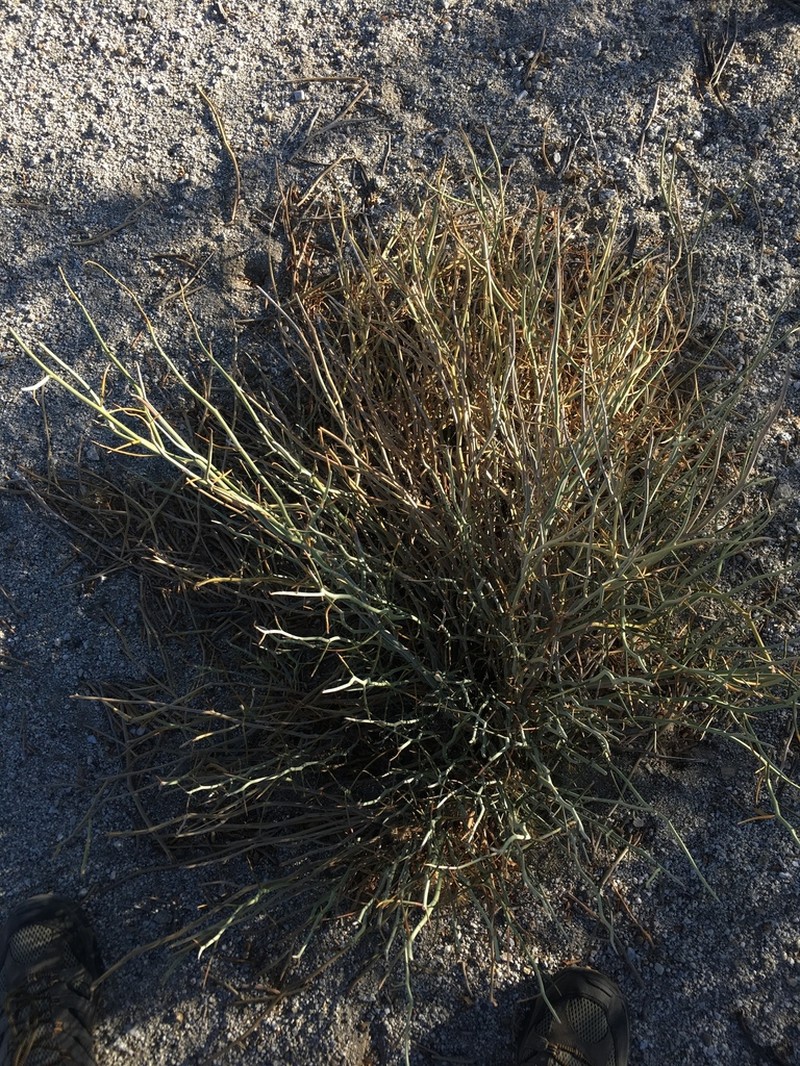
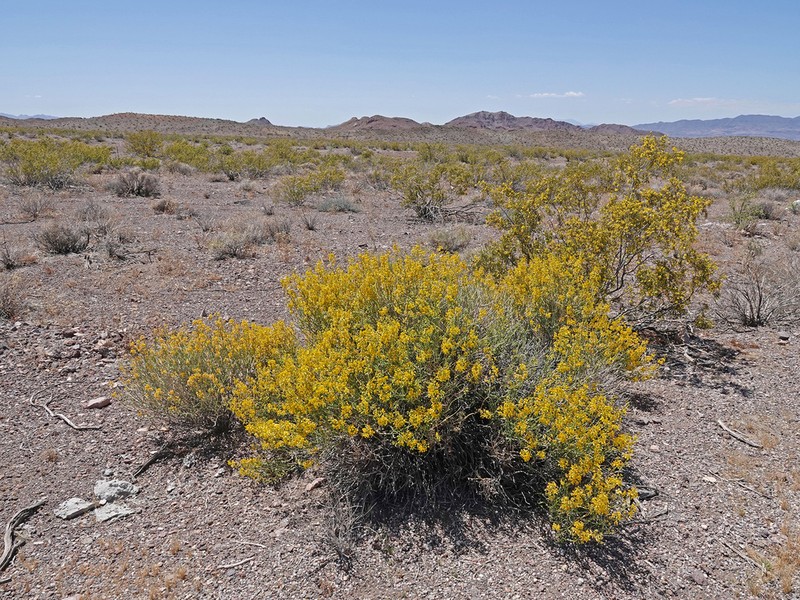
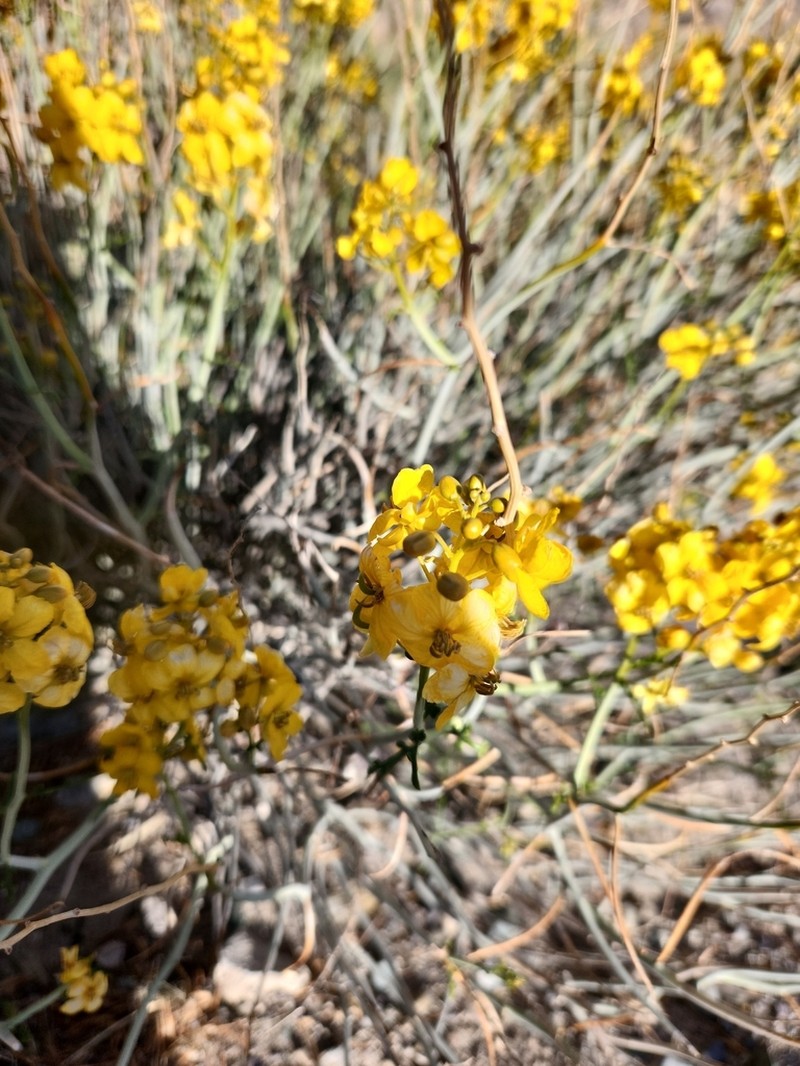
Taxonomy
- Division:
- Magnoliophyta | - Flowering plants
- Family:
- Fabaceae
- Genus:
- Senna
- Species:
- Senna armata
- USDA Symbol:
- SEAR8
Growth Characteristics
- Life Cycle:
- Perennial
- Growth Habit:
- Shrub
- Height:
- 200 cm
- Light Requirements:
- Full Sun
- Drought Tolerance:
- High
- Bloom Months:
- apr,may,jun,jul
- Bloom Colors:
- yellow
Wildlife Benefits
- Bees:
- ★☆☆☆☆ Documented bee visitation (GBIF)
- Butterflies & Moths:
- ★☆☆☆☆ Documented Lepidoptera association (GBIF)
- Caterpillars:
- ★☆☆☆☆ Recorded caterpillar host plant (HOSTS Database)
Host Plant for Caterpillars
Cloudless Sulphur (Phoebis sennae)
Garden & Ecology Notes
- Wildlife Value:
- bees, butterflies
- Deer Resistant:
- Yes
Soil Requirements
- Soil Type:
- sandy, nutrient-poor, well-drained soil
- pH:
- 6.0 - 8.0 (neutral to slightly alkaline)
- Drainage:
- excellent drainage required
- Moisture:
- dry to moderate
- Notes:
- native to arid desert regions
Propagation & Germination
- Stratification:
- Warm stratification required — 30–60 days
- Scarification:
- Seed coat scarification required before sowing
- Germination Time:
- 14–30 days
- Notes:
- Seeds require scarification (nicking or hot water treatment) followed by warm stratification for optimal germination.
Pre-treatment: Seeds are soaked for 45 to 60 minutes in a 50:50 bleach and water solution, then soaked for 12 to 24 hours in water prior to sowing.
Establishment: Seeds are hand collected when pods have matured and begin to split open. Senna armata is found below 3,700 ft elevation in sandy washes and open places in the Colorado and Mojave deserts in Nevada, Arizona and Southern California.
Source: npn.rngr.net