
American Senna
Senna hebecarpa
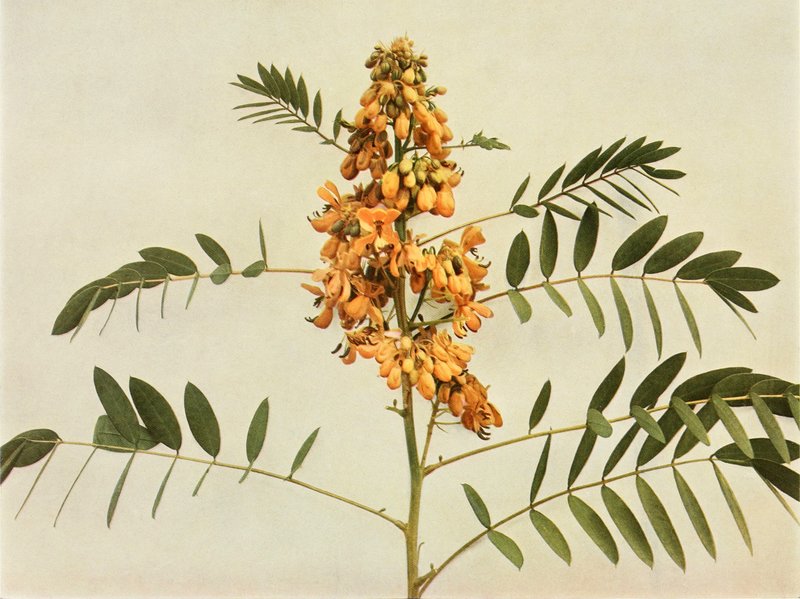
Homer D. House, New York State Botanist. Walter B. Starr of the Matthews-Northrup Company, Buffalo, and Harold H. Snyder of the Zeese-Wilkinson Company, New York, photographers.
Taxonomy
- Division:
- Magnoliophyta | - Flowering plants
- Family:
- Fabaceae
- Genus:
- Senna
- Species:
- Senna hebecarpa
Growth Characteristics
- Life Cycle:
- Perennial
- Growth Habit:
- Forb/herb
- Height:
- 3-4 ft
- Light Requirements:
- Full Sun, Part Shade
- Drought Tolerance:
- Medium
- Bloom Months:
- jul, aug
- Bloom Colors:
- Yellow
Native Range
United States: Connecticut, District of Columbia, Delaware, Georgia, Illinois, Indiana, Kentucky, Massachusetts, Maryland, Maine, Michigan, North Carolina, New Hampshire, New Jersey, New York, Ohio, Pennsylvania, Rhode Island, South Carolina, Tennessee, Virginia, Vermont, Wisconsin, West Virginia, Canada: Ontario
Reported Fauna Sightings
Soil Requirements
- Soil Type:
- rich, well-drained loamy soil
- pH:
- 5.5 - 7.0 (slightly acidic to neutral)
- Drainage:
- excellent drainage required
- Moisture:
- consistently moist
- Notes:
- prefers fertile soils in open areas
Germination Information
Pre-treatment: None required
Establishment: Seeds are harvested from existing populations within the Appalachian Plant Materials Center in southeastern West Virginia. The plant is common throughout the Eastern United States from Maine south to Georgia and westward to Illinois and Wisconsin.
Source: npn.rngr.net