
Notched Cowpea
Vigna marina
- Native to:
- Aldabra, American Samoa, Andaman Is., Australia, Bangladesh, Bismarck Archipelago, Borneo, Cameroon, Caroline Is., Central African Republic, Chagos Archipelago, China, Cocos (Keeling) Is., Congo, Cook Is., Equatorial Guinea, Federated States of Micronesia, Fiji, Gabon, Ghana, Gilbert Is., Guam, Gulf of Guinea Is., Hainan, Hawaii, India, Ivory Coast, Japan, Jawa, Kazan-retto, Laccadive Is., Lesser Sunda Is., Liberia, Madagascar, Malaya, Maldives, Maluku, Marianas, Marshall Is., Marshall Islands, Mauritius, Mozambique, Myanmar, Nansei-shoto, Nauru, New Guinea, Nicobar Is., Nigeria, Niue, Norfolk Is., Northern Mariana Islands, Ogasawara-shoto, Palau, Philippines, Puerto Rico, Réunion, Samoa, Seychelles, Society Is., Solomon Is., South Africa, South China Sea, Sri Lanka, Sulawesi, Sumatera, Taiwan, Tanzania, Thailand, Tokelau-Manihiki, Tonga, Tuamotu, Tubuai Is., Tuvalu, U.S. Minor Outlying Islands, Vanuatu, Vietnam, Wallis-Futuna Is.
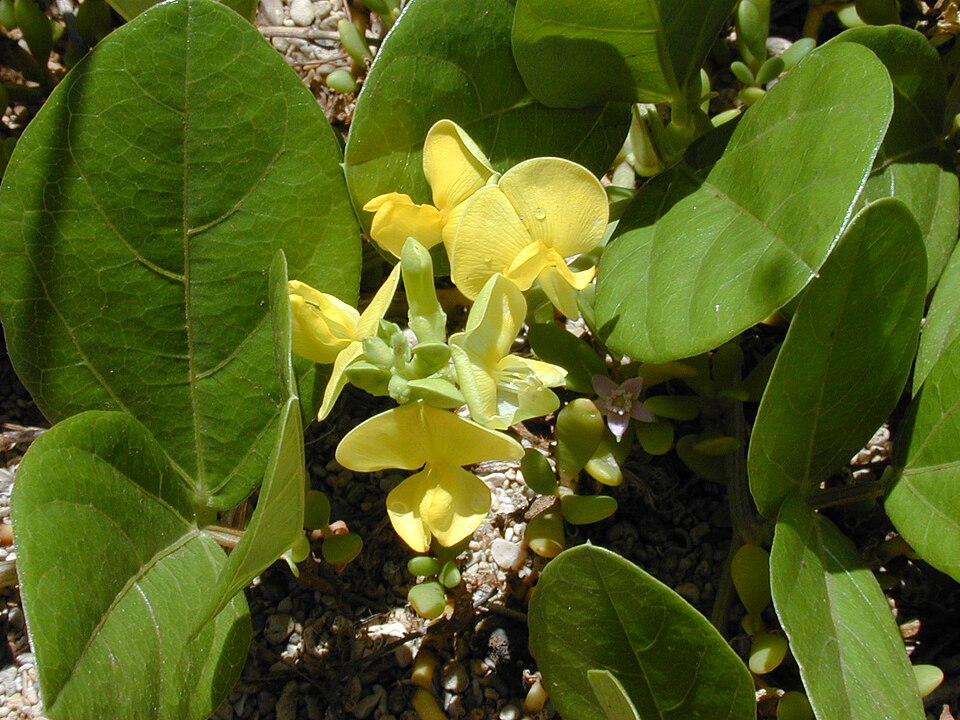
Forest & Kim Starr (www.hear.org)
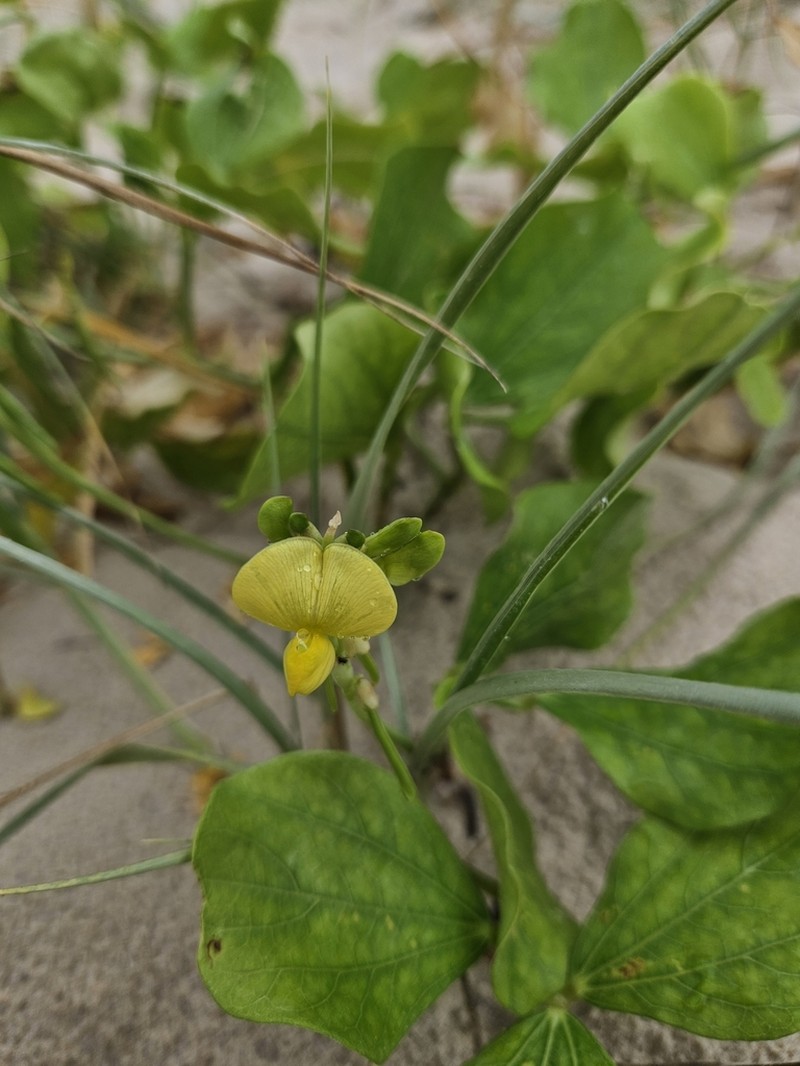
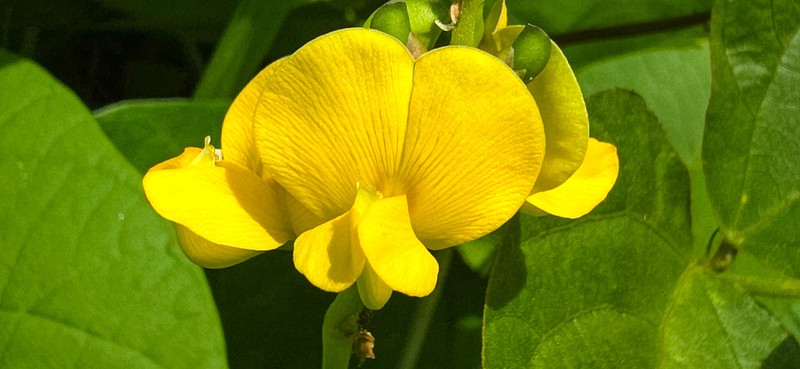
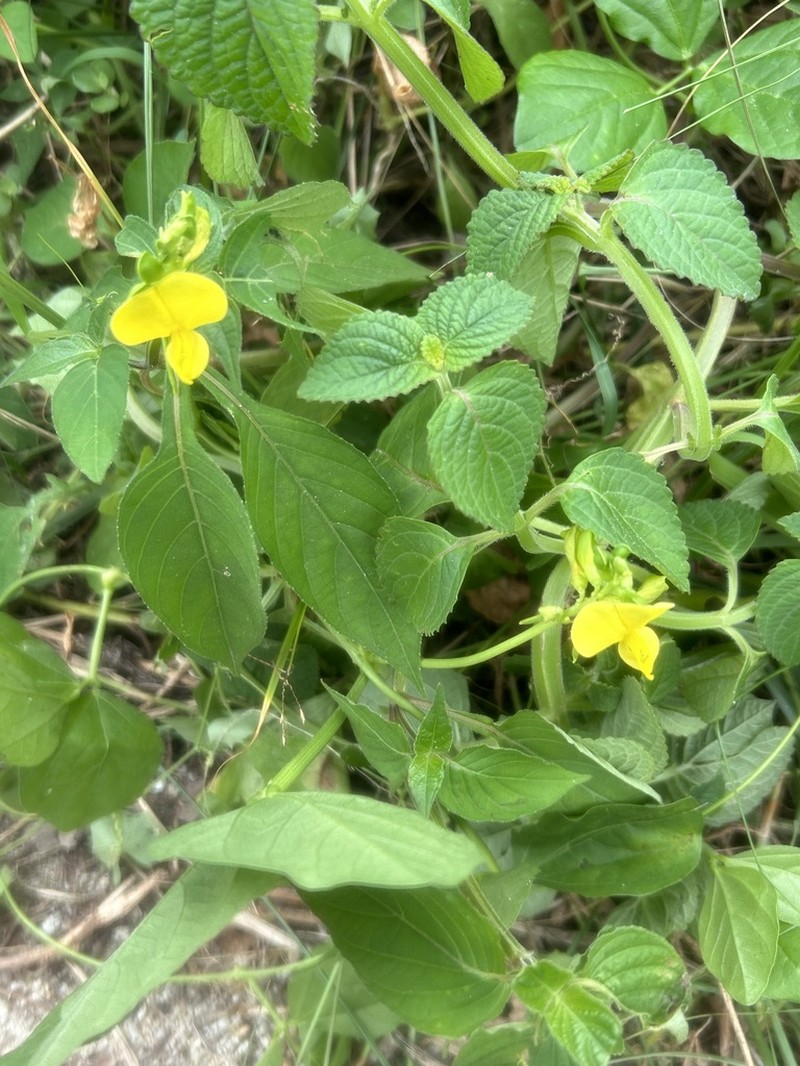
Taxonomy
- Division:
- Magnoliophyta | - Flowering plants
- Family:
- Fabaceae
- Genus:
- Vigna
- Species:
- Vigna marina
- USDA Symbol:
- VIMA3
Growth Characteristics
- Life Cycle:
- Perennial
- Growth Habit:
- Forb/herb , Vine
- Height:
- 60 cm
- Light Requirements:
- Full Sun
- Drought Tolerance:
- High
- Bloom Months:
- jun,jul,aug,sep
- Bloom Colors:
- yellow
Wildlife Benefits
- Butterflies & Moths:
- ★★☆☆☆ Documented Lepidoptera association (GBIF)
Keystone Species Ranking
- Caterpillar Keystone:
- ★★★☆☆ Butterfly & moth species supported by this genus (NWF)
Garden & Ecology Notes
- Wildlife Value:
- birds, butterflies
- Salt Tolerant:
- Yes
Soil Requirements
- Soil Type:
- sandy, nutrient-poor, well-drained soil
- pH:
- 6.0 - 7.5 (slightly acidic to neutral)
- Drainage:
- excellent drainage required
- Moisture:
- dry to moderate
- Notes:
- commonly found in coastal areas and dunes
Propagation & Germination
- Scarification:
- Seed coat scarification required before sowing
- Germination Time:
- 7–21 days
- Notes:
- Seeds benefit from scarification (nicking or hot water treatment) to break hard seed coat.