
American Chestnut
Castanea dentata
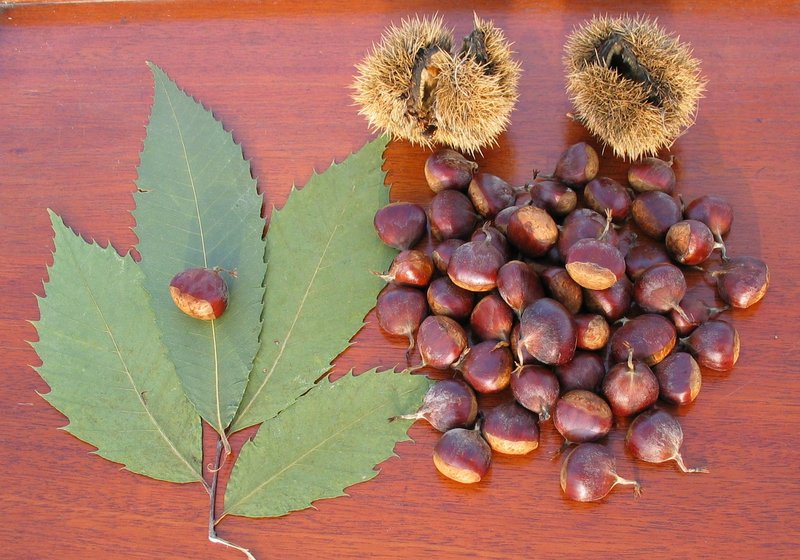
The original uploader was Peatcher at German Wikipedia.
Taxonomy
- Division:
- Magnoliophyta | - Flowering plants
- Family:
- Fagaceae
- Genus:
- Castanea
- Species:
- Castanea dentata
Growth Characteristics
- Life Cycle:
- Perennial
- Growth Habit:
- Tree
- Height:
- More than 40 ft
- Light Requirements:
- Full Sun, Part Shade, Shade
- Drought Tolerance:
- Medium
- Bloom Months:
- jun, jul
- Bloom Colors:
- White
- Food Forest:
- Plant contains edible parts
Native Range
United States: Alabama, Connecticut, District of Columbia, Delaware, Florida, Georgia, Iowa, Illinois, Indiana, Kentucky, Louisiana, Massachusetts, Maryland, Maine, Michigan, Missouri, Mississippi, North Carolina, New Hampshire, New Jersey, New York, Ohio, Pennsylvania, Rhode Island, South Carolina, Tennessee, Virginia, Vermont, Wisconsin, West Virginia, Canada: Ontario
Keystone Species Ranking
- Caterpillar Keystone:
- ★☆☆☆☆ Based on number of butterfly and moth species using this genus as host plant (Source: National Wildlife Federation)
Host Plant for Caterpillars
Acronicta lithospila, Alcoholic Plagodis (Plagodis alcoolaria), American Dagger Moth (Acronicta americana), Banded Tussock Moth (Halysidota tessellaris), black-dotted leaftier moth (Psilocorsis cryptolechiella), Brown-tail moth (Euproctis chrysorrhoea), California oakworm (Phryganidia californica), Cameraria bethunella, Cameraria castaneaeella, Chain-lined geometer moth (Cingilia catenaria), Chestnut clearwing (Synanthedon castaneae), Chinquapin leafminer moth (Dyseriocrania griseocapitella), Cinnamon Tussock Moth (Dasychira cinnamomea), Coleophora leucochrysella, Colocasia propinquilinea, common tan wave (Pleuroprucha insulsaria), contracted datana (Datana contracta), Copper Underwing (Amphipyra pyramidoides), Curve-toothed geometer (Eutrapela clemataria), Dead-wood Borer Moth (Scolecocampa liburna), Dichomeris ligulella, Dichomeris ventrella (Dichomeris ventrella), elm spanworm moth (Ennomos subsignaria), fall cankerworm (Alsophila pometaria), Fall webworm (Hyphantria cunea), false prominent (Schizura leptinoides), friendly probole (Probole amicaria), Frosted Dagger Moth (Acronicta hastulifera), Gypsy moth (Lymantria dispar), Hickory Tussock Moth (Lophocampa caryae), Horned Spanworm (Nematocampa resistaria), Imperial Moth (Eacles imperialis), Limbata angle moth (Nematocampa limbata), Luna moth (Actias luna), Maple spanworm (Ennomos magnaria), Melissopus latiferreanus, Mottled Prominent (Macrurocampa marthesia), Nason's slug moth (Natada nasoni), oak leaftier moth (Psilocorsis quercicella), Obtuse Euchlaena (Euchlaena obtusaria), Old Wife Underwing (Catocala palaeogama), orange besma (Besma endropiaria), Orange-tipped oakworm moth (Anisota senatoria), ovate dagger moth (Acronicta ovata), Peppered Moth (Biston betularia), Phyllonorycter kearfottella, Phyllonorycter restrictella, Pink-striped oakworm moth (Anisota virginiensis), Polyphemus moth (Antheraea polyphemus), red oak clearwing borer (Paranthrene simulans), Sabulodes caberata, Saddled Prominent (Heterocampa guttivitta), sharp-lined tussock moth (Dasychira dorsipennata), southern tussock moth (Dasychira meridionalis), spotted oakworm moth (Anisota stigma), Spring cankerworm (Paleacrita vernata), Stigmella castaneaefoliella, Stigmella latifasciella, Swammerdamia caesiella, tentoriferella (Machimia tentoriferella), Tetracis crocallata, White-headed Symmerista (Symmerista albifrons), White-lined leafroller (Amorbia humerosana), White-marked Tussock Moth (Orgyia leucostigma), witch hazel dagger moth (Acronicta hamamelis), Yellownecked caterpillar (Datana ministra), Banded Hairstreak (Satyrium calanus), hickory hairstreak (Satyrium caryaevorum), Striped Hairstreak (Satyrium liparops)
Reported Fauna Sightings
Bees: American bumble bee (Bombus pensylvanicus), American bumble bee (Bombus pensylvanicus), Bombus bimaculatus (Bombus bimaculatus), Bombus bimaculatus (Bombus bimaculatus), Bombus griseocollis (Bombus griseocollis), Bombus griseocollis (Bombus griseocollis), Bombus impatiens (Bombus impatiens), Bombus impatiens (Bombus impatiens), Bombus terricola (Bombus terricola), Bombus terricola (Bombus terricola)
Soil Requirements
- Soil Type:
- rich, well-drained loamy soil
- pH:
- 4.5 - 6.5 (acidic to slightly acidic)
- Drainage:
- excellent drainage required
- Moisture:
- consistently moist
- Notes:
- prefers deep soils with good fertility
Germination Information
Pre-treatment: Seed is floated in water to determine viability. Seed that floats is discarded, while the seed that sinks is retained for planting.
Source: npn.rngr.net