
Chinquapin
Castanea pumila
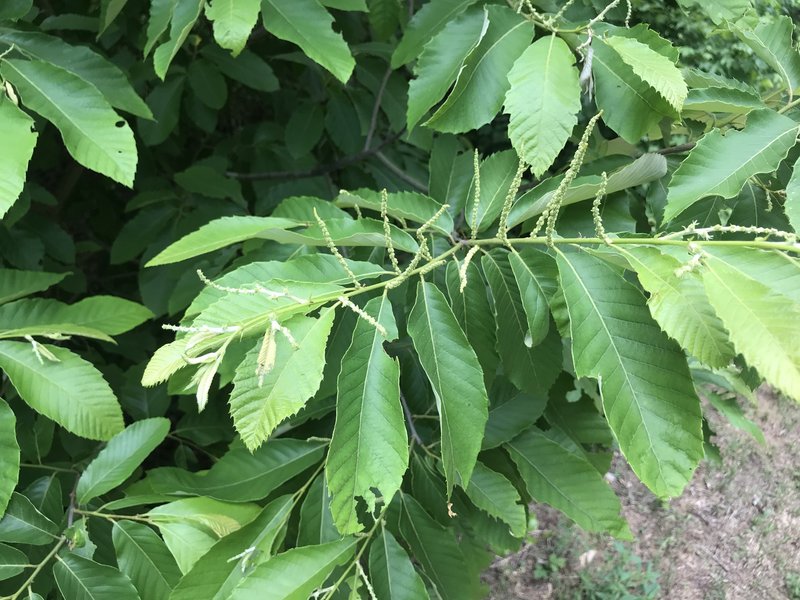
Michael Ellis
Taxonomy
- Division:
- Magnoliophyta | - Flowering plants
- Family:
- Fagaceae
- Genus:
- Castanea
- Species:
- Castanea pumila
Growth Characteristics
- Life Cycle:
- Perennial
- Growth Habit:
- Shrub , Tree
- Height:
- More than 40 ft
- Light Requirements:
- Part Shade
- Drought Tolerance:
- Medium
- Bloom Months:
- mar, apr, may, jun
- Bloom Colors:
- White
- Landscaping Shrub:
- Yes
Native Range
United States: Alabama, Arkansas, District of Columbia, Delaware, Florida, Georgia, Indiana, Kentucky, Louisiana, Massachusetts, Maryland, Missouri, Mississippi, North Carolina, New Jersey, New York, Ohio, Oklahoma, Pennsylvania, South Carolina, Tennessee, Texas, Virginia, West Virginia
Keystone Species Ranking
- Caterpillar Keystone:
- ★☆☆☆☆ Based on number of butterfly and moth species using this genus as host plant (Source: National Wildlife Federation)
Host Plant for Caterpillars
Reported Fauna Sightings
Soil Requirements
- Soil Type:
- sandy, well-drained, acidic soil
- pH:
- 4.5 - 6.5 (acidic to slightly acidic)
- Drainage:
- excellent drainage required
- Moisture:
- dry to moderate
- Notes:
- prefers nutrient-poor conditions typical of native habitats
Germination Information
Pre-treatment: Seed may be floated in water to help determine viability. Seed that floats is normally poorly filled and has low or no viability. Floaters are discarded, while the seed that sinks is retained for planting.
Establishment: Seeds are collected from established seed orchards in the fall immediately after the burrs (spiny husks) have split open to expose the nuts. Chinkapin is native to the eastern and southern United States in USDA plant hardiness zones 6 to 10. It is tolerant of high heat and acid soils (pH 5.5-6.0), but is not tolerant of coastal salt spray or shade.
Source: npn.rngr.net