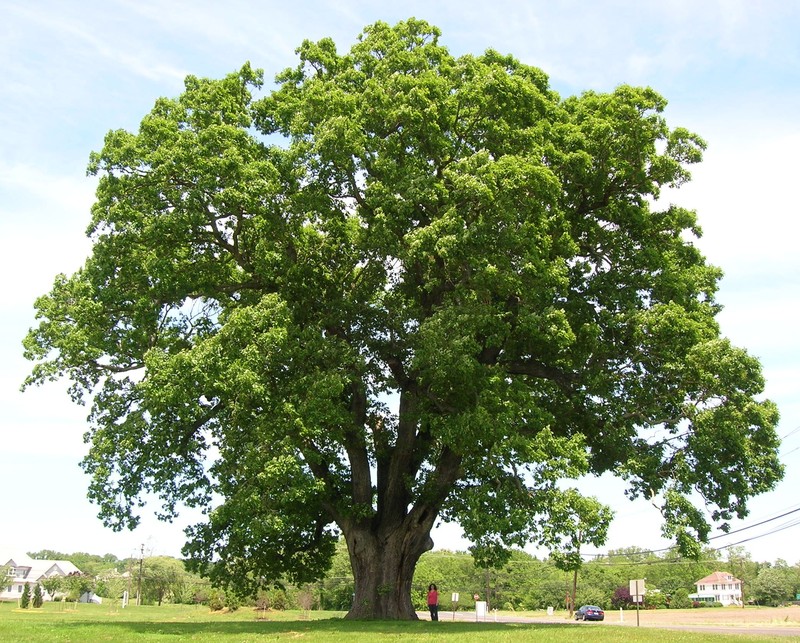
Taxonomy
- Division:
- Magnoliophyta | - Flowering plants
- Family:
- Fagaceae
- Genus:
- Quercus
- Species:
- Quercus alba
Growth Characteristics
- Life Cycle:
- Perennial
- Growth Habit:
- Tree
- Height:
- More than 40 ft
- Light Requirements:
- Full Sun, Part Shade, Shade
- Drought Tolerance:
- Medium
- Bloom Months:
- mar, apr, may
- Bloom Colors:
- Red, Yellow, Green, Brown
Native Range
United States: Alabama, Arkansas, Connecticut, District of Columbia, Delaware, Florida, Georgia, Iowa, Illinois, Indiana, Kansas, Kentucky, Louisiana, Massachusetts, Maryland, Maine, Michigan, Minnesota, Missouri, Mississippi, North Carolina, Nebraska, New Hampshire, New Jersey, New York, Ohio, Oklahoma, Pennsylvania, Rhode Island, South Carolina, Tennessee, Texas, Virginia, Vermont, Wisconsin, West Virginia, Canada: Ontario, Quebec
Keystone Species Ranking
- Caterpillar Keystone:
- ★☆☆☆☆
Based on number of butterfly and moth species using this genus as host plant (Source: National Wildlife Federation)
Host Plant for Caterpillars
Acrocercops albinatella, Aholibah Underwing (Catocala aholibah), almond bud moth (Acrobasis minimella), American Dagger Moth (Acronicta americana), American lappet moth (Phyllodesma americana), angled sallow (Perigonica angulata), Antaeotricha osseella, Atlantic arches (Lacanobia atlantica), Automeris zephyria, Banded Tussock Moth (Halysidota tessellaris), Bethune's Pinion (Lithophane bethunei), black-patched graylet moth (Hyperstrotia secta), Brown-tail moth (Euproctis chrysorrhoea), Bucculatrix luteella, Bucculatrix ochrisuffusa, California oakworm (Phryganidia californica), Cameraria cincinnatiella, Cameraria obstrictella, Cameraria tubiferella, Cecropia moth (Hyalophora cecropia), Cecropis moth (Automeris cecrops), Chionodes formosella, Coleophora querciella, Confused Morrisonia (Morrisonia confusa), Copper Underwing (Amphipyra pyramidoides), Cosmia calami, Curve-lined looper (Lambdina fervidaria), Curve-toothed geometer (Eutrapela clemataria), Cyclophora dataria, Darwin's emerald (Nemoria darwiniata), Dichomeris ligulella, Distinct Lichen Moth (Achatia distincta), Eastern Pinion (Lithophane contenta), Eastern Tent Caterpillar (Malacosoma americana), Egira dolosa, Egira februalis, elm spanworm moth (Ennomos subsignaria), Eriocraniella mediabulla, Euxoa scandens, Eversmann's rustic (Actebia fennica), fall cankerworm (Alsophila pometaria), Fall webworm (Hyphantria cunea), Feralia februalis, Filbertworm (Cydia latiferreana), Finlayson's oakworm moth (Anisota finlaysoni), Forest Tent Caterpillar (Malacosoma disstria), funeral dagger moth (Acronicta funeralis), Girlfriend Underwing (Catocala amica), Greater Red Dart (Abagrotis alternata), Gypsy moth (Lymantria dispar), hesitant dagger moth (Acronicta haesitata), hibiscus Quaker (Orthosia hibisci), Hickory Tussock Moth (Lophocampa caryae), Himella fidelis, Homohadena badistriga, Hyperaeschra georgica, Ilia Underwing (Catocala ilia), Imperial Moth (Eacles imperialis), Io moth (Automeris io), Lace-winged zale (Zale minerea), Leopard moth (Zeuzera pyrina), Linden looper (Erannis tiliaria), Luna moth (Actias luna), maple leaf blotch miner (Cameraria platanoidiella), maple webworm moth (Pococera asperatella), maple-basswood leafroller (Sparganothis pettitana), marbled dagger moth (Acronicta marmorata), Morrisonia latex, Mournful Thorn (Lambdina fiscellaria), Nacophora quernaria, Norman's Quaker (Crocigrapha normani), Oak besma (Besma quercivoraria), oak leaf blotch miner (Cameraria hamadryadella), oak leaf skeletonizer (Bucculatrix ainsliella), oak leafroller moth (Argyrotaenia quercifoliana), Obliquebanded leafroller (Choristoneura rosaceana), Olethreutes inornatana, One-spotted variant moth (Hypagyrtis unipunctata), orange besma (Besma endropiaria), Orange-tipped oakworm moth (Anisota senatoria), Orthosia pacifica, Orthosia revicta, Pacific tent caterpillar (Malacosoma constricta), Phyllonorycter aeriferella, Phyllonorycter albanotella, Phyllonorycter argentifimbriella, Phyllonorycter basistrigella, Phyllonorycter fitchella, Phyllonorycter hagenii, Phyllonorycter lucidicostella, Phyllonorycter quercialbella, Pink-striped oakworm moth (Anisota virginiensis), Polia detracta, Polyphemus moth (Antheraea polyphemus), Psaphida styracis, Psaphida thaxterianus, Pseudanthracia coracias, Pseudoglaea olivata, red oak clearwing borer (Paranthrene simulans), Red-humped caterpillar moth (Schizura concinna), red-humped oakworm moth (Symmerista canicosta), Red-lined Panopoda (Panopoda rufimargo), Robinson's underwing (Catocala robinsonii), Rusty Tussock Moth (Orgyia antiqua), Scalloped sack-bearer (Lacosoma chiridota), Schlaeger's Fruitworm Moth (Antaeotricha schlaegeri), spotted oakworm moth (Anisota stigma), Spotted Tussock Moth (Lophocampa maculata), Spring cankerworm (Paleacrita vernata), Stigmella quercipulchella, Stigmella sclerostylota, three-lined leafroller (Pandemis limitata), Tischeria badiiella, Tischeria fuscomarginella, Unicorn caterpillar moth (Schizura unicornis), Variable Oakleaf Caterpillar Moth (Lochmaeus manteo), Variable Tussock Moth (Dasychira vagans), Variegated cutworm (Peridroma saucia), Verrill's underwing (Catocala verrilliana), Waved Sphinx (Ceratomia undulosa), White-blotched Heterocampa (Heterocampa umbrata), White-dotted Prominent (Nadata gibbosa), white-fringed emerald (Nemoria mimosaria), White-headed Symmerista (Symmerista albifrons), White-marked Tussock Moth (Orgyia leucostigma), white-streaked prominent (Oligocentria lignicolor), yellow-based tussock moth (Dasychira basiflava), Yellownecked caterpillar (Datana ministra), Ypsolopha cervella, Zale aeruginosa, Banded Hairstreak (Satyrium calanus), Early Hairstreak (Erora laeta), Edwards' hairstreak (Satyrium edwardsii), Fixsenia ontario, Juvenal's Duskywing (Erynnis juvenalis)
Reported Fauna Sightings
Butterflies:Azure sp. (Celastrina Tutt), Black Swallowtail (Papilio polyxenes), (Pieris rapae), (Pieris rapae), Cloudless Sulphur (Phoebis sennae), Cloudless Sulphur (Phoebis sennae), Eastern Comma (Polygonia comma), Eastern Comma (Polygonia comma), Eastern Comma (Polygonia comma), Eastern Tiger Swallowtail (Pterourus glaucus), Eastern Tiger Swallowtail (Pterourus glaucus), Little Wood Satyr (Megisto cymela), Little Wood Satyr (Megisto cymela), Question Mark (Polygonia interrogationis), Red Admiral (Vanessa atalanta), Silver-spotted Skipper (Epargyreus clarus), Silver-spotted Skipper (Epargyreus clarus), Spicebush Swallowtail (Pterourus troilus), Tawny Emperor (Asterocampa clyton), Zabulon Skipper (Poanes zabulon), Zabulon Skipper (Poanes zabulon)
Soil Requirements
- Soil Type:
- rich, well-drained loamy soil
- pH:
- 5.5 - 7.0 (slightly acidic to neutral)
- Drainage:
- excellent drainage required
- Moisture:
- dry to moderate
- Notes:
- prefers deep soils with good aeration
Germination Information
Pre-treatment: Acorns are sown in the fall immediately after processing. Seeds are also stratified and germinate at 18/10 C. In some cases, acorns are fall sown with a mechanical seeder.
Establishment: Seeds are collected from various sources, including local people who collect within a 50 mile radius of the nursery and wild collected during fall months. Seeds are kept separated according to site, elevation and source. White oak is found throughout eastern North America in various habitats, including upland woods, moist soils, and temperate deciduous forests.
Source: npn.rngr.net