
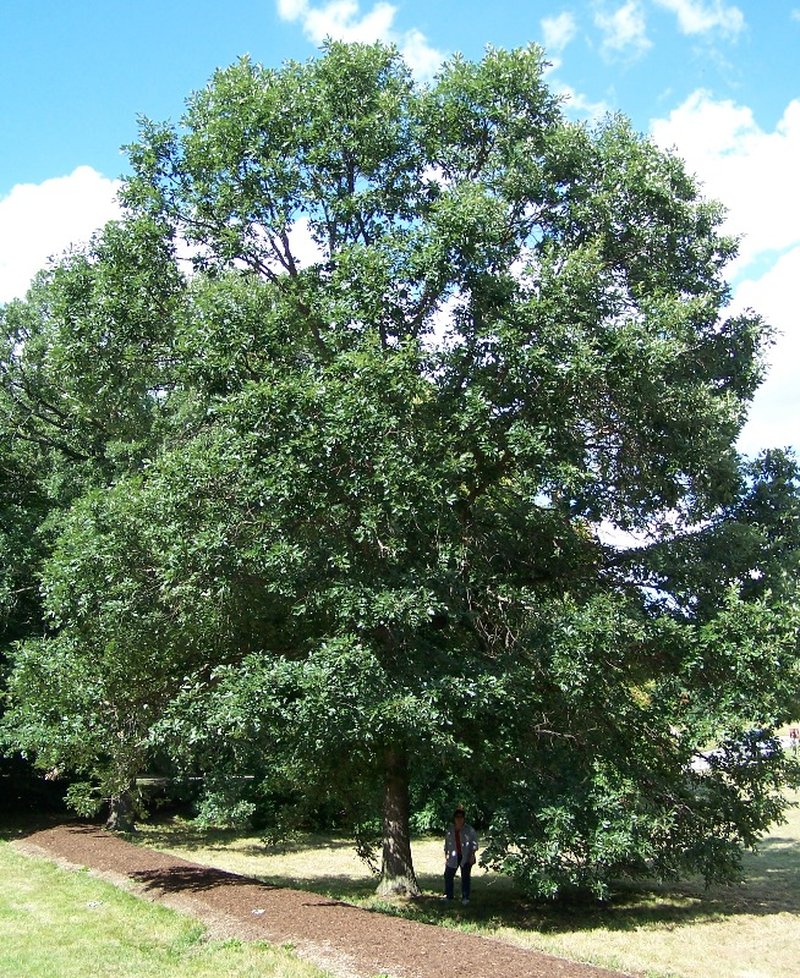
Swamp White Oak
Quercus bicolor
Taxonomy
- Division:
- Magnoliophyta | - Flowering plants
- Family:
- Fagaceae
- Genus:
- Quercus
- Species:
- Quercus bicolor
Growth Characteristics
- Life Cycle:
- Perennial
- Growth Habit:
- Tree
- Height:
- More than 40 ft
- Light Requirements:
- Part Shade
- Drought Tolerance:
- High
- Bloom Months:
- mar, apr, may
- Bloom Colors:
- Red, Yellow, Green
Native Range
United States: Alabama, Connecticut, District of Columbia, Delaware, Iowa, Illinois, Indiana, Kentucky, Massachusetts, Maryland, Maine, Michigan, Minnesota, Missouri, Mississippi, North Carolina, New Hampshire, New Jersey, New York, Ohio, Pennsylvania, Rhode Island, South Carolina, Tennessee, Virginia, Vermont, Wisconsin, West Virginia, Canada: Nova Scotia, Ontario, Quebec
Keystone Species Ranking
- Caterpillar Keystone:
- ★☆☆☆☆ Based on number of butterfly and moth species using this genus as host plant (Source: National Wildlife Federation)
Host Plant for Caterpillars
Soil Requirements
- Soil Type:
- rich, moist, well-drained loamy soil
- pH:
- 5.0 - 7.0 (slightly acidic to neutral)
- Drainage:
- tolerates poor drainage
- Moisture:
- consistently moist
- Notes:
- prefers lowland areas with periodic flooding
Germination Information
Pre-treatment: Seeds are sown in late November with a mechanical seeder or can be planted immediately after collection as acorns of the white group have little or no dormancy, and will germinate almost immediately after falling.
Establishment: Seeds are collected from local people who collect within a 50 mile radius of the nursery or collected in Chickasaw National Recreation Area, Sulphur, Oklahoma. Seeds are wild collected during fall months and are kept separated according to site, elevation and source.
Source: npn.rngr.net