
Canyon Live Oak
Quercus chrysolepis
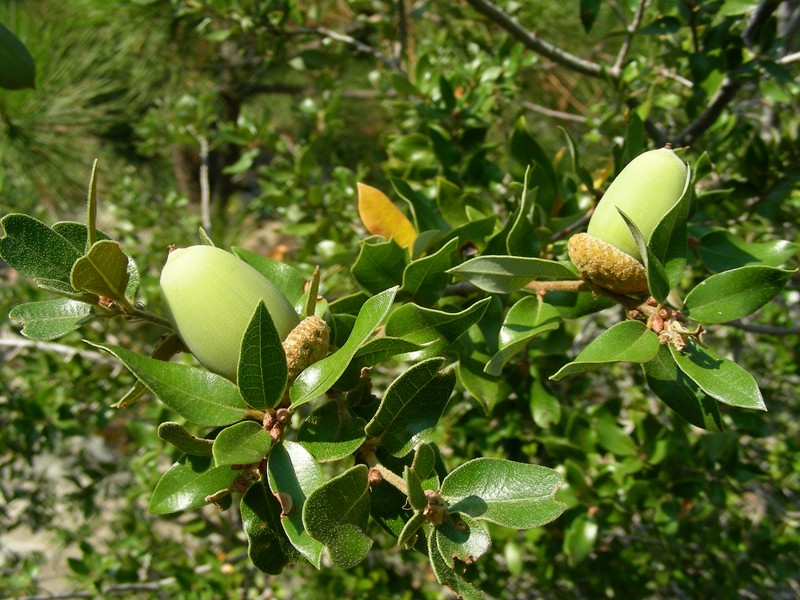
Taxonomy
- Division:
- Magnoliophyta | - Flowering plants
- Family:
- Fagaceae
- Genus:
- Quercus
- Species:
- Quercus chrysolepis
Growth Characteristics
- Life Cycle:
- Perennial
- Growth Habit:
- Shrub , Tree
- Height:
- More than 40 ft
- Light Requirements:
- Full Sun
- Drought Tolerance:
- High
- Bloom Months:
- mar, apr, may
- Bloom Colors:
- Yellow
- Evergreen Shrub:
- Yes
Native Range
United States: Arizona, California, New Mexico, Nevada, Oregon
Keystone Species Ranking
- Caterpillar Keystone:
- ★☆☆☆☆ Based on number of butterfly and moth species using this genus as host plant (Source: National Wildlife Federation)
Host Plant for Caterpillars
Acrocercops sp., Buck Moth (Hemileuca maia), California oakworm (Phryganidia californica), Cameraria conglomeratella, Cameraria diabloensis, Cameraria leucothorax, Cameraria shenaniganensis, Decodes montanus, Dicogaster coronada, Distinct Tolype (Tolype distincta?), Epinotia emarginana, Eriocraniella falcata, Evippe sp., Hemihyalea edwardsii, Henricus sp., indiscreet cissusa moth (Cissusa indiscreta), McDunnough's underwing (Catocala mcdunnoughi), Neocrania bifasciata, Orgyia cana (Orgyia cana), Pseudocopivaleria anaverta, Rectiostoma fernaldella, Sicya pergilvaria, Stilbosis dulcedo, Telphusa sedulitella, Tolype sp., Western tent caterpillar (Malacosoma californica), Western tussock moth (Orgyia vetusta), Bredow's sister (Adelpha bredowii), Golden Hairstreak (Habrodais grunus), Western Tiger Swallowtail (Papilio rutulus)
Soil Requirements
- Soil Type:
- rocky, well-drained loamy soil
- pH:
- 5.5 - 7.5 (slightly acidic to neutral)
- Drainage:
- excellent drainage required
- Moisture:
- dry to moderate
- Notes:
- adapted to rocky slopes and canyons
Germination Information
Pre-treatment: Seeds are placed in cold moist stratification for 17 to 46 days or soaked in fresh water overnight, rinsed in a 5% bleach solution for 1 minute, then placed in a plastic freezer bag with an equal amount of dry perlite and kept in refrigerator at 15C.
Establishment: Seeds are collected between September 1st and December 15th. Mature acorns are brown and are collected when the acorn base turns brown and is easily removed from the cup. The plant is found in canyons and on moist slopes, below 6,500 feet elevation; from Oregon south to Lower California and east to New Mexico.
Source: npn.rngr.net