
Emory Oak
Quercus emoryi
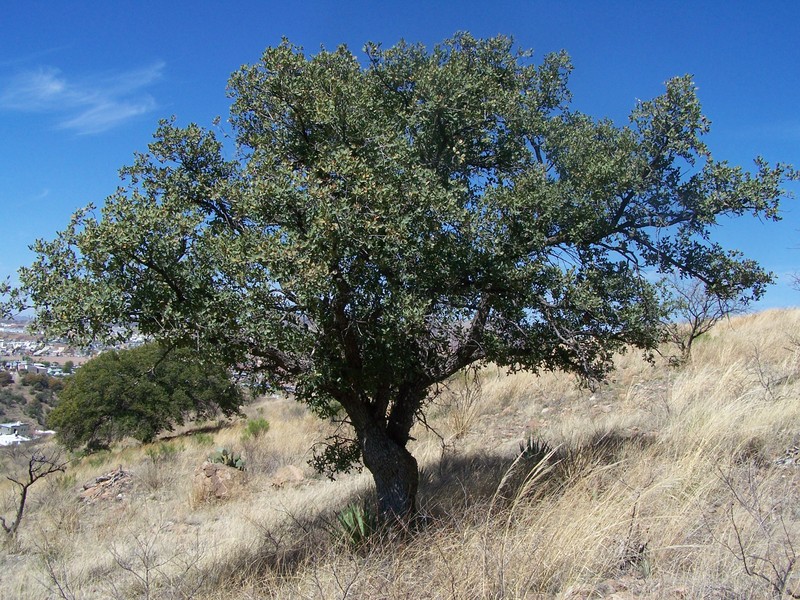
Taxonomy
- Division:
- Magnoliophyta | - Flowering plants
- Family:
- Fagaceae
- Genus:
- Quercus
- Species:
- Quercus emoryi
Growth Characteristics
- Life Cycle:
- Perennial
- Growth Habit:
- Shrub , Tree
- Height:
- More than 40 ft
- Light Requirements:
- Full Sun, Part Shade
- Drought Tolerance:
- Medium
- Bloom Months:
- mar, apr, may
- Bloom Colors:
- Yellow
- Evergreen Shrub:
- Yes
Native Range
United States: Arizona, New Mexico, Texas
Keystone Species Ranking
- Caterpillar Keystone:
- ★☆☆☆☆ Based on number of butterfly and moth species using this genus as host plant (Source: National Wildlife Federation)
Host Plant for Caterpillars
Antheraea oculea, Arizona emerald (Nemoria arizonaria), Cecropis moth (Automeris cecrops), Gloveria howardi, Grote's buck moth (Hemileuca grotei), Io moth (Automeris io), Oslar's eacles (Eacles oslari), Oslar's oakworm moth (Anisota oslari), Pacific tent caterpillar (Malacosoma constricta), red oak clearwing borer (Paranthrene simulans), Stilbosis juvantis, Stone's buckmoth (Hemileuca stonei), Juvenal's Duskywing (Erynnis juvenalis)
Soil Requirements
- Soil Type:
- rocky, well-drained loamy soil
- pH:
- 6.0 - 7.5 (slightly acidic to neutral)
- Drainage:
- excellent drainage required
- Moisture:
- dry to moderate
- Notes:
- Commonly found in mountainous regions with rocky substrates.
Germination Information
Pre-treatment: Germination occurs at 30D/20N C alternating temperature cycle
Establishment: Q. emoryi is found in moist canyons and dry foothills; from western Texas to Arizona and northern Mexico.
Source: npn.rngr.net