
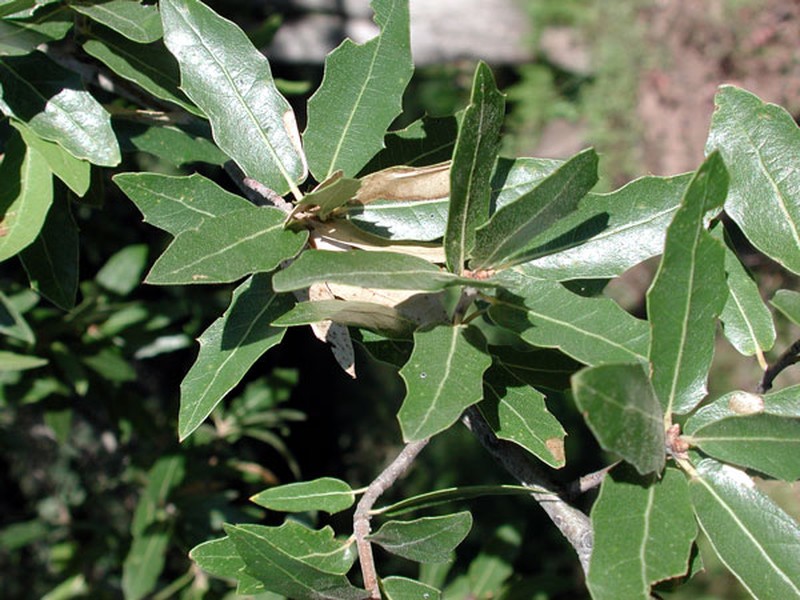
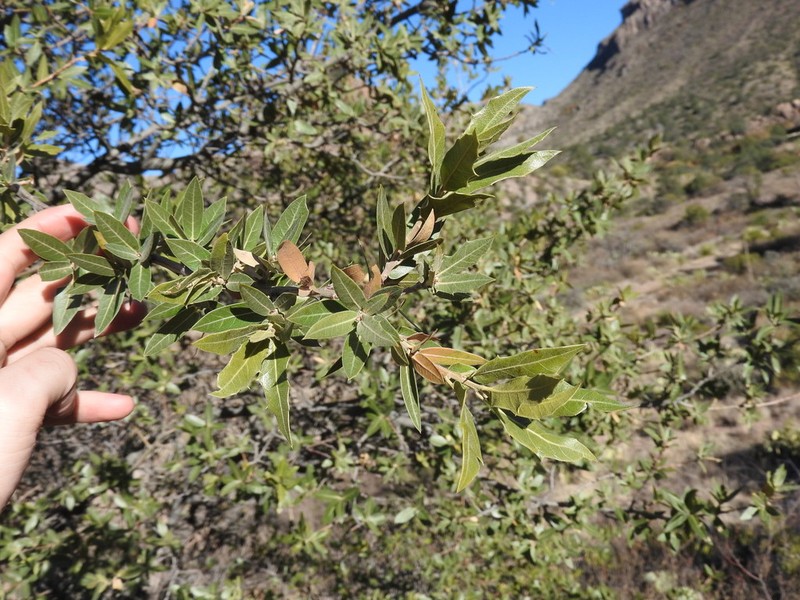
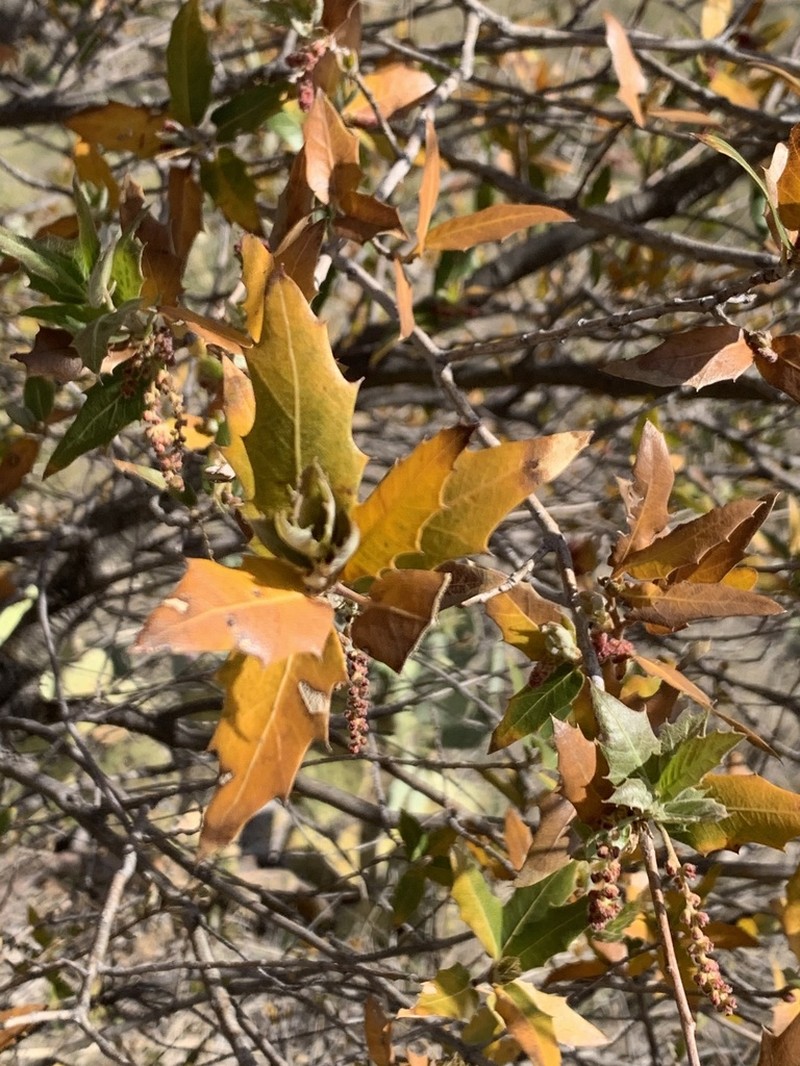
Emory Oak
Quercus emoryi
- Native to:
- Mexico, United States
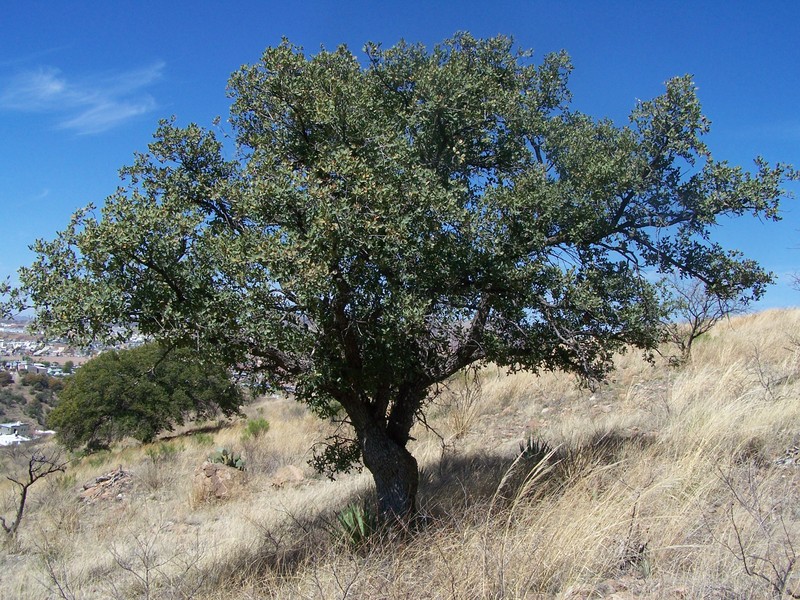
User:pompilid
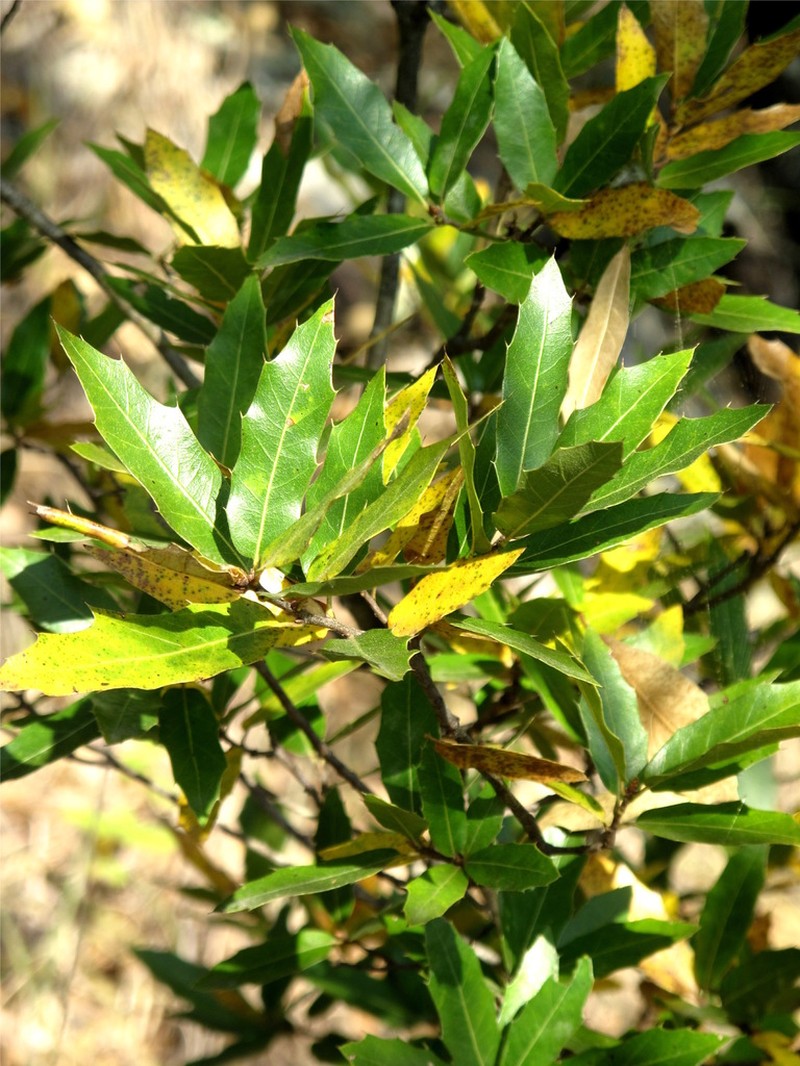
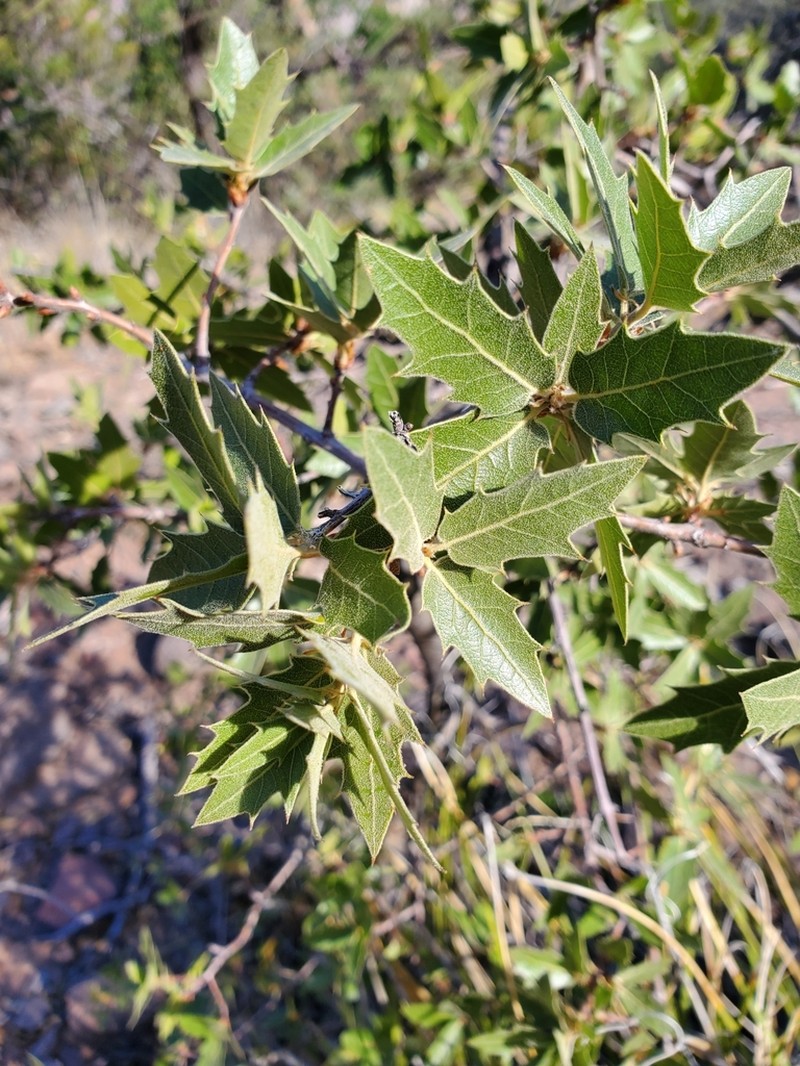
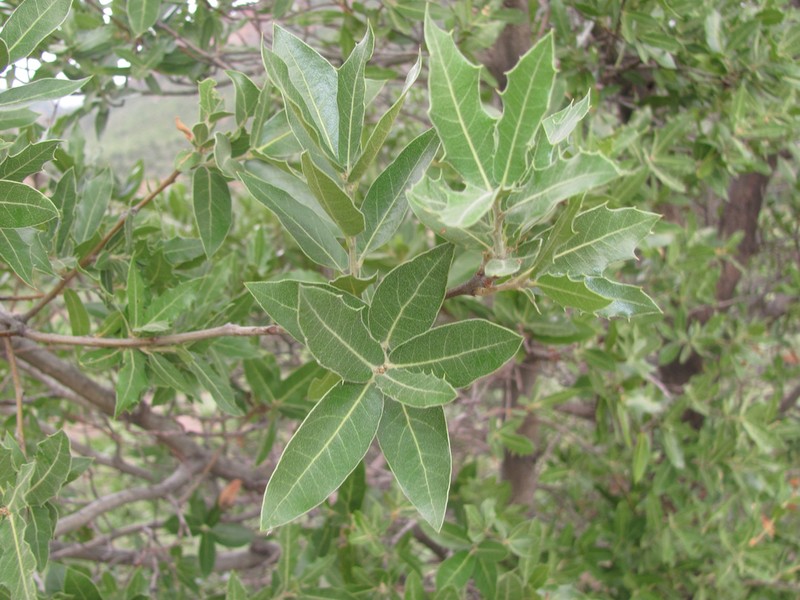
Taxonomy
- Division:
- Magnoliophyta | - Flowering plants
- Family:
- Fagaceae
- Genus:
- Quercus
- Species:
- Quercus emoryi
- USDA Symbol:
- QUEM
Growth Characteristics
- Life Cycle:
- Perennial
- Growth Habit:
- Shrub , Tree
- Height:
- 2000 cm
- Light Requirements:
- Full Sun,Part Shade
- Drought Tolerance:
- High
- Food Forest:
- Contains edible parts
Wildlife Benefits
- Butterflies & Moths:
- ★★★☆☆ Documented Lepidoptera association (GBIF)
- Caterpillars:
- ★★☆☆☆ Recorded caterpillar host plant (HOSTS Database)
- Hummingbirds:
- ★☆☆☆☆ Documented hummingbird visits (GBIF)
Keystone Species Ranking
- Caterpillar Keystone:
- ★★★★★ Butterfly & moth species supported by this genus (NWF)
Host Plant for Caterpillars
Antheraea oculea, Arizona emerald (Nemoria arizonaria), Cecropis moth (Automeris cecrops), Gloveria howardi, Grote's buck moth (Hemileuca grotei), Io moth (Automeris io), Oslar's eacles (Eacles oslari), Oslar's oakworm moth (Anisota oslari), Pacific tent caterpillar (Malacosoma constricta), red oak clearwing borer (Paranthrene simulans), Stilbosis juvantis, Stone's buckmoth (Hemileuca stonei), Juvenal's Duskywing (Erynnis juvenalis)
Reported Fauna Sightings
Hummingbirds: Black-chinned Hummingbird (Archilochus alexandri)
Garden & Ecology Notes
- Wildlife Value:
- birds, mammals
- Fire Ecology:
- Fire adapted — tolerates or benefits from fire
- Fire Notes:
- Resprouts vigorously from root crown after fire; thick bark provides some protection.
Soil Requirements
- Soil Type:
- rocky, well-drained loamy soil
- pH:
- 6.0 - 7.5 (slightly acidic to neutral)
- Drainage:
- excellent drainage required
- Moisture:
- dry to moderate
- Notes:
- Commonly found in mountainous regions with rocky substrates.
Propagation & Germination
- Stratification:
- Cold/moist stratification required — 30–60 days
- Germination Time:
- 30–90 days
- Notes:
- Seeds require cold stratification for 30-60 days to break dormancy; sow in fall or after stratification.
Pre-treatment: Germination occurs at 30D/20N C alternating temperature cycle
Establishment: Q. emoryi is found in moist canyons and dry foothills; from western Texas to Arizona and northern Mexico.
Source: npn.rngr.net
Where to Buy
Nationwide Seller
- Sheffield's Seed (seeds)