
Gambel Oak
Quercus gambelii
- Native to:
- Mexico, United States
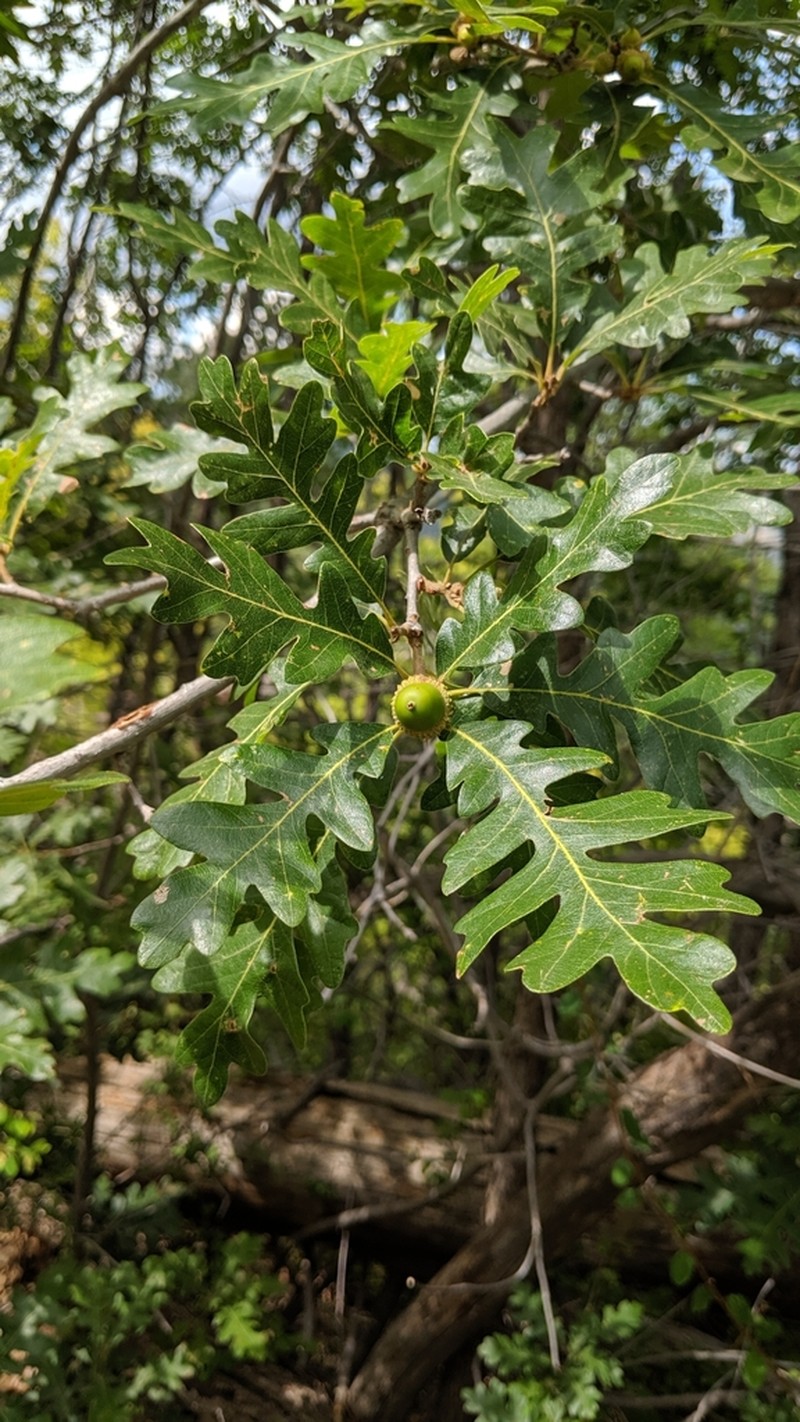
iNaturalist: © torres-grant (iNaturalist #31593425)
Taxonomy
- Division:
- Magnoliophyta | - Flowering plants
- Family:
- Fagaceae
- Genus:
- Quercus
- Species:
- Quercus gambelii
- USDA Symbol:
- QUGA
Growth Characteristics
- Life Cycle:
- Perennial
- Growth Habit:
- Shrub , Tree
- Height:
- 900 cm
- Light Requirements:
- Part Shade
- Drought Tolerance:
- High
Wildlife Benefits
- Bees:
- ★☆☆☆☆ Documented bee visitation (GBIF)
- Butterflies & Moths:
- ★★★★★ Documented Lepidoptera association (GBIF)
- Caterpillars:
- ★★★☆☆ Recorded caterpillar host plant (HOSTS Database)
- Hummingbirds:
- ★☆☆☆☆ Documented hummingbird visits (GBIF)
Keystone Species Ranking
- Caterpillar Keystone:
- ★★★★★ Butterfly & moth species supported by this genus (NWF)
Host Plant for Caterpillars
Automeris randa, Automeris zephyria, Cecropis moth (Automeris cecrops), Dorithia semicirculana, Eriocraniella longifurcula, Glenwood Tolype (Tolype glenwoodii), Grote's buck moth (Hemileuca grotei), Io moth (Automeris io), Nemoria festaria, Oslar's eacles (Eacles oslari), Oslar's oakworm moth (Anisota oslari), Polyphemus moth (Antheraea polyphemus), tiger moth (Malacosoma tigris), Tischeria mediostriata, Western tent caterpillar (Malacosoma californica), Yellowstriped oakworm moth (Anisota peigleri), Ypsolopha cervella, Banded Hairstreak (Satyrium calanus), Fixsenia ontario, Horace's Duskywing (Erynnis horatius), Rocky Mountain Duskywing (Erynnis telemachus)
Reported Fauna Sightings
Hummingbirds: Broad-tailed Hummingbird (Selasphorus platycercus), Calliope Hummingbird (Selasphorus calliope) Butterflies:Colorado hairstreak (Hypaurotis crysalus), Tharsalea arota
Garden & Ecology Notes
- Wildlife Value:
- birds, mammals, butterflies
- Fall Color:
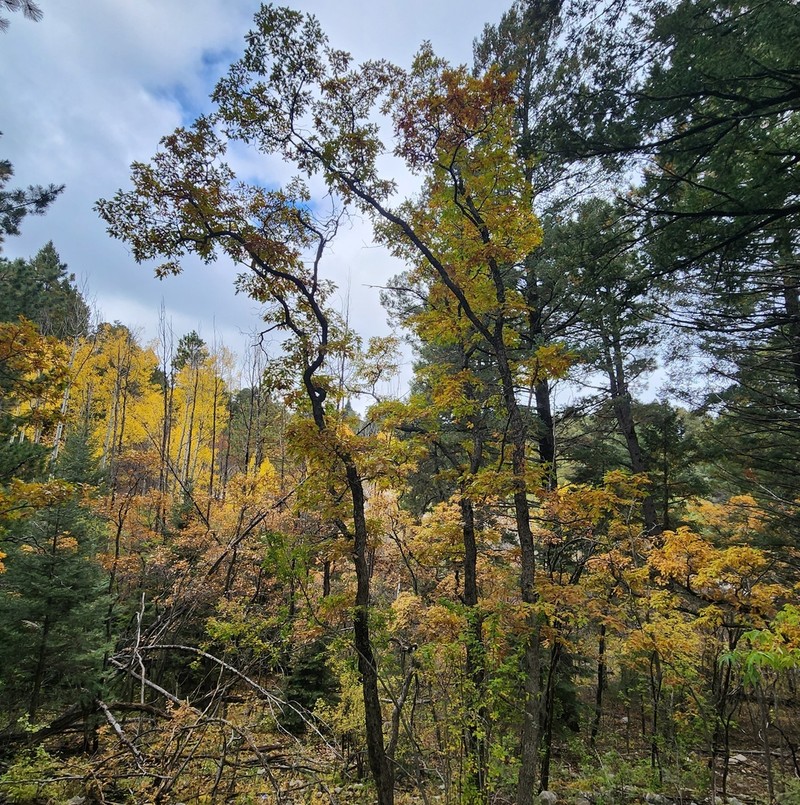
- yellow, orange, red
- Fire Ecology:
- Fire adapted — tolerates or benefits from fire
- Fire Notes:
- Resprouts vigorously from root crown after fire; seedlings establish in post-fire conditions.
Soil Requirements
- Soil Type:
- rocky, well-drained loamy soil
- pH:
- 6.0 - 8.0 (slightly acidic to neutral)
- Drainage:
- excellent drainage required
- Moisture:
- dry to moderate
- Notes:
- often found in mountainous regions
Propagation & Germination
- Stratification:
- Cold/moist stratification required — 30–60 days
- Germination Time:
- 30–90 days
- Notes:
- Seeds require cold stratification for 30-60 days; sow in fall or stratify artificially.
Pre-treatment: Seeds are stratified naturally by planting them in the fall in a thin layer of sand on mulched field beds. Some acorns may require cold to overcome epicotyl dormancy. Cold moist storage immediately after collection may be beneficial.
Establishment: Seeds are wild collected during fall months and are kept separated according to site, elevation and source. Some seeds were collected in Mesa Verde National Park, Colorado and Grand Canyon National Park, Arizona. There is some variation in pre-treatment and establishment protocols.
Source: npn.rngr.net
Where to Buy
Nationwide Seller
- Sheffield's Seed (seeds)