
California Black Oak
Quercus kelloggii
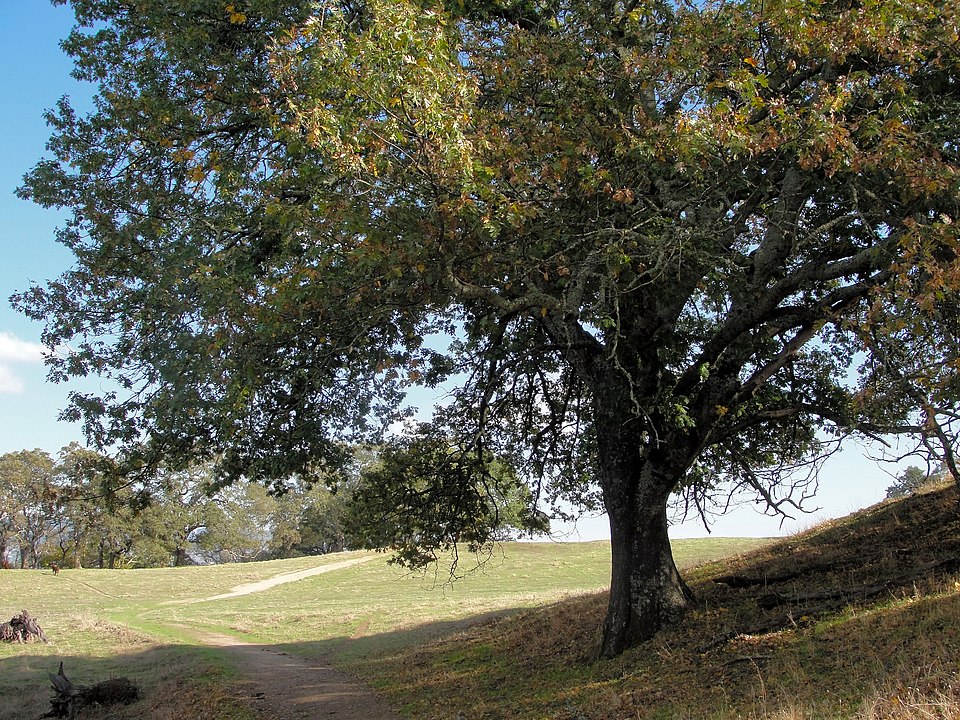
Miguel Vieira from Walnut Creek, CA, USA
Taxonomy
- Division:
- Magnoliophyta | - Flowering plants
- Family:
- Fagaceae
- Genus:
- Quercus
- Species:
- Quercus kelloggii
Growth Characteristics
- Life Cycle:
- Perennial
- Growth Habit:
- Shrub , Tree
- Height:
- More than 40 ft
- Light Requirements:
- Full Sun
- Drought Tolerance:
- Medium
- Bloom Months:
- mar, apr, may
- Bloom Colors:
- Yellow
Native Range
United States: California, Oregon
Keystone Species Ranking
- Caterpillar Keystone:
- ★☆☆☆☆ Based on number of butterfly and moth species using this genus as host plant (Source: National Wildlife Federation)
Host Plant for Caterpillars
California oakworm (Phryganidia californica), Caloptilia sp., Cameraria lobatiella, Cameraria mediodorsella, Cecropis moth (Automeris cecrops), Chionodes chrysopyla, Chionodes occidentella, Chionodes raspyon, Chionodes sp., Chionodes trichostola, Cosmia calami, Decodes fragariana, Epinotia emarginana, Eriocraniella aurosparsella, fruit-tree leafroller (Archips argyrospila), George's pinion (Lithophane georgii), habrosana leafroller moth (Pseudexentera habrosana), Io moth (Automeris io), Orgyia cana (Orgyia cana), Oslar's oakworm moth (Anisota oslari), Pacific tent caterpillar (Malacosoma constricta), Phyllonorycter basistrigella, Polyphemus moth (Antheraea polyphemus), Stigmella variella, Telphusa sedulitella, Tischeria mediostriata, Western tent caterpillar (Malacosoma californica), Western tussock moth (Orgyia vetusta), White-dotted Prominent (Nadata gibbosa), Xenolechia querciphaga
Soil Requirements
- Soil Type:
- well-drained, rocky or sandy loam
- pH:
- 5.0 - 7.0 (slightly acidic to neutral)
- Drainage:
- excellent drainage required
- Moisture:
- dry to moderate
- Notes:
- Commonly found in mountainous regions with poor soil fertility.
Germination Information
Pre-treatment: Seeds are soaked overnight in fresh water, rinsed in a 5% bleach solution for 1 minute, then placed in a plastic freezer bag with an equal amount of perlite and stored in a refrigerator at 15C. If seeds are dry, they are placed into cold running water for 48 hours prior to stratification.
Establishment: Seeds are collected fresh in the fall and stored in cold conditions until stratification. The plumule and leaves do not emerge for 1 to 2 months after sowing. There are some variations in the protocols, particularly in the pre-treatment and establishment phases.
Source: npn.rngr.net