
Chinquapin Oak
Quercus muehlenbergii
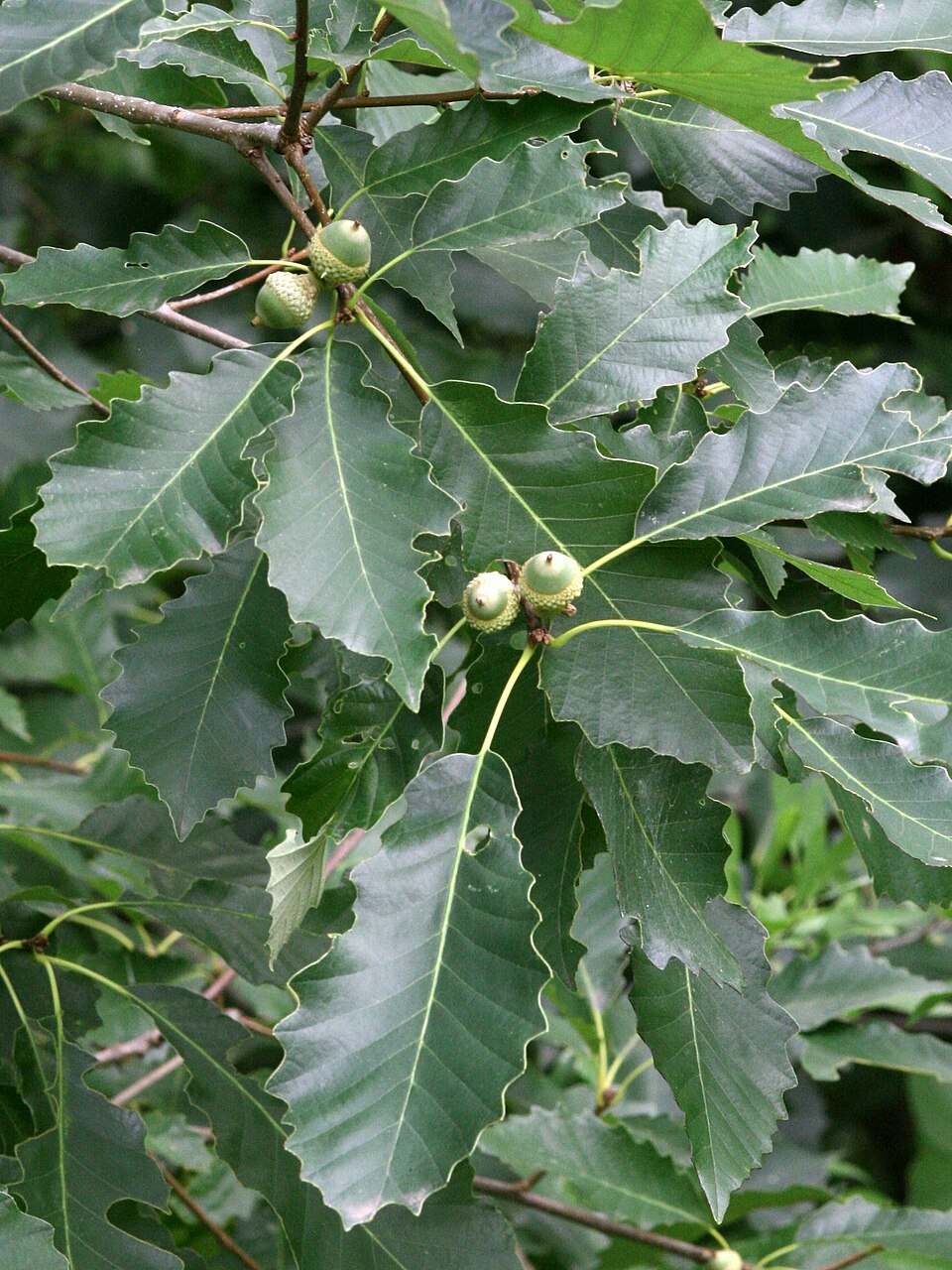
Taxonomy
- Division:
- Magnoliophyta | - Flowering plants
- Family:
- Fagaceae
- Genus:
- Quercus
- Species:
- Quercus muehlenbergii
Growth Characteristics
- Life Cycle:
- Perennial
- Growth Habit:
- Tree
- Height:
- More than 40 ft
- Light Requirements:
- Full Sun, Part Shade
- Bloom Months:
- mar, apr, may
- Bloom Colors:
- Yellow, Green, Brown
Native Range
United States: Alabama, Arkansas, Connecticut, District of Columbia, Florida, Georgia, Iowa, Illinois, Indiana, Kansas, Kentucky, Louisiana, Massachusetts, Maryland, Michigan, Minnesota, Missouri, Mississippi, North Carolina, Nebraska, New Jersey, New Mexico, New York, Ohio, Oklahoma, Pennsylvania, South Carolina, Tennessee, Texas, Virginia, Vermont, Wisconsin, West Virginia, Canada: Ontario
Keystone Species Ranking
- Caterpillar Keystone:
- ★☆☆☆☆ Based on number of butterfly and moth species using this genus as host plant (Source: National Wildlife Federation)
Host Plant for Caterpillars
Soil Requirements
- Soil Type:
- rich, well-drained loamy soil
- pH:
- 6.0 - 8.0 (slightly acidic to alkaline)
- Drainage:
- excellent drainage required
- Moisture:
- dry to moderate
- Notes:
- prefers calcareous soils often found in limestone regions
Germination Information
Pre-treatment: Seed may be floated in water to determine viability. Discard seeds that float and retain those that sink. Acorns can be planted immediately after collection as they have little or no dormancy.
Establishment: Seeds are collected from established natural stands within the confines of Stones River National Battlefield or Chickasaw National Recreation Area. The Chinkapin oak is common throughout the eastern two-thirds of the continental United States with the exception of certain states. No conflicting information found in the protocols.
Source: npn.rngr.net