
Willow Oak
Quercus phellos
- Native to:
- United States, Virgin Islands
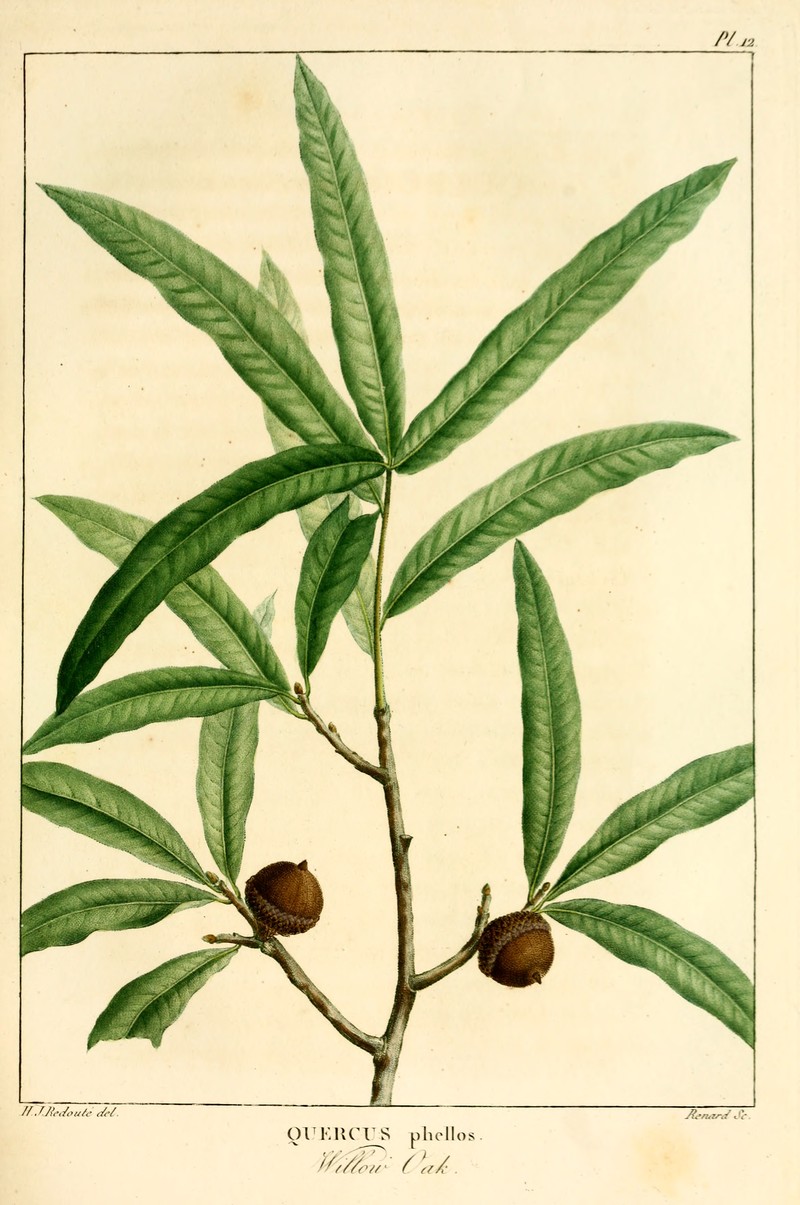
François André Michaux (book author), Henri-Joseph Redouté (illustrator), Renard (engraver)
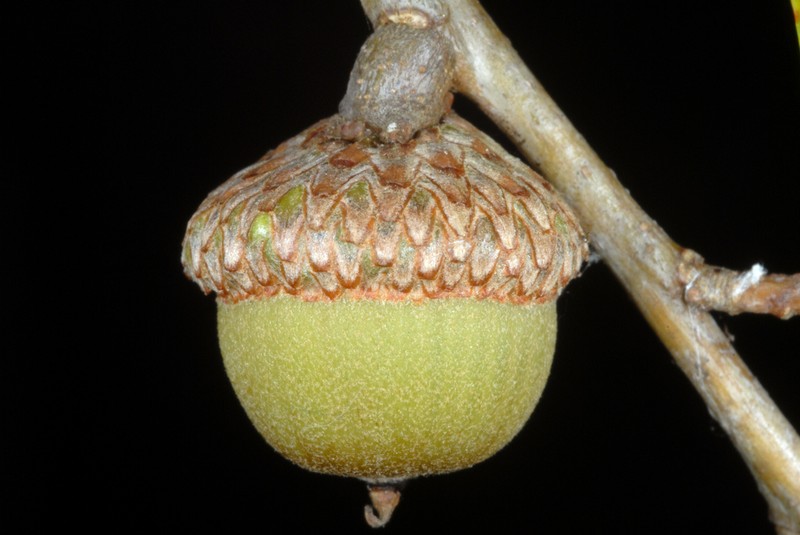
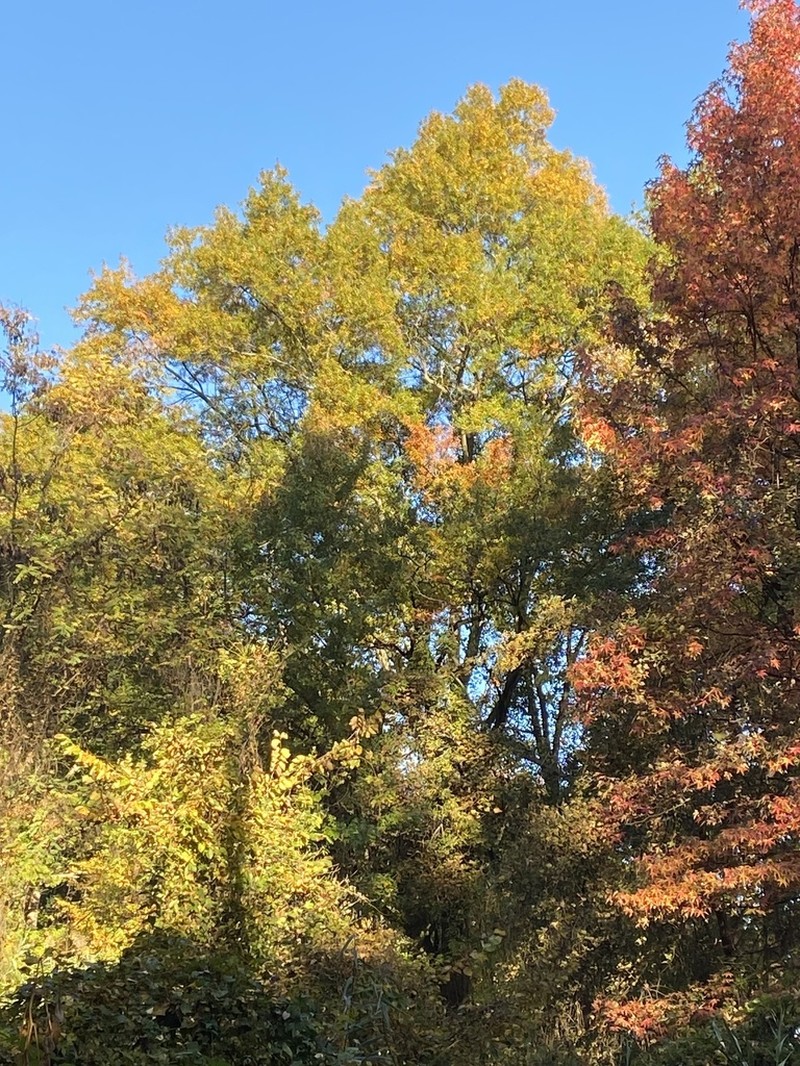
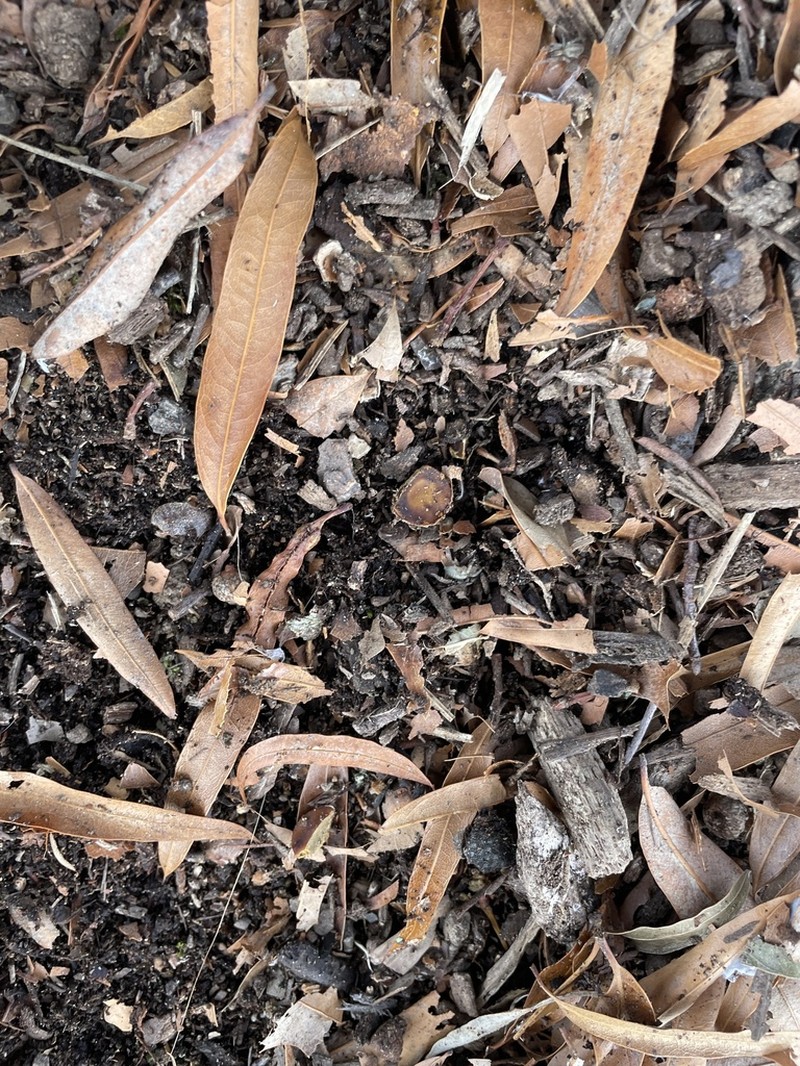
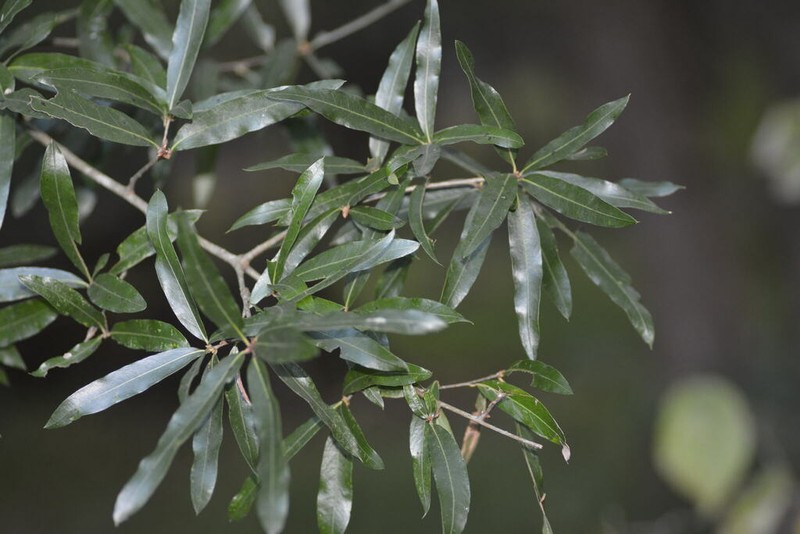
Taxonomy
- Division:
- Magnoliophyta | - Flowering plants
- Family:
- Fagaceae
- Genus:
- Quercus
- Species:
- Quercus phellos
- USDA Symbol:
- QUPH
Growth Characteristics
- Life Cycle:
- Perennial
- Growth Habit:
- Tree
- Height:
- 3000 cm
- Light Requirements:
- Part Shade
- Drought Tolerance:
- Low
- Bloom Months:
- apr
- Bloom Colors:
- yellow-green
Wildlife Benefits
- Bees:
- ★☆☆☆☆ Documented bee visitation (GBIF)
- Butterflies & Moths:
- ★★★★★ Documented Lepidoptera association (GBIF)
- Caterpillars:
- ★★☆☆☆ Recorded caterpillar host plant (HOSTS Database)
Keystone Species Ranking
- Caterpillar Keystone:
- ★★★★★ Butterfly & moth species supported by this genus (NWF)
Host Plant for Caterpillars
Automeris zephyria, Cecropis moth (Automeris cecrops), Fall webworm (Hyphantria cunea), Large Tolype (Tolype velleda), Phyllodesma carpinifolia, Polyphemus moth (Antheraea polyphemus), White-marked Tussock Moth (Orgyia leucostigma), Horace's Duskywing (Erynnis horatius), Red-spotted Purple (Basilarchia arthemis)
Reported Fauna Sightings
Moths:Copper Underwing (Amphipyra pyramidoides), Coptotriche citrinipennella, Eastern Tent Caterpillar (Malacosoma americana), Lobel's dagger moth (Acronicta lobeliae), oak blotch miner moth (Tischeria quercitella), Polyphemus moth (Antheraea polyphemus)
Garden & Ecology Notes
- Wildlife Value:
- birds, mammals, butterflies
- Fall Color:
- yellow to brown
- Fire Ecology:
- Fire adapted — tolerates or benefits from fire
- Fire Notes:
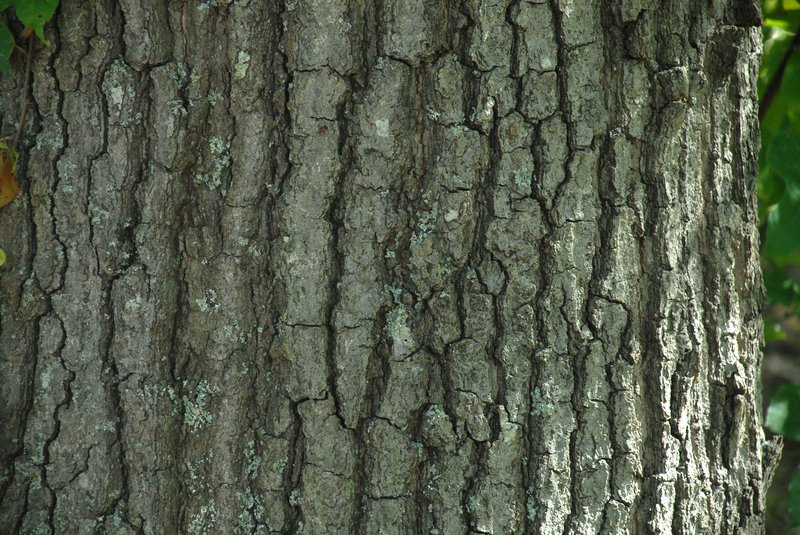
- Thick bark provides some fire resistance; can resprout after low to moderate intensity fire.
Soil Requirements
- Soil Type:
- moist, well-drained loamy soil
- pH:
- 4.5 - 6.5 (acidic to slightly acidic)
- Drainage:
- tolerates poor drainage
- Moisture:
- consistently moist
- Notes:
- prefers lowland areas with periodic flooding
Propagation & Germination
- Stratification:
- Cold/moist stratification required — 30–60 days
- Germination Time:
- 30–90 days
- Notes:
- Seeds require cold stratification for 30-60 days to break dormancy; sow in fall or after stratification.
Pre-treatment: Seeds are fall sown with a mechanical seeder or by hand into prepared field beds.
Establishment: Seeds are purchased from local collectors within a 50 mile radius of the nursery. The seeds are wild collected during fall months and are kept separated according to site, elevation and source. The seed sources are from south central Missouri.
Source: npn.rngr.net
Where to Buy
Nationwide Seller
- Sheffield's Seed (seeds)
- Native Plants Nursery (nursery)