
Post Oak
Quercus stellata
- Native to:
- United States, Virgin Islands
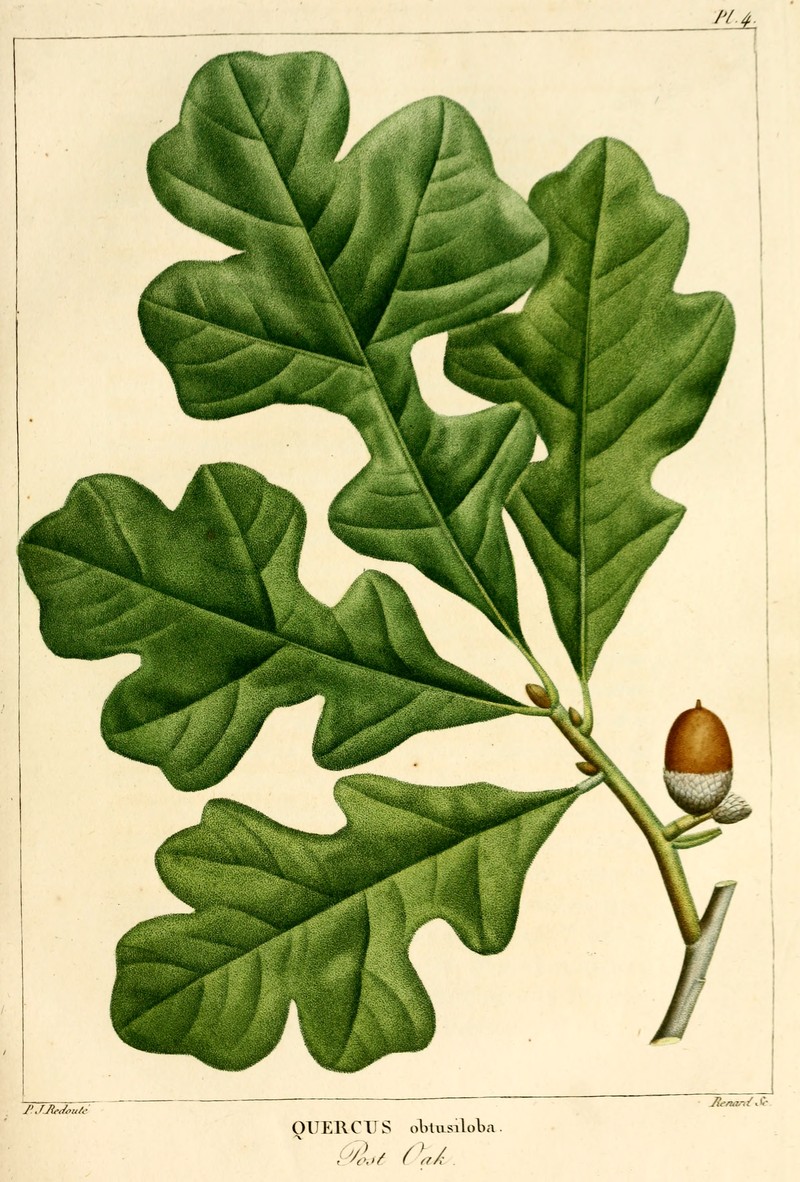
François André Michaux (book author), Pierre-Joseph Redouté (illustrator), Renard (engraver)
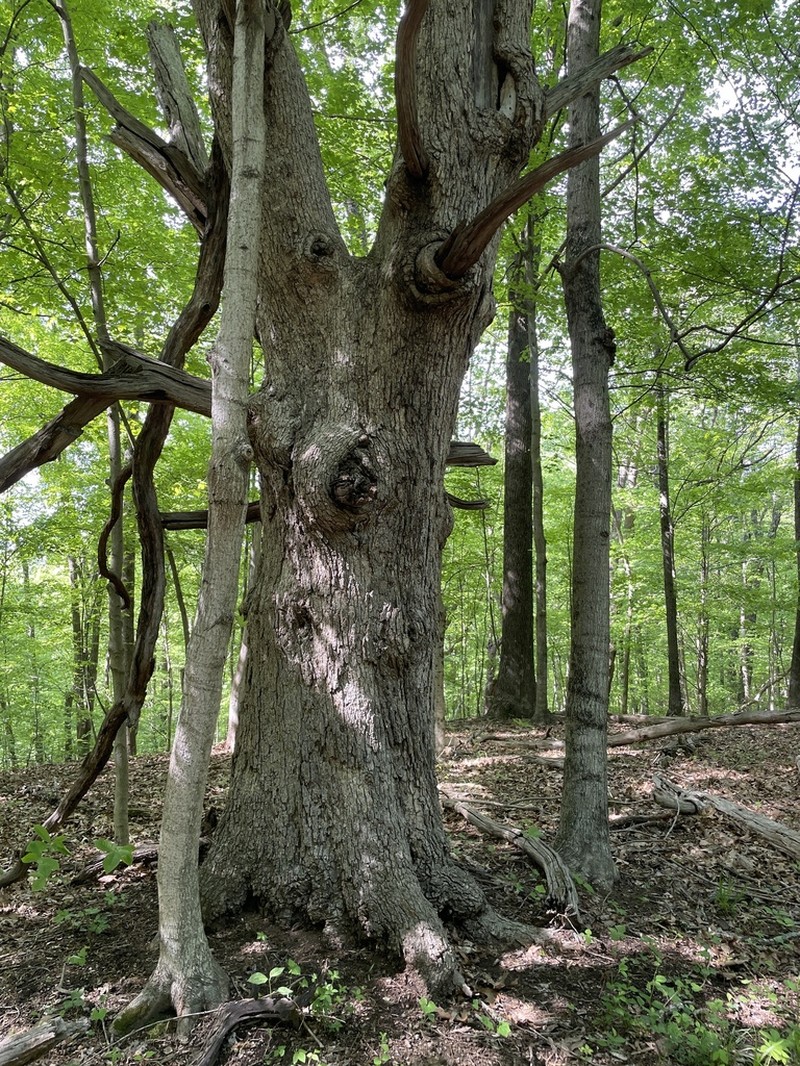
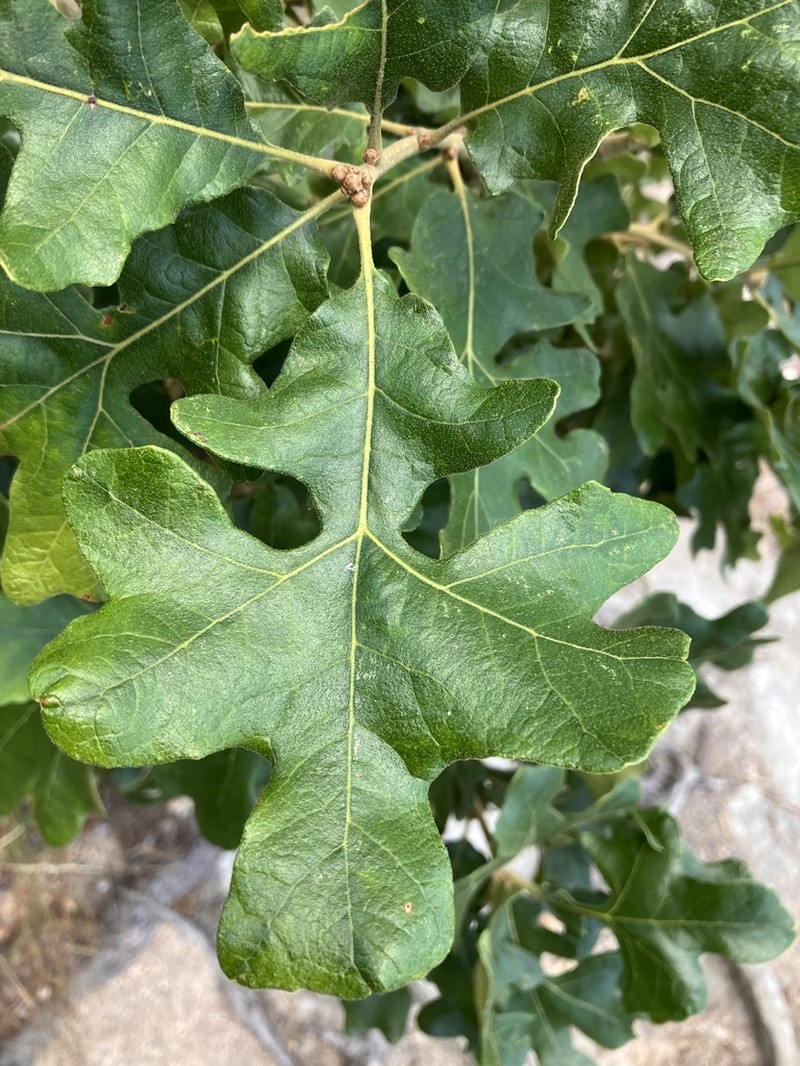
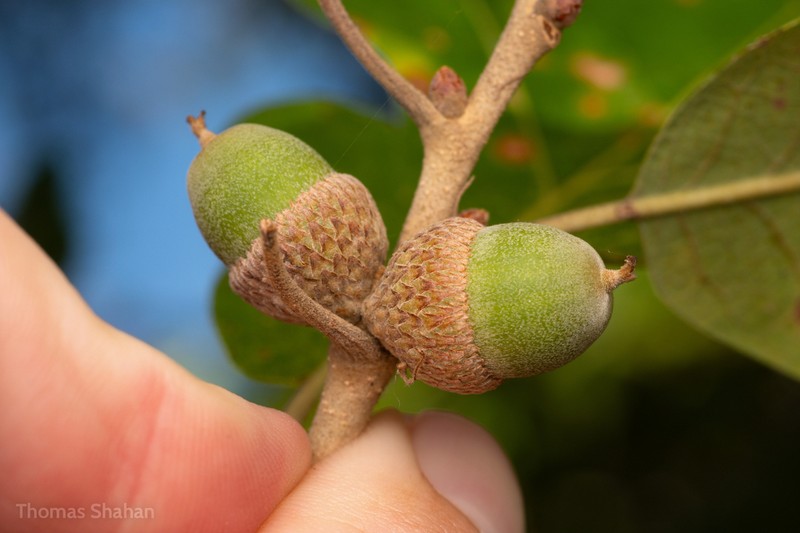
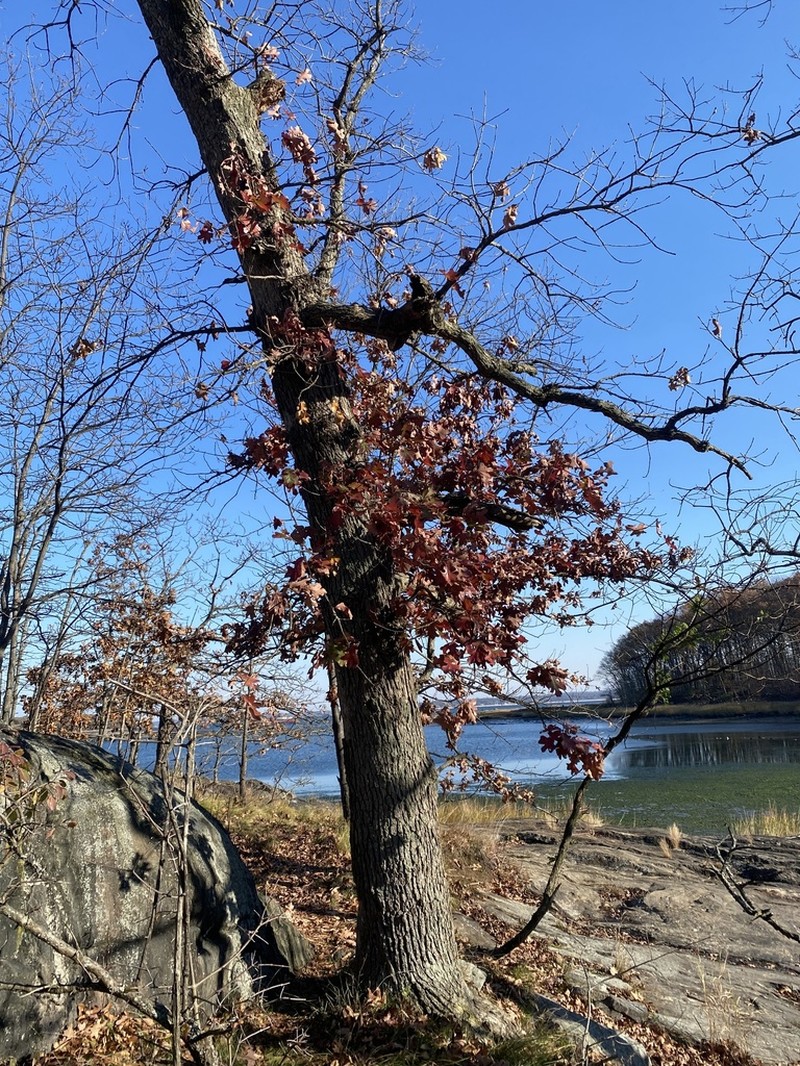
Taxonomy
- Division:
- Magnoliophyta | - Flowering plants
- Family:
- Fagaceae
- Genus:
- Quercus
- Species:
- Quercus stellata
- USDA Symbol:
- QUST
Growth Characteristics
- Life Cycle:
- Perennial
- Growth Habit:
- Tree
- Height:
- 1830 cm
- Light Requirements:
- Full Sun,Part Shade
- Drought Tolerance:
- High
- Bloom Months:
- apr
- Bloom Colors:
- yellow-green
Wildlife Benefits
- Bees:
- ★☆☆☆☆ Documented bee visitation (GBIF)
- Butterflies & Moths:
- ★★★★★ Documented Lepidoptera association (GBIF)
- Caterpillars:
- ★★★☆☆ Recorded caterpillar host plant (HOSTS Database)
Keystone Species Ranking
- Caterpillar Keystone:
- ★★★★★ Butterfly & moth species supported by this genus (NWF)
Host Plant for Caterpillars
Buck Moth (Hemileuca maia), Eastern Tent Caterpillar (Malacosoma americana), Forest Tent Caterpillar (Malacosoma disstria), Girlfriend Underwing (Catocala amica), Grote's buck moth (Hemileuca grotei), Gypsy moth (Lymantria dispar), Io moth (Automeris io), Lineella Underwing (Catocala lineella), Little nymph underwing (Catocala micronympha), Meganola spodia, Menesta melanella, oak leaf blotch miner (Cameraria hamadryadella), Phyllonorycter basistrigella, Phyllonorycter fitchella, Pink-striped oakworm moth (Anisota virginiensis), Polyphemus moth (Antheraea polyphemus), Scalloped sack-bearer (Lacosoma chiridota), Scarlet Underwing (Catocala coccinata), Similar Underwing (Catocala similis), spotted oakworm moth (Anisota stigma), Stilbosis victor, tiger moth (Malacosoma tigris), Variable Oakleaf Caterpillar Moth (Lochmaeus manteo), Yellownecked caterpillar (Datana ministra), Fixsenia ontario, Horace's Duskywing (Erynnis horatius), Juvenal's Duskywing (Erynnis juvenalis)
Reported Fauna Sightings
Bees: ⚠️Western honey bee (Apis mellifera) Moths:Acronicta brumosa, Ianassa lignicolor, Lucerne Moth (Nomophila nearctica), oak blotch miner moth (Tischeria quercitella), Polyphemus moth (Antheraea polyphemus), Schizura ipomaeae, Variable Oakleaf Caterpillar Moth (Lochmaeus manteo), White-dotted Prominent (Nadata gibbosa) Butterflies:Black Swallowtail (Papilio polyxenes), Cecropterus Herrich-Schäffer, Common Buckeye (Junonia coenia), Dainty Sulphur (Nathalis iole), Gray Hairstreak (Strymon melinus), Little Yellow (Eurema lisa), ⚠️Monarch butterfly (Danaus plexippus), Question Mark (Polygonia interrogationis), Red Admiral (Vanessa atalanta), Variegated Fritillary (Euptoieta claudia)
Garden & Ecology Notes
- Wildlife Value:
- birds, mammals, butterflies
- Fall Color:
- red, orange, brown
- Fire Ecology:
- Fire adapted — tolerates or benefits from fire
- Fire Notes:
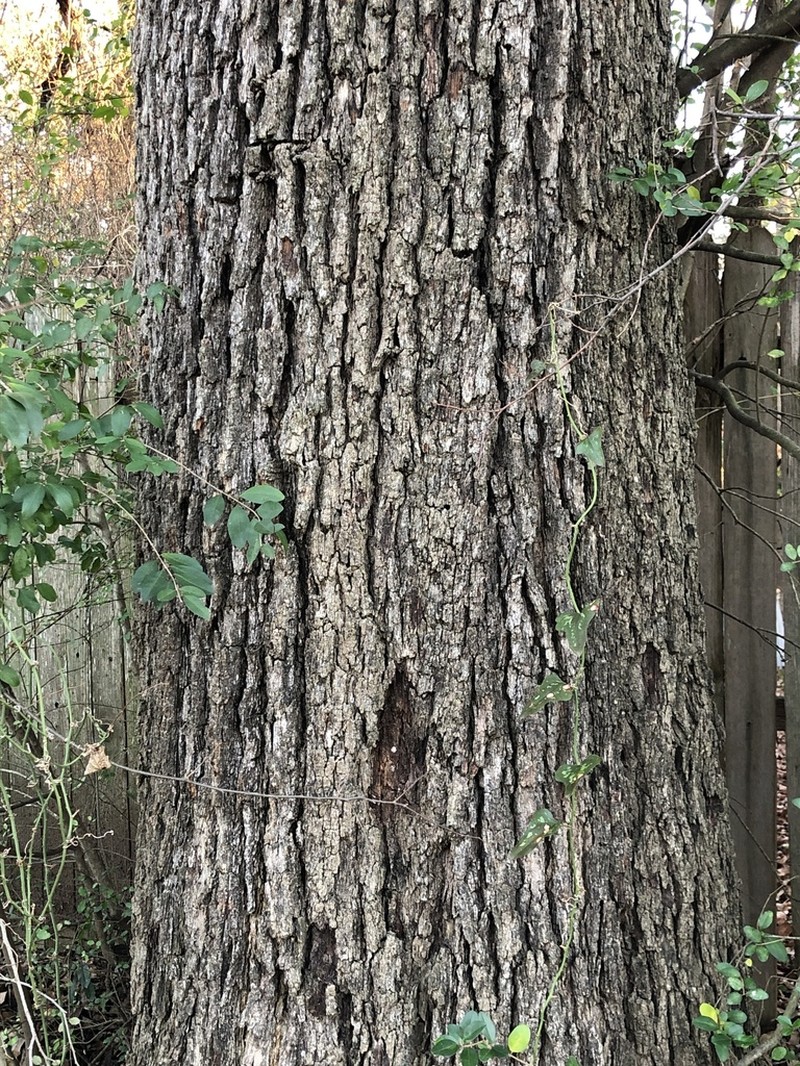
- Thick bark provides some fire resistance; can resprout after low-intensity fire.
Soil Requirements
- Soil Type:
- sandy, well-drained, nutrient-poor soil
- pH:
- 5.5 - 7.0 (slightly acidic to neutral)
- Drainage:
- excellent drainage required
- Moisture:
- dry to moderate
- Notes:
- Commonly found in upland areas with poor fertility.
Propagation & Germination
- Stratification:
- Cold/moist stratification required — 30–60 days
- Germination Time:
- 30–90 days
- Notes:
- Seeds require cold stratification for 30-60 days to break dormancy; germination occurs in spring.
Pre-treatment: Seed may be floated in water to determine viability. Discard floating seeds and retain the ones that sink. Acorns can be planted immediately after collection as they have little or no dormancy.
Establishment: Seeds are collected from established natural stands. The establishment phase includes the overwintering period. No germination percentages or temperature information provided in the protocols.
Source: npn.rngr.net
Where to Buy
Nationwide Seller
- Sheffield's Seed (seeds)
- Native Plants Nursery (nursery)