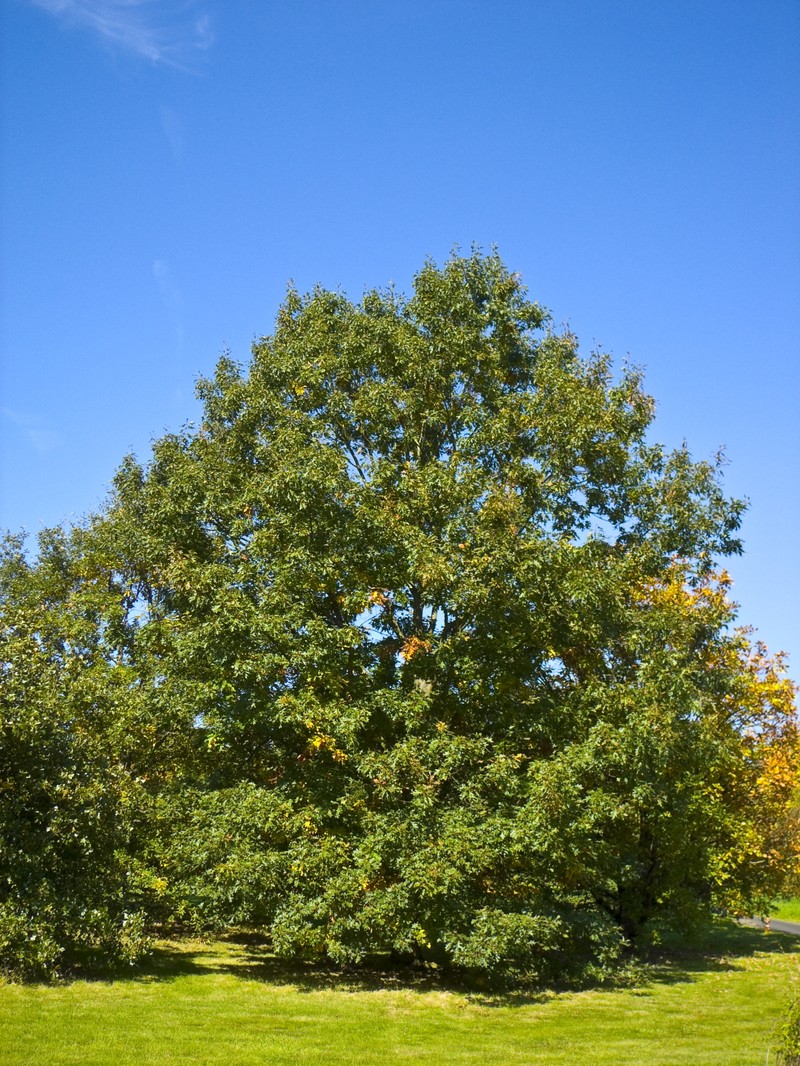
Taxonomy
- Division:
- Magnoliophyta | - Flowering plants
- Family:
- Fagaceae
- Genus:
- Quercus
- Species:
- Quercus velutina
Growth Characteristics
- Life Cycle:
- Perennial
- Growth Habit:
- Tree
- Height:
- More than 40 ft
- Light Requirements:
- Full Sun, Part Shade
- Drought Tolerance:
- High
- Bloom Months:
- mar, apr, may
- Bloom Colors:
- Yellow, Green, Brown
Native Range
United States: Alabama, Arkansas, Connecticut, District of Columbia, Delaware, Florida, Georgia, Iowa, Illinois, Indiana, Kansas, Kentucky, Louisiana, Massachusetts, Maryland, Maine, Michigan, Minnesota, Missouri, Mississippi, North Carolina, Nebraska, New Hampshire, New Jersey, New York, Ohio, Oklahoma, Pennsylvania, Rhode Island, South Carolina, Tennessee, Texas, Virginia, Vermont, Wisconsin, West Virginia, Canada: Ontario
Keystone Species Ranking
- Caterpillar Keystone:
- ★☆☆☆☆
Based on number of butterfly and moth species using this genus as host plant (Source: National Wildlife Federation)
Host Plant for Caterpillars
American Dagger Moth (Acronicta americana), Automeris zephyria, Banded Tussock Moth (Halysidota tessellaris), Buck Moth (Hemileuca maia), California oakworm (Phryganidia californica), Cameraria bethunella, Cameraria fasciella, Cameraria obstrictella, Cameraria ulmella, Confused Morrisonia (Morrisonia confusa), Copper Underwing (Amphipyra pyramidoides), Curve-toothed geometer (Eutrapela clemataria), Eastern Tent Caterpillar (Malacosoma americana), elm spanworm moth (Ennomos subsignaria), Filbertworm (Cydia latiferreana), Forest Tent Caterpillar (Malacosoma disstria), Girlfriend Underwing (Catocala amica), Greater Red Dart (Abagrotis alternata), Gypsy moth (Lymantria dispar), Hethemia pistasciaria, Ilia Underwing (Catocala ilia), Io moth (Automeris io), Lithophane laticinerea, maple trumpet skeletonizer (Catastega aceriella), maple webworm moth (Pococera asperatella), Meganola spodia, Morrisonia latex, Nason's slug moth (Natada nasoni), oak blotch miner moth (Tischeria quercitella), Orange-tipped oakworm moth (Anisota senatoria), Oslar's oakworm moth (Anisota oslari), Perimede erransella, Phyllonorycter aeriferella, Phyllonorycter basistrigella, Phyllonorycter quercialbella, Pink-striped oakworm moth (Anisota virginiensis), Polyphemus moth (Antheraea polyphemus), prudent trypanisma moth (Trypanisma prudens), Rosy Maple Moth (Dryocampa rubicunda), Scalloped sack-bearer (Lacosoma chiridota), spotted oakworm moth (Anisota stigma), Spotted Tussock Moth (Lophocampa maculata), Spring cankerworm (Paleacrita vernata), White-blotched Heterocampa (Heterocampa umbrata), Yellownecked caterpillar (Datana ministra), Yellowstriped oakworm moth (Anisota peigleri), Eastern Tiger Swallowtail (Papilio glaucus), Edwards' hairstreak (Satyrium edwardsii), Horace's Duskywing (Erynnis horatius), Juvenal's Duskywing (Erynnis juvenalis), Red-spotted Purple (Basilarchia arthemis)
Reported Fauna Sightings
Hummingbirds: Calliope Hummingbird (Selasphorus calliope), Calliope Hummingbird (Selasphorus calliope) Butterflies:American Lady (Vanessa virginiensis), Black Swallowtail (Papilio polyxenes), Clouded Sulphur (Colias philodice), Clouded Sulphur (Colias philodice), Coral Hairstreak (Satyrium titus), Coral Hairstreak (Satyrium titus), Delaware Skipper (Anatrytone logan), Delaware Skipper (Anatrytone logan), Eastern Tailed-Blue (Cupido comyntas), Eastern Tailed-Blue (Cupido comyntas), Great Spangled Fritillary (Argynnis cybele), Great Spangled Fritillary (Argynnis cybele), Little Wood Satyr (Megisto cymela), Little Wood Satyr (Megisto cymela), ⚠️Monarch (Danaus plexippus), Red Admiral (Vanessa atalanta), Silver-spotted Skipper (Epargyreus clarus), Silver-spotted Skipper (Epargyreus clarus), Summer Azure (Celastrina neglecta), Summer Azure (Celastrina neglecta)
Soil Requirements
- Soil Type:
- sandy, acidic, nutrient-poor soil
- pH:
- 4.5 - 6.5 (acidic to slightly acidic)
- Drainage:
- excellent drainage required
- Moisture:
- dry to moderate
- Notes:
- Prefers upland areas with well-drained soils
Germination Information
Pre-treatment: Seeds are placed in cold moist stratification for 90 days or sown within a day or two after processing. Fall sown acorns need to be protected from birds and rodents.
Establishment: Seeds are purchased from local people who collect within a 50 mile radius of the nursery. Seeds are wild collected during fall months and are kept separated according to site, elevation and source. Germination can occur under greenhouse temperatures.
Source: npn.rngr.net