
Interior Live Oak
Quercus wislizeni
- Native to:
- Mexico, United States
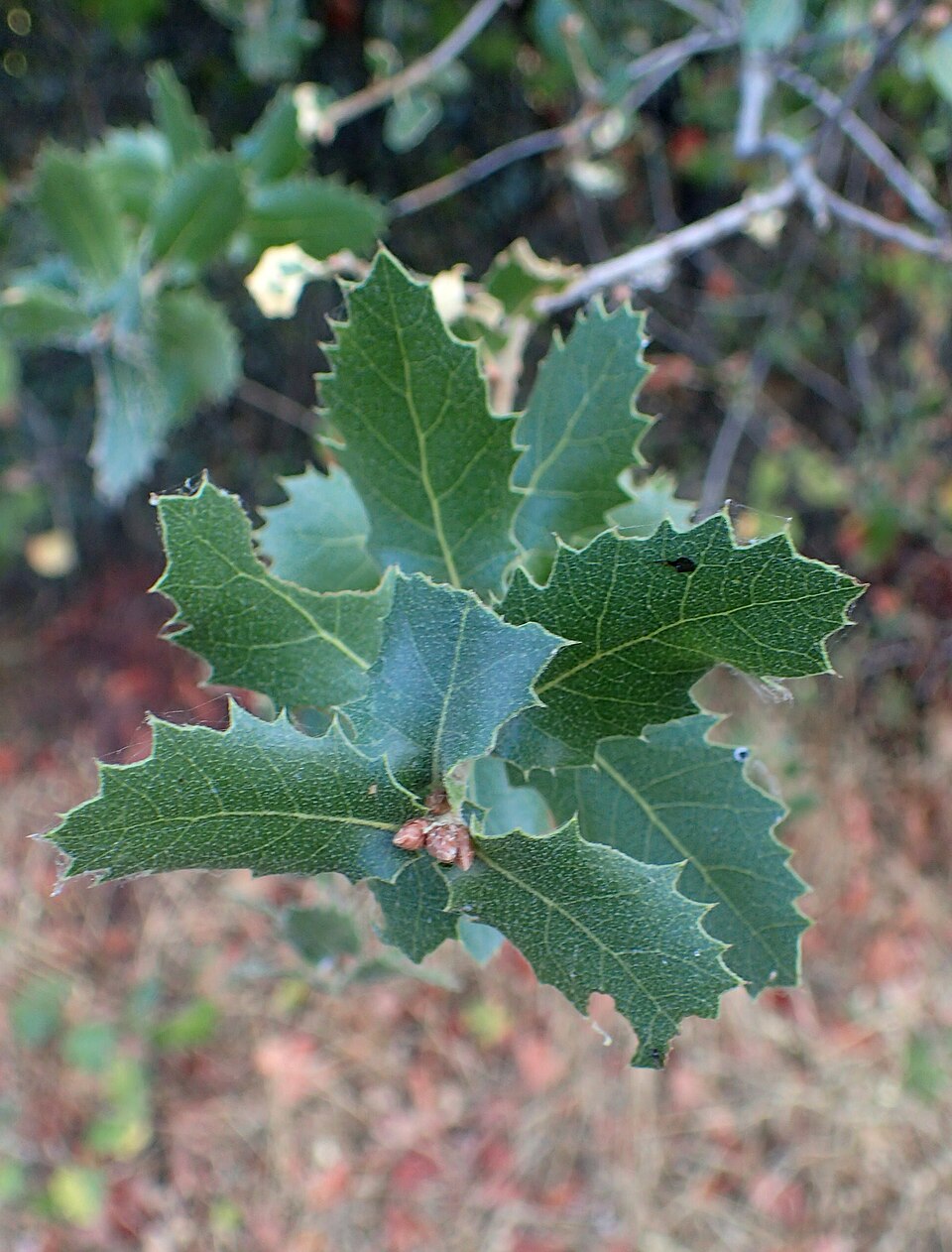
Krzysztof Ziarnek, Kenraiz
Taxonomy
- Division:
- Magnoliophyta | - Flowering plants
- Family:
- Fagaceae
- Genus:
- Quercus
- Species:
- Quercus wislizeni
- USDA Symbol:
- QUWI2
Growth Characteristics
- Life Cycle:
- Perennial
- Growth Habit:
- Shrub , Tree
- Height:
- 2500 cm
- Light Requirements:
- Full Sun
- Drought Tolerance:
- High
Wildlife Benefits
- Butterflies & Moths:
- ★☆☆☆☆ Documented Lepidoptera association (GBIF)
- Caterpillars:
- ★★★★☆ Recorded caterpillar host plant (HOSTS Database)
Keystone Species Ranking
- Caterpillar Keystone:
- ★★★★★ Butterfly & moth species supported by this genus (NWF)
Host Plant for Caterpillars
Acrocercops insulariella, Andromache Underwing (Catocala andromache), Bucculatrix albertiella, Caloptilia agrifoliella, Caloptilia reticulata, Cameraria anomala, Cameraria wislizeniella, Chionodes chrysopyla, Chionodes raspyon, Chionodes trichostola, Coleophora serratella, Coptodisca powellella, Decodes fragariana, Dyseriocrania auricyanea, Epinotia emarginana, Eriocraniella aurosparsella, Eriocraniella xanthocara, Evippe sp., fruit-tree leafroller (Archips argyrospila), habrosana leafroller moth (Pseudexentera habrosana), Pacific tent caterpillar (Malacosoma constricta), Phyllonorycter inusitatella, Phyllonorycter sandraella, Rectiostoma fernaldella, Recurvaria sp., Stigmella variella, Stilbosis dulcedo, Telphusa sedulitella, Tischeria discreta, Trachycera caliginella, Vespina quercivora, Xenolechia querciphaga, Xenolechia staspa, Gold-hunter's hairstreak (Satyrium auretorum)
Garden & Ecology Notes
- Wildlife Value:
- birds, mammals
- Fire Ecology:
- Fire adapted — tolerates or benefits from fire
- Fire Notes:
- Thick bark provides some fire resistance; resprouts from root crown after fire.
Soil Requirements
- Soil Type:
- well-drained, rocky or sandy loam
- pH:
- 5.5 - 7.5 (slightly acidic to neutral)
- Drainage:
- excellent drainage required
- Moisture:
- dry to moderate
- Notes:
- adapted to dry slopes and foothills
Propagation & Germination
- Stratification:
- Cold/moist stratification required — 30–60 days
- Germination Time:
- 30–90 days
- Notes:
- Seeds require cold stratification for 30-60 days; sow in fall or after stratification in spring.
Pre-treatment: Seeds are placed in cold moist stratification for 17 to 28 days or soaked in fresh water overnight, cleaned, and then placed in a plastic freezer bag with an equal amount of dry perlite. Keep in refrigerator at 15C for 1 month.
Establishment: Seeds are collected between September 1st and December 15th. Mature acorns are brown. Collect when the base of the acorn turns brown and is easily pulled from the cup. The protocols provide two different pre-treatment methods, one involving cold moist stratification and the other soaking in water and refrigeration.
Source: npn.rngr.net
Where to Buy
Nationwide Seller
- Sheffield's Seed (seeds)