
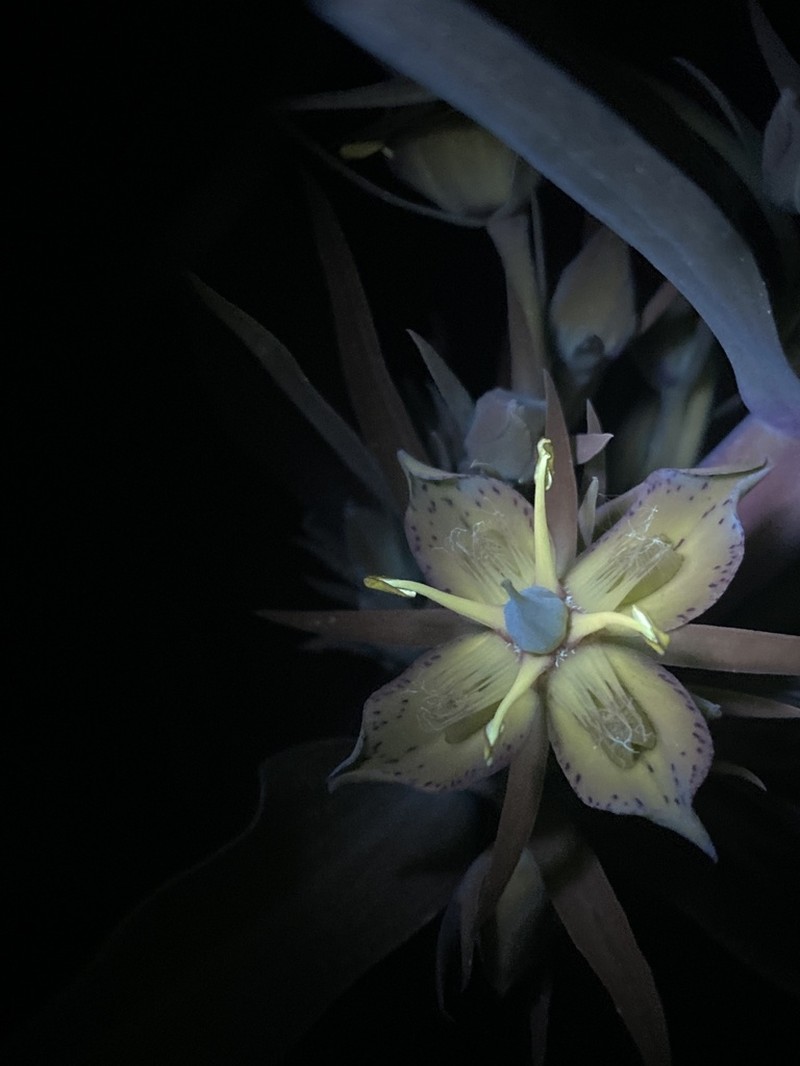
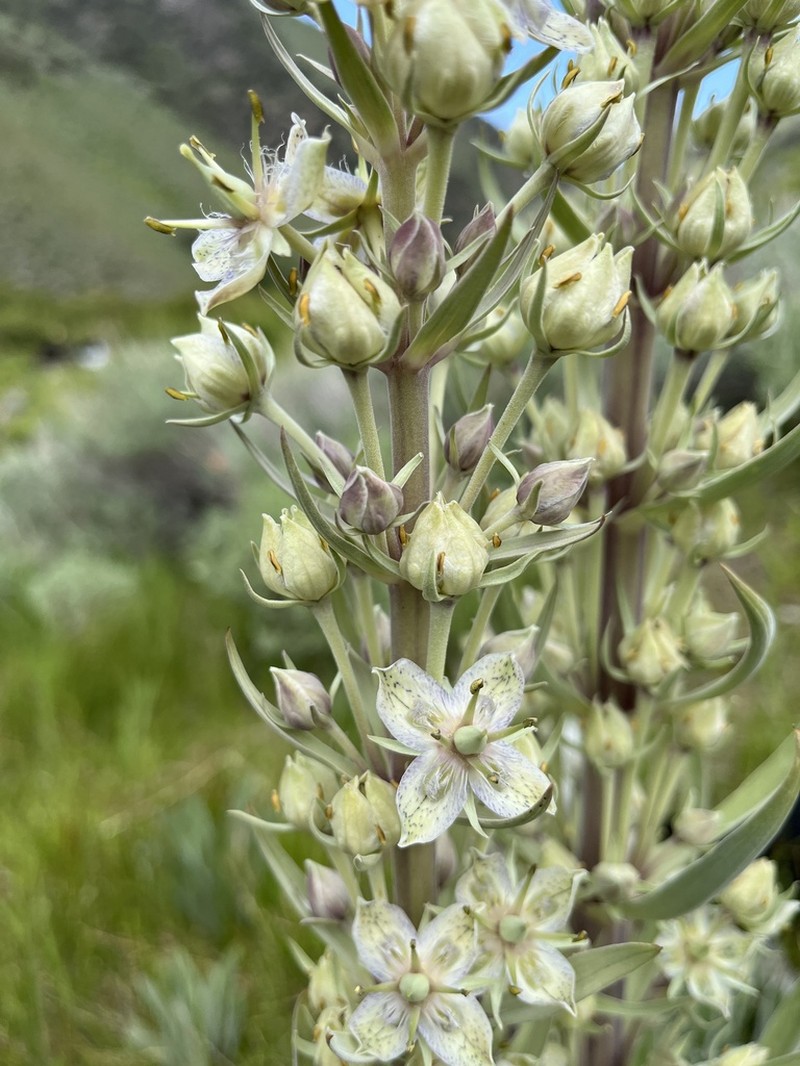
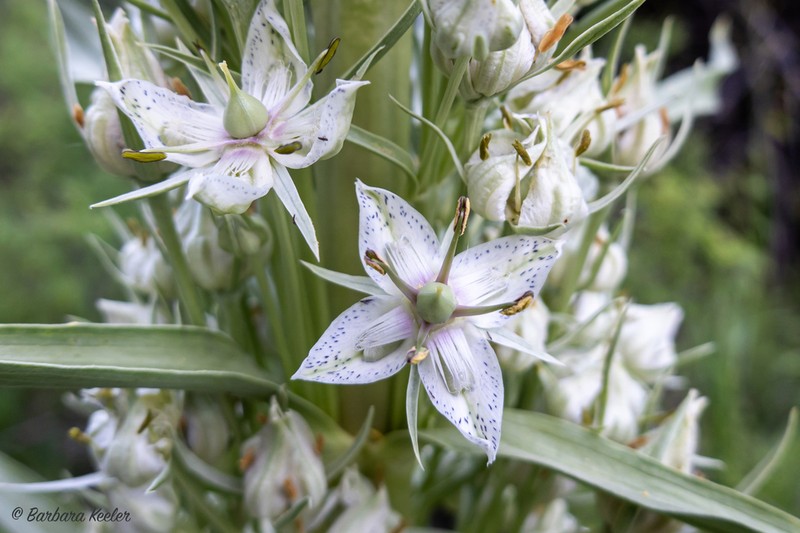
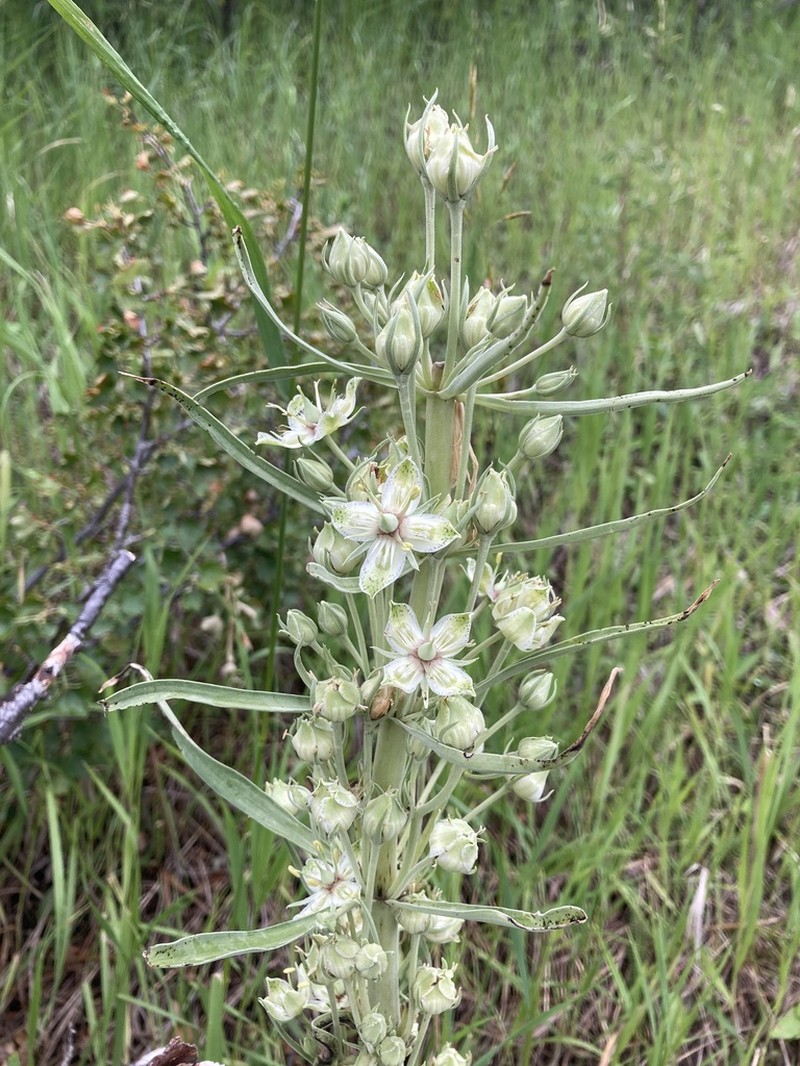
Elkweed
Frasera speciosa
- Native to:
- Mexico, United States
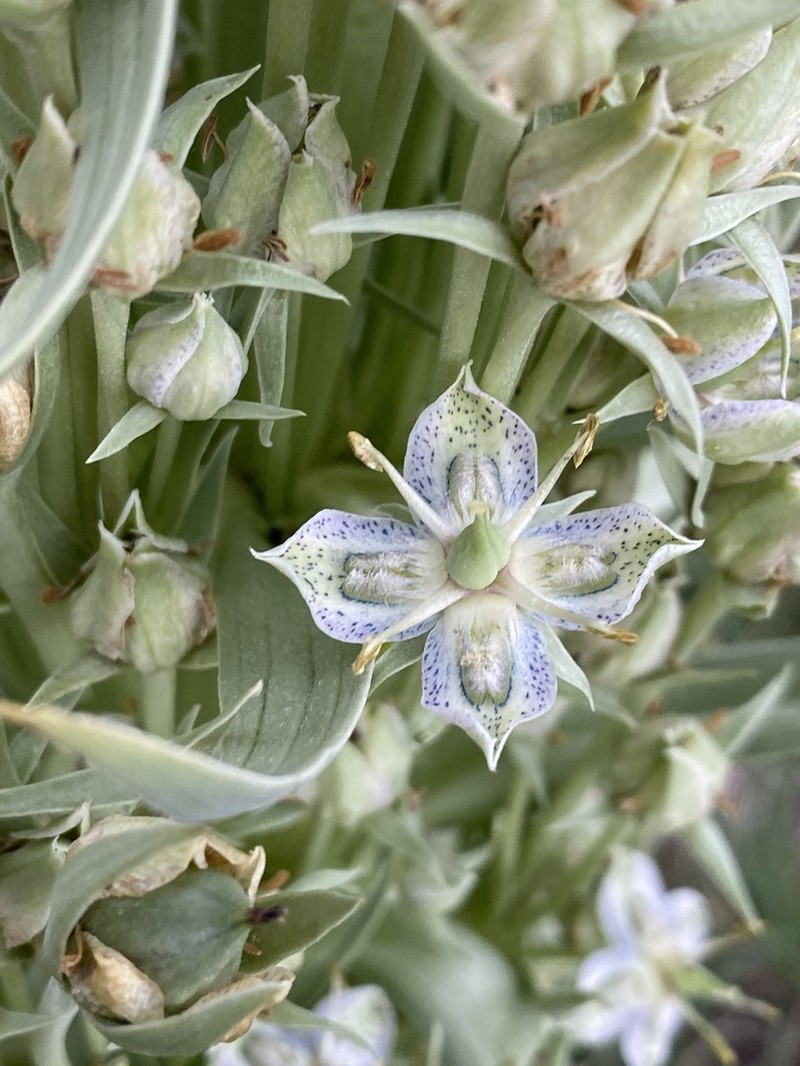
iNaturalist: © sheriff_woody_pct (iNaturalist #85982144)
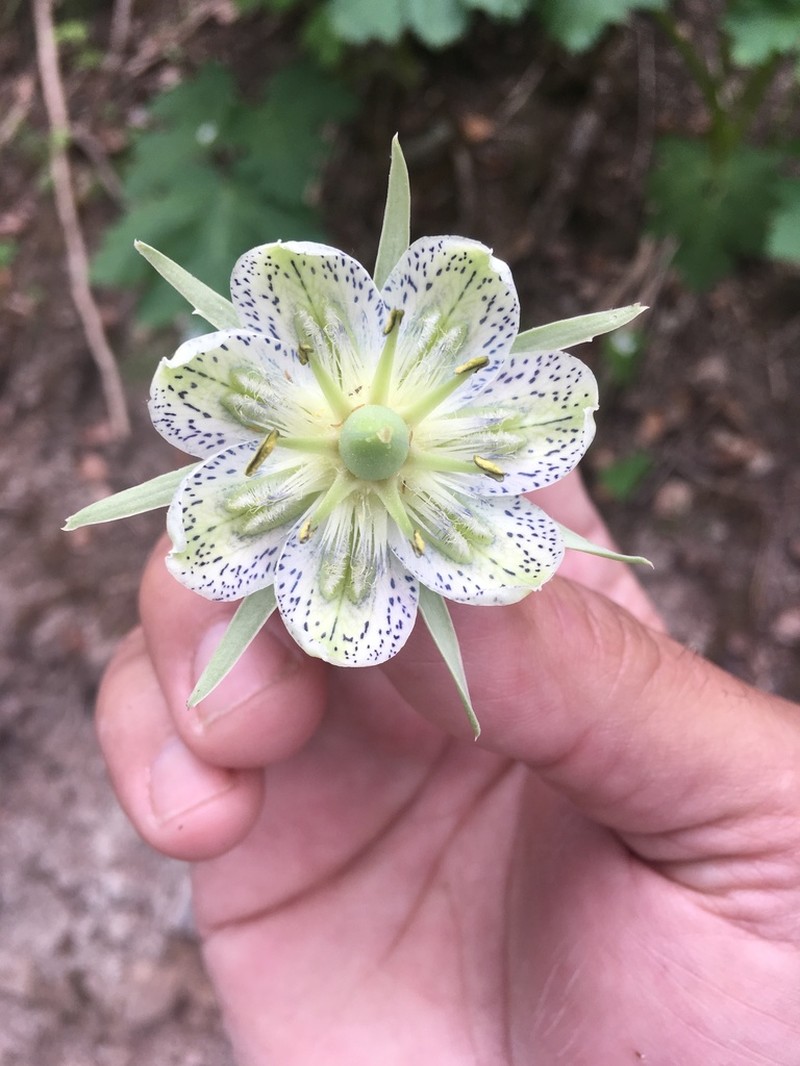
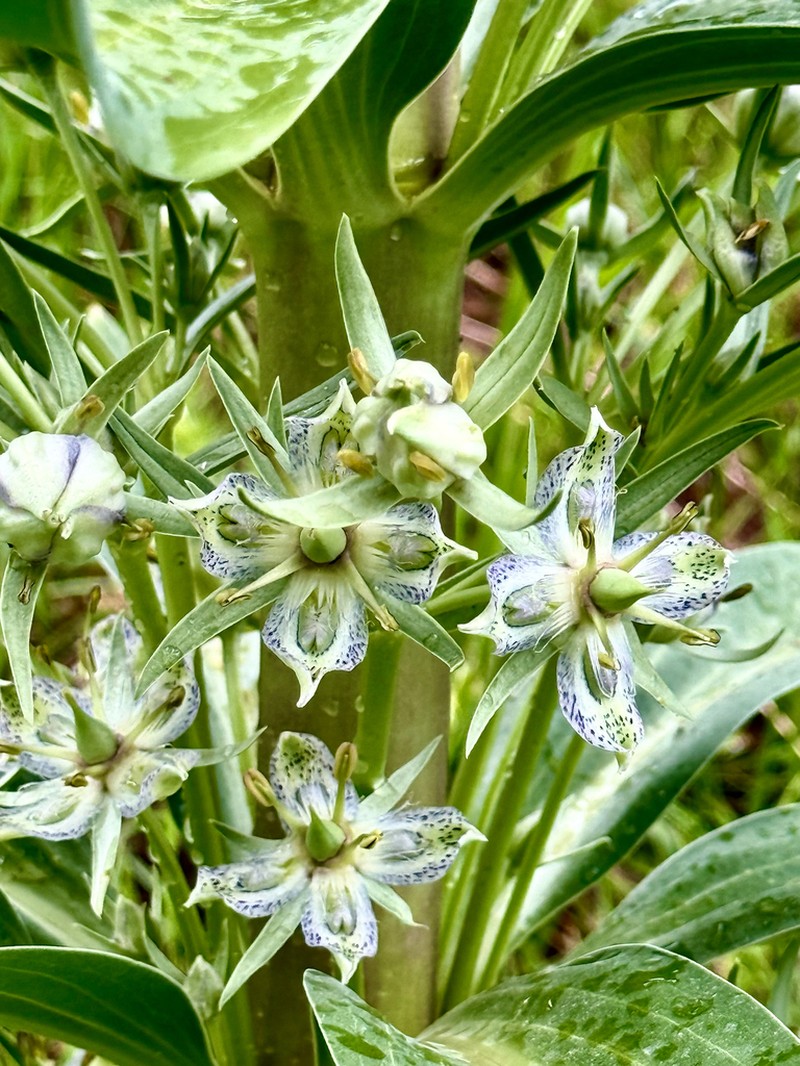
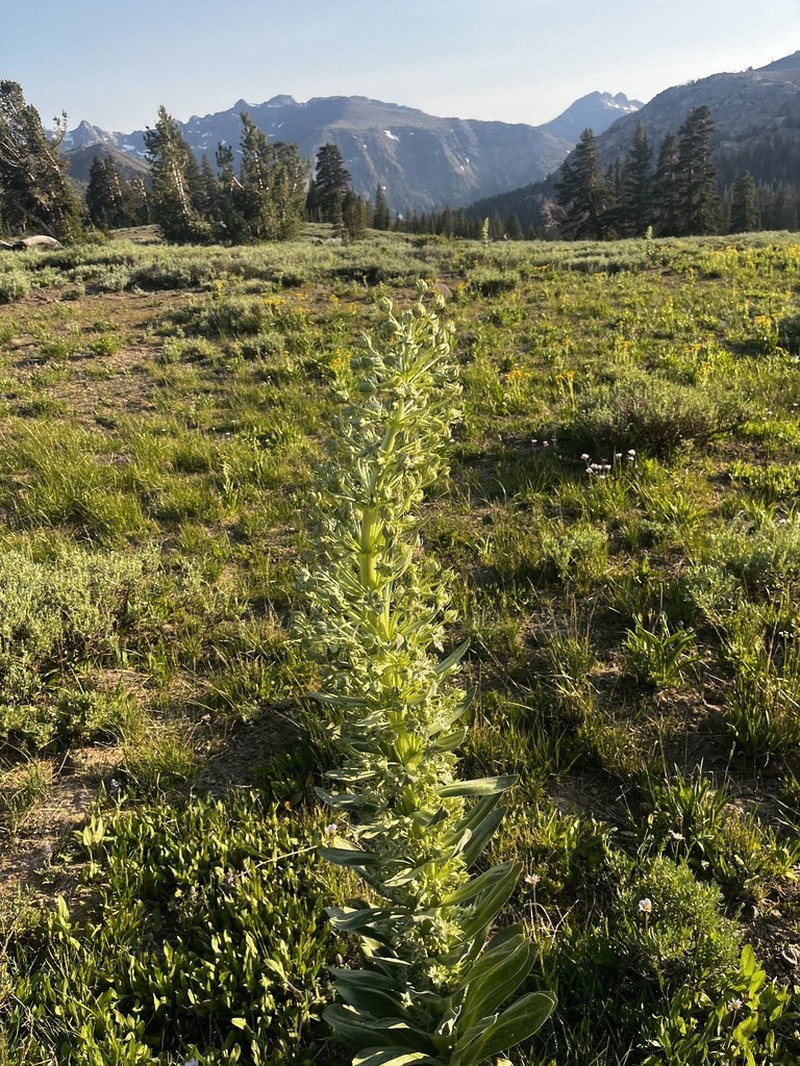
Taxonomy
- Division:
- Magnoliophyta | - Flowering plants
- Family:
- Gentianaceae
- Genus:
- Frasera
- Species:
- Frasera speciosa
- USDA Symbol:
- FRSP
Growth Characteristics
- Life Cycle:
- Perennial
- Growth Habit:
- Forb/herb
- Height:
- 200 cm
- Light Requirements:
- Full Sun,Part Shade
- Drought Tolerance:
- Medium
- Bloom Months:
- jun,jul,aug
- Bloom Colors:
- greenish-white, purple
Wildlife Benefits
- Bees:
- ★★☆☆☆ Documented bee visitation (GBIF)
- Butterflies & Moths:
- ★☆☆☆☆ Documented Lepidoptera association (GBIF)
- Caterpillars:
- ★☆☆☆☆ Recorded caterpillar host plant (HOSTS Database)
Host Plant for Caterpillars
verbena bud moth (Endothenia hebesana)
Reported Fauna Sightings
Bees: Central bumble bee (Bombus centralis), Nearctic Bumble (Bombus vancouverensis), Red-belted bumble bee (Bombus rufocinctus), Two-form bumble bee (Bombus bifarius), Yellow head bumble bee (Bombus flavifrons)
Garden & Ecology Notes
- Wildlife Value:
- bees, butterflies, hummingbirds
Soil Requirements
- Soil Type:
- rich, well-drained loamy soil
- pH:
- 5.5 - 7.5 (slightly acidic to neutral)
- Drainage:
- excellent drainage required
- Moisture:
- dry to moderate
- Notes:
- prefers open meadows and forest edges
Propagation & Germination
- Stratification:
- Cold/moist stratification required — 60–90 days
- Germination Time:
- 14–30 days
- Notes:
- Seeds benefit from cold stratification for 2-3 months before sowing in spring.
Pre-treatment: Seeds are placed in cold moist stratification for 112 days.
Establishment: C. foliosum is found throughout the western United States in moist meadows and upland forests.
Source: npn.rngr.net
ORGHPS Germination Guide: Sow @ 20C 6 wks then 4C 6 wks then slowly raise to 10C 6 wks. Repeat if no germination.