
Lewis' Mock Orange
Philadelphus lewisii
Also known as: California Mock Orange
- Native to:
- Canada, United States
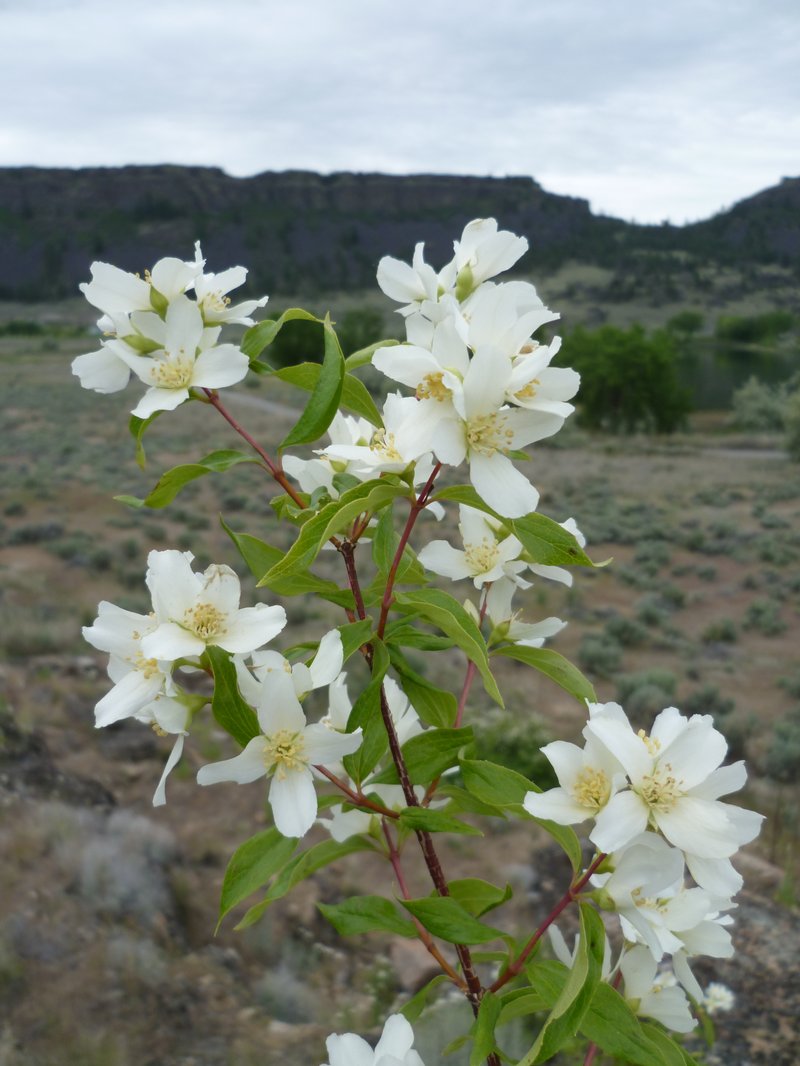
Matt Lavin (www.flickr.com) from Bozeman, Montana, USA
Taxonomy
- Division:
- Magnoliophyta | - Flowering plants
- Family:
- Hydrangeaceae
- Genus:
- Philadelphus
- Species:
- Philadelphus lewisii
- USDA Symbol:
- PHLE4
Growth Characteristics
- Life Cycle:
- Perennial
- Growth Habit:
- Shrub
- Height:
- 300 cm
- Light Requirements:
- Full Sun,Part Shade
- Drought Tolerance:
- Medium
- Bloom Months:
- may,jun,jul
- Bloom Colors:
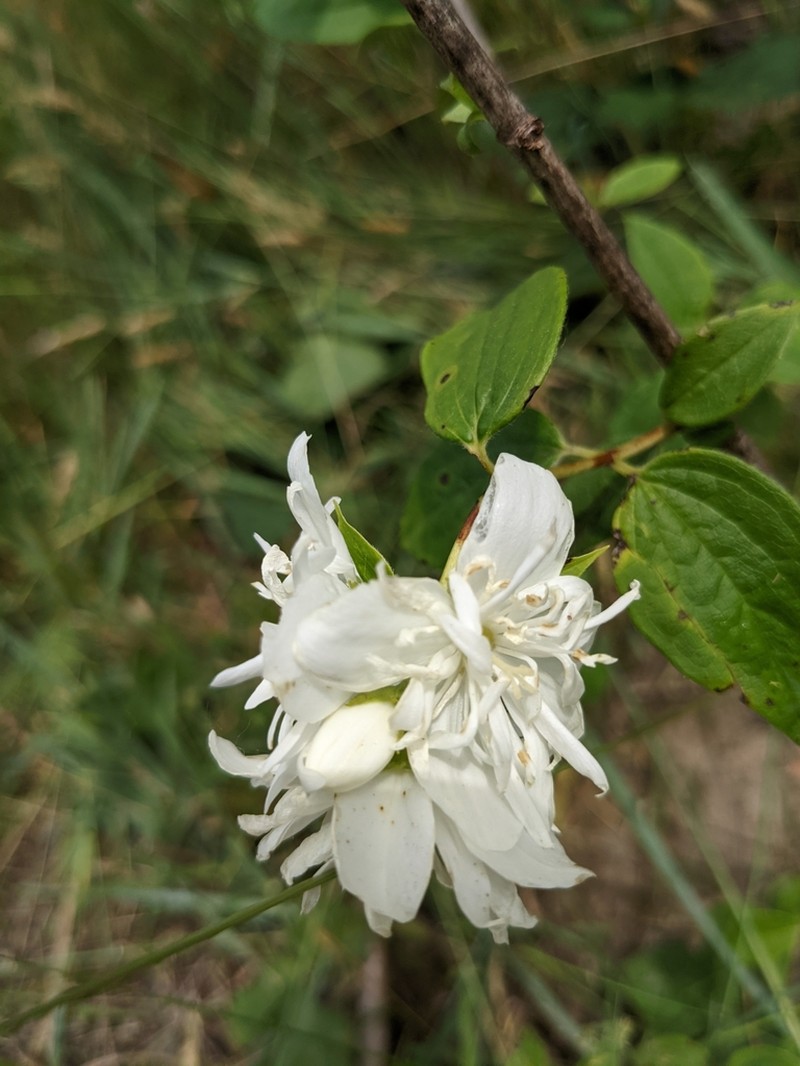
- white
- Landscaping Shrub:
- Yes
Wildlife Benefits
- Bees:
- ★☆☆☆☆ Documented bee visitation (GBIF)
- Butterflies & Moths:
- ★☆☆☆☆ Documented Lepidoptera association (GBIF)
Host Plant for Caterpillars
Reported Fauna Sightings
Garden & Ecology Notes
- Wildlife Value:
- bees, butterflies, birds
- Fragrant:
- Yes
Soil Requirements
- Soil Type:
- rich, well-drained loamy soil
- pH:
- 5.5 - 7.5 (slightly acidic to neutral)
- Drainage:
- good drainage preferred
- Moisture:
- dry to moderate
- Notes:
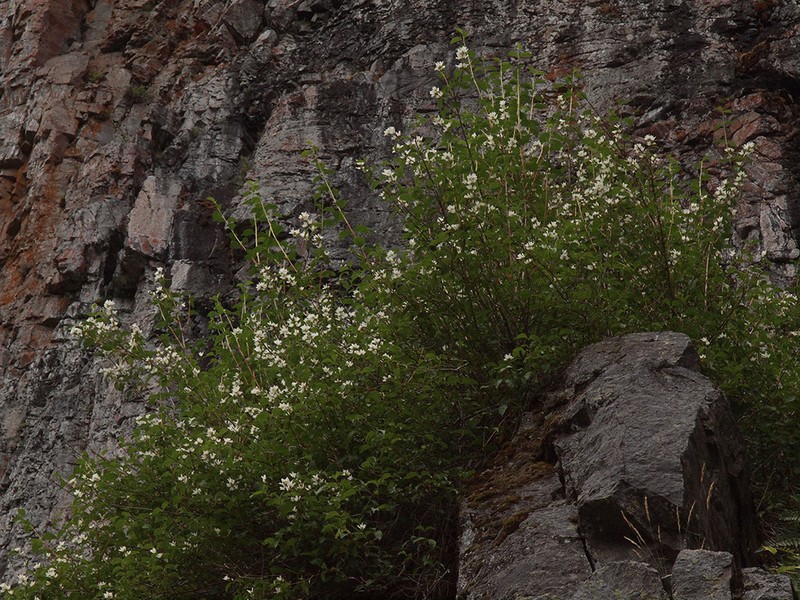
- thrives in open woods and rocky slopes
Propagation & Germination
- Stratification:
- Cold/moist stratification required — 30–60 days
- Germination Time:
- 14–30 days
- Notes:
- Seeds germinate readily after cold stratification; sow in fall or stratify for 30-60 days.
Pre-treatment: For cuttings: re-cut and remove terminal buds, dip into Domain fungicide bath for 2 minutes, treat with 2000 ppm liquid IBA rooting hormone, and strike in rooting medium with bottom heat with at least 2 nodes below the surface. For seeds: 5 month outdoor cold moist stratification.
Establishment: Cuttings are collected in mid June from healthy field plants. Seeds are collected in late summer when capsules turn brown and begin to dehisce. The plant is found on open rocky slopes from low to mid elevations; from British Columbia and Alberta south to Montana, Idaho, and California. It is found from sea level to 2100 m elevation.
Source: npn.rngr.net
Where to Buy
Nationwide Seller
- Sheffield's Seed (seeds)