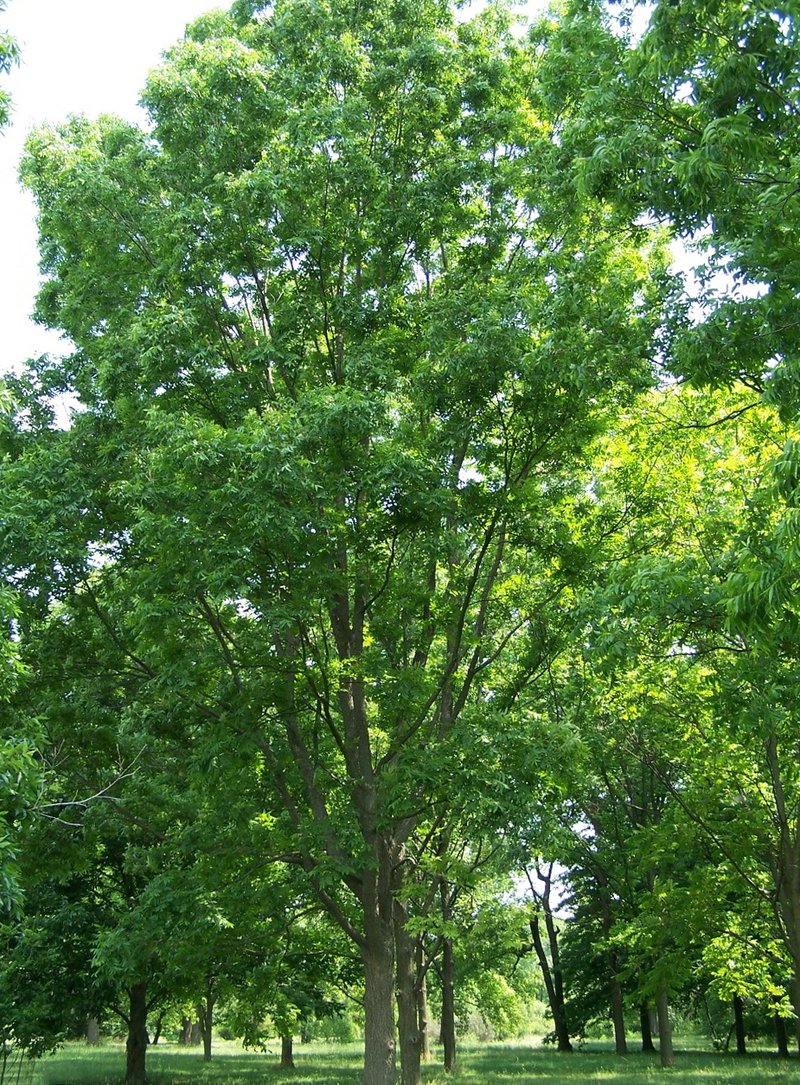
Taxonomy
- Division:
- Magnoliophyta | - Flowering plants
- Family:
- Juglandaceae
- Genus:
- Carya
- Species:
- Carya illinoinensis
Growth Characteristics
- Life Cycle:
- Perennial
- Growth Habit:
- Tree
- Height:
- More than 40 ft
- Light Requirements:
- Full Sun
- Drought Tolerance:
- High
- Bloom Months:
- mar, apr, may
- Bloom Colors:
- Yellow
- Food Forest:
- Plant contains edible parts
Native Range
United States: Alabama, Arkansas, Florida, Georgia, Iowa, Illinois, Indiana, Kansas, Kentucky, Louisiana, Maryland, Missouri, Mississippi, North Carolina, Ohio, Oklahoma, South Carolina, Tennessee, Texas, Virginia
Keystone Species Ranking
- Caterpillar Keystone:
- ★☆☆☆☆
Based on number of butterfly and moth species using this genus as host plant (Source: National Wildlife Federation)
Host Plant for Caterpillars
Acrobasis caryivorella, Acrobasis caulivorella, Acrobasis cunulae, Acrobasis evanescentella, Acrobasis grossbecki, Acrobasis hebescella, Acrobasis latifasciella, Acrobasis palliolella, Acrobasis peplifera, Agrippina Underwing (Catocala agrippina), American plum borer (Euzophera semifuneralis), Angulose Prominent (Peridea angulosa), Angus' Underwing (Catocala angusi), Archips infumatana, Bagworm moth (Thyridopteryx ephemeraeformis), black-dotted leaftier moth (Psilocorsis cryptolechiella), Cecropia moth (Hyalophora cecropia), common gray (Anavitrinella pampinaria), Coptodisca lucifluella, cordovan pyralid moth (Acrobasis exsulella), Cossula magnifica, Dichomeris ventrella (Dichomeris ventrella), Dogwood borer (Synanthedon scitula), Eastern Tent Caterpillar (Malacosoma americana), Epione underwing (Catocala epione), Eulogia ochrifrontella, Fall armyworm (Spodoptera frugiperda), Fall webworm (Hyphantria cunea), false prominent (Schizura leptinoides), hickory shoot borer (Acrobasis caryae), Hickory shuckworm (Cydia caryana), Judith's Underwing (Catocala judith), Larisa subsolana, leaf crumpler moth (Acrobasis indigenella), leafroller (Gretchena deludana), Luna moth (Actias luna), Monoleuca semifascia, Obscure Underwing (Catocala obscura), Old Wife Underwing (Catocala palaeogama), Omnivorous Leafroller (Platynota rostrana), pecan bud moth (Gretchena bolliana), pecan cigar casebearer (Coleophora laticornella), pecan leaf casebearer (Acrobasis juglandis), pecan leafminer (Cameraria caryaefoliella), pecan nut casebearer (Acrobasis nuxvorella), Penitent Underwing (Catocala piatrix), Phyllonorycter caryaealbella, Phyllonorycter olivaeformis, Pococera subcanalis, Red-humped caterpillar moth (Schizura concinna), Red-lined Panopoda (Panopoda rufimargo), reflexella leafroller moth (Psilocorsis reflexella), Regal Moth (Citheronia regalis), residual underwing (Catocala residua), Sabulodes caberata, Sad Underwing (Catocala maestosa), Sappho underwing (Catocala sappho), Similar Underwing (Catocala similis), Splendid Royal Moth (Citheronia splendens), Stigmella juglandifoliella, Synanthedon geliformis, Tearful Underwing (Catocala lacrymosa), Unicorn caterpillar moth (Schizura unicornis), Walnut Sphinx (Amorpha juglandis), Widow Underwing (Catocala vidua), Yellownecked caterpillar (Datana integerrima), Edwards' hairstreak (Satyrium edwardsii)
Soil Requirements
- Soil Type:
- rich, well-drained loamy soil
- pH:
- 6.0 - 7.0 (slightly acidic to neutral)
- Drainage:
- good drainage required
- Moisture:
- consistently moist
- Notes:
- prefers deep, fertile soils along riverbanks
Germination Information
Pre-treatment: Seeds are cold stratified for 60 to 90 days and germinate under greenhouse temperatures. In another study, seeds germinate at 30 to 35 C.
Establishment: Seeds are purchased from local people who collect within a 50 mile radius of the nursery. Seeds are wild collected during late fall and early winter months and are kept separated according to site, elevation and source. Pecan grows principally in the bottomlands of the Mississippi River valley and its range extends westward from southern Indiana through Illinois, southeastern Iowa, and eastern Kansas, south to central Texas, and eastward to western Mississippi and western Tennessee. Its best commercial development is on river-front lands of the Mississippi Delta and along major rivers west of the Delta to Texas. Seed sources are from south central Missouri.
Source: npn.rngr.net