
Butternut
Juglans cinerea
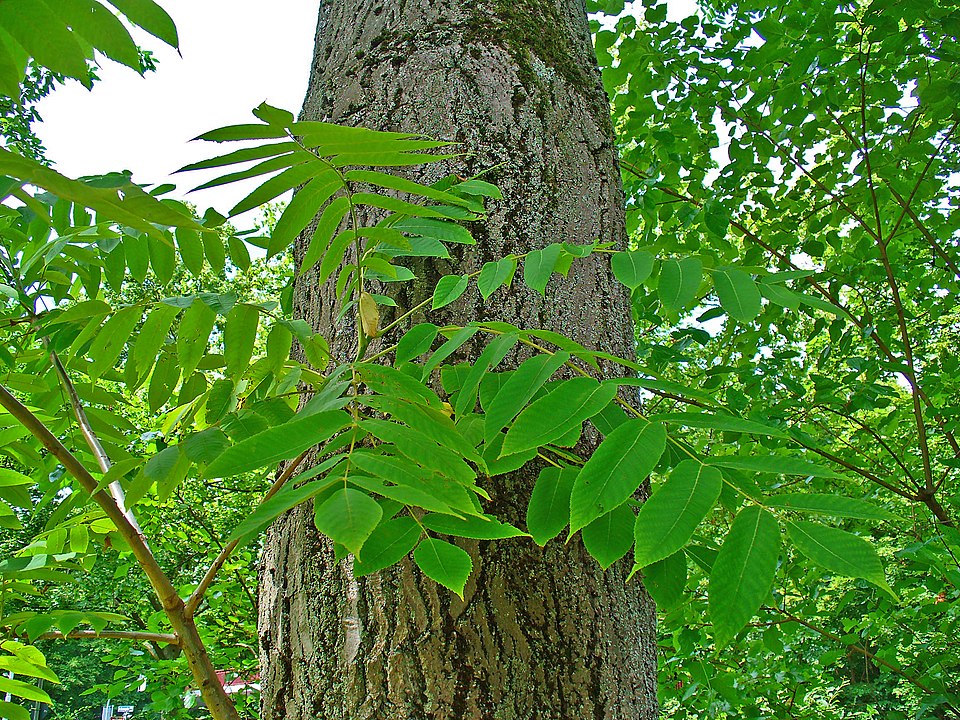
Taxonomy
- Division:
- Magnoliophyta | - Flowering plants
- Family:
- Juglandaceae
- Genus:
- Juglans
- Species:
- Juglans cinerea
Growth Characteristics
- Life Cycle:
- Perennial
- Growth Habit:
- Tree
- Height:
- More than 40 ft
- Light Requirements:
- Full Sun
- Drought Tolerance:
- High
- Bloom Months:
- apr, may
- Bloom Colors:
- Green, Brown
- Food Forest:
- Plant contains edible parts
Native Range
United States: Alabama, Arkansas, Connecticut, District of Columbia, Delaware, Georgia, Iowa, Illinois, Indiana, Kentucky, Massachusetts, Maryland, Maine, Michigan, Minnesota, Missouri, Mississippi, North Carolina, New Hampshire, New Jersey, New York, Ohio, Pennsylvania, Rhode Island, South Carolina, Tennessee, Virginia, Vermont, Wisconsin, West Virginia, Canada: Manitoba, New Brunswick, Ontario, Prince Edward Island, Quebec
Keystone Species Ranking
- Caterpillar Keystone:
- ★☆☆☆☆ Based on number of butterfly and moth species using this genus as host plant (Source: National Wildlife Federation)
Host Plant for Caterpillars
Reported Fauna Sightings
Soil Requirements
- Soil Type:
- rich, well-drained loamy soil
- pH:
- 6.0 - 7.5 (slightly acidic to neutral)
- Drainage:
- excellent drainage required
- Moisture:
- consistently moist
- Notes:
- Prefers fertile soils in riparian zones
Germination Information
Pre-treatment: Seeds are cold stratified for 60 to 120 days or allowed to undergo natural stratification outdoors. Seeds have a hard seed coat and an embryo dormancy that can be broken by cold stratification.
Establishment: Seeds are either collected from mature nuts in the wild or purchased from local collectors. The general distribution of J. cinerea is within temperate deciduous forests of eastern North America, from Maine to Minnesota and south to Arkansas and Mississippi.
Source: npn.rngr.net