
Eastern Beebalm
Monarda bradburiana
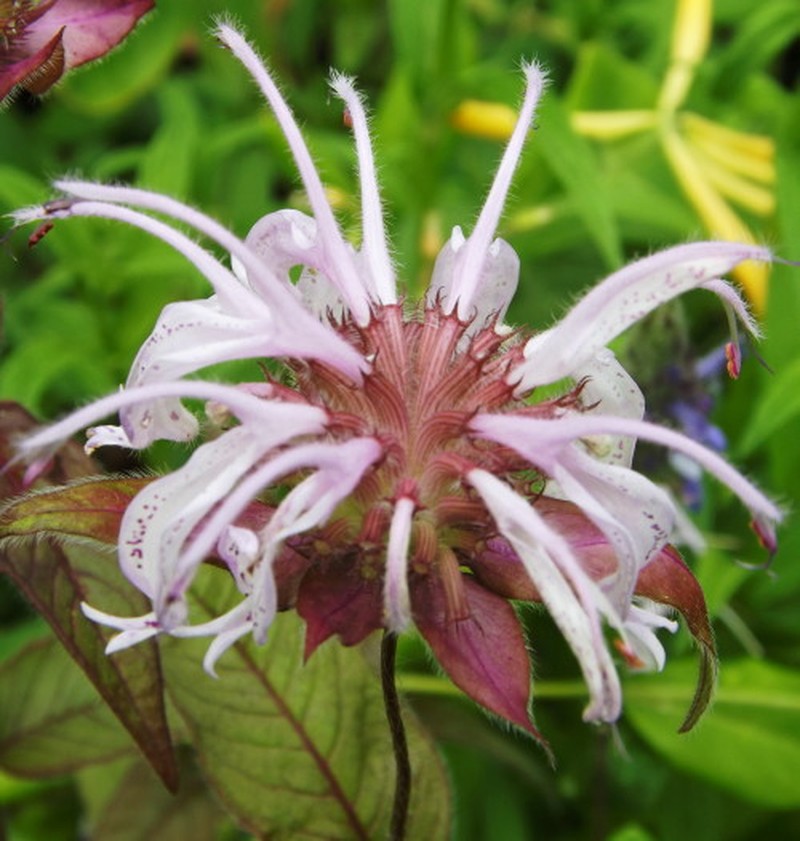
Taxonomy
- Division:
- Magnoliophyta | - Flowering plants
- Family:
- Lamiaceae
- Genus:
- Monarda
- Species:
- Monarda bradburiana
Growth Characteristics
- Life Cycle:
- Perennial
- Growth Habit:
- Forb/herb
- Height:
- 1-2 ft
- Light Requirements:
- Full Sun
- Drought Tolerance:
- High
- Bloom Months:
- jun, jul, aug, sep
- Bloom Colors:
- Pink, Purple
Native Range
United States: Alabama, Arkansas, Iowa, Illinois, Indiana, Kansas, Kentucky, Louisiana, Missouri, Oklahoma, Tennessee, Texas, Virginia
Keystone Species Ranking
- Caterpillar Keystone:
- ★★★★☆ Based on number of butterfly and moth species using this genus as host plant (Source: National Wildlife Federation)
Host Plant for Caterpillars
Coleophora heinrichella, Coleophora monardella, Eutrepsia inconstans, Hermit sphinx (Sphinx eremitus), Pyrausta generosa, ragged-edged pyrausta moth (Pyrausta signatalis), sparganothis fruitworm moth (Sparganothis sulfureana), Xenotemna pallorana
Reported Fauna Sightings
Bees: American bumble bee (Bombus pensylvanicus), American bumble bee (Bombus pensylvanicus), Brown-belted bumble bee (Bombus griseocollis), Brown-belted bumble bee (Bombus griseocollis), Two-spotted bumble bee (Bombus bimaculatus), Two-spotted bumble bee (Bombus bimaculatus)
Soil Requirements
- Soil Type:
- well-drained, sandy or rocky soil
- pH:
- 6.0 - 7.5 (slightly acidic to neutral)
- Drainage:
- excellent drainage required
- Moisture:
- dry to moderate
- Notes:
- native to prairies and open woodlands
Germination Information
Pre-treatment: Cold-moist stratification for 30 days at 1–5°C (34–41°F).
Source: OpenAI GPT-4o