
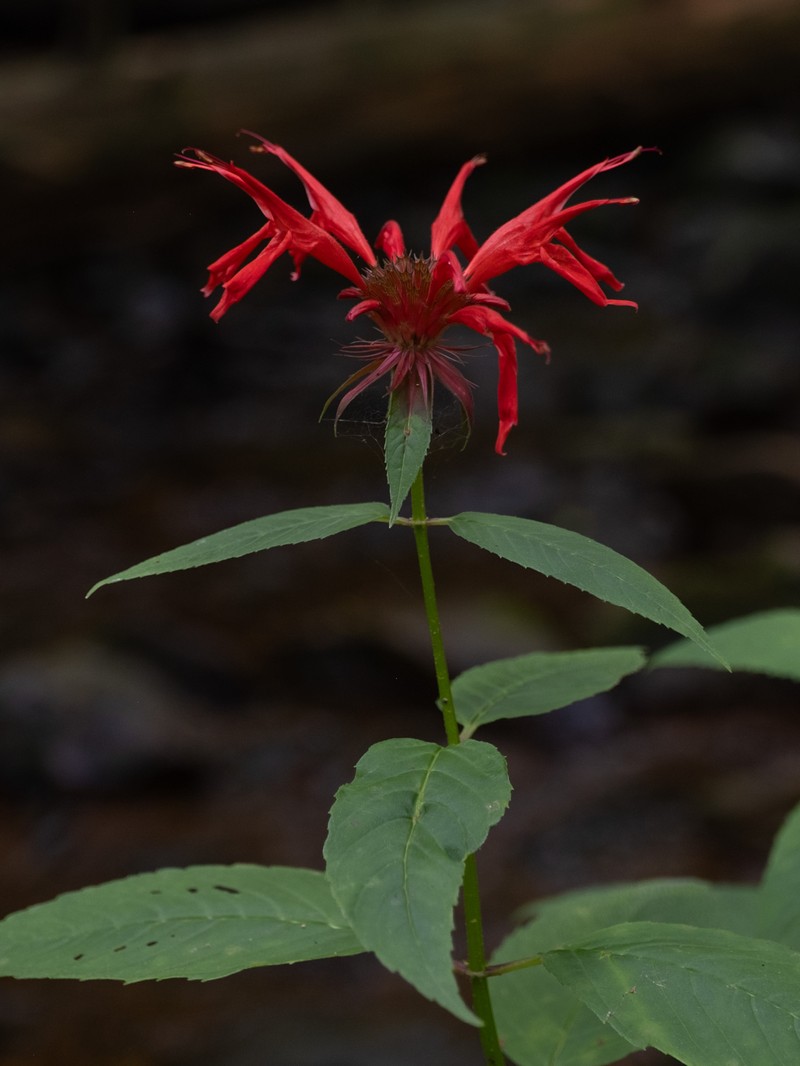
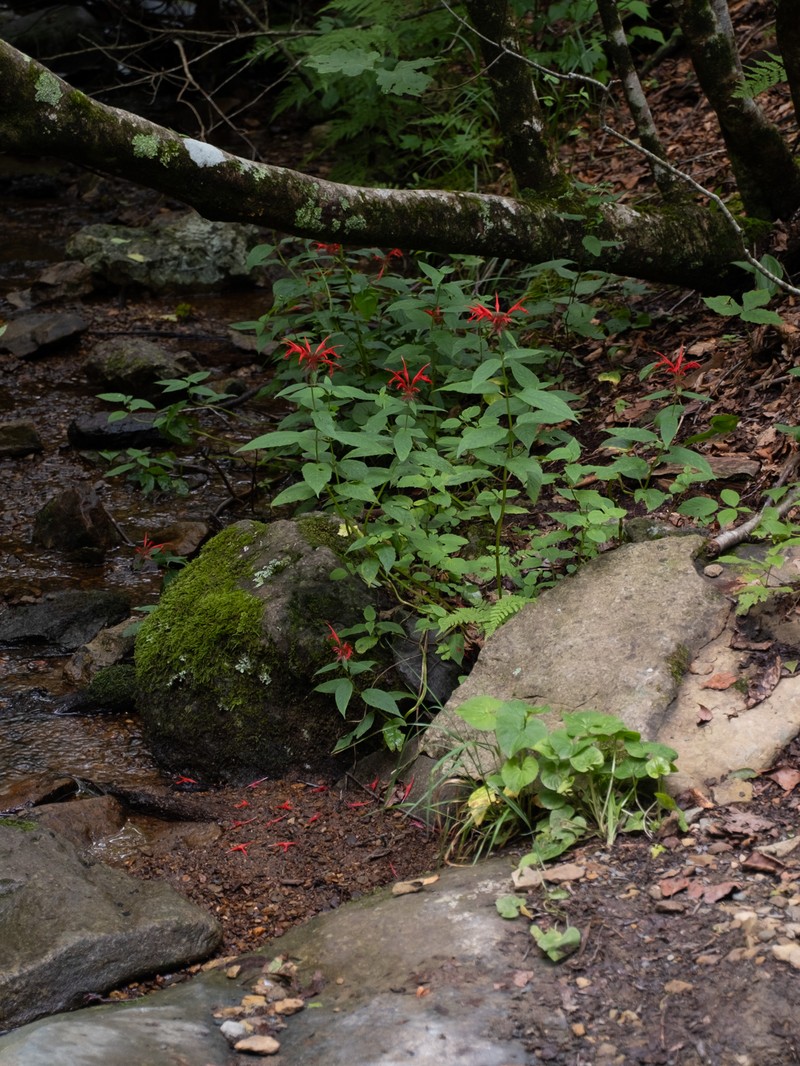
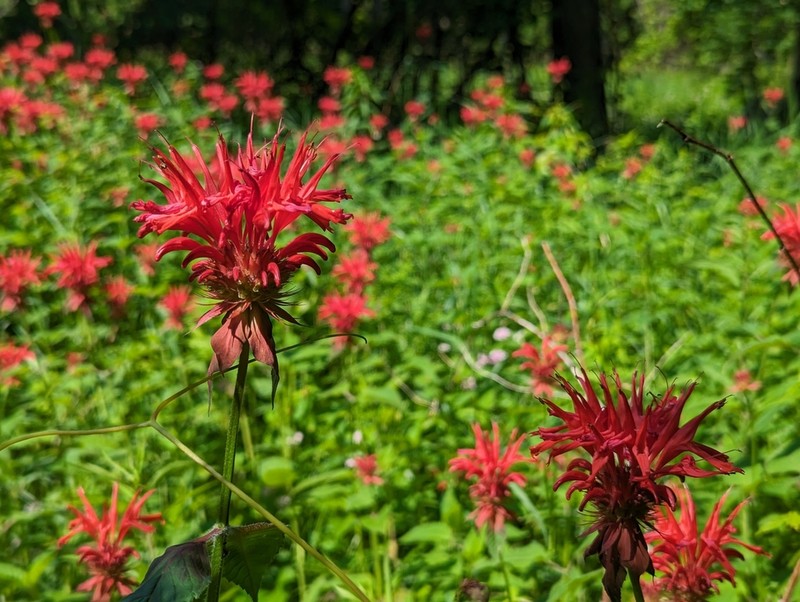
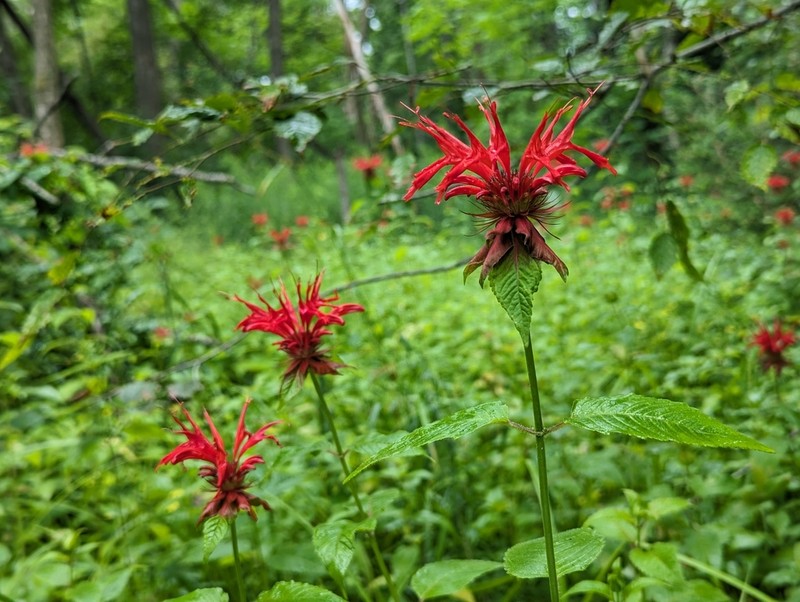
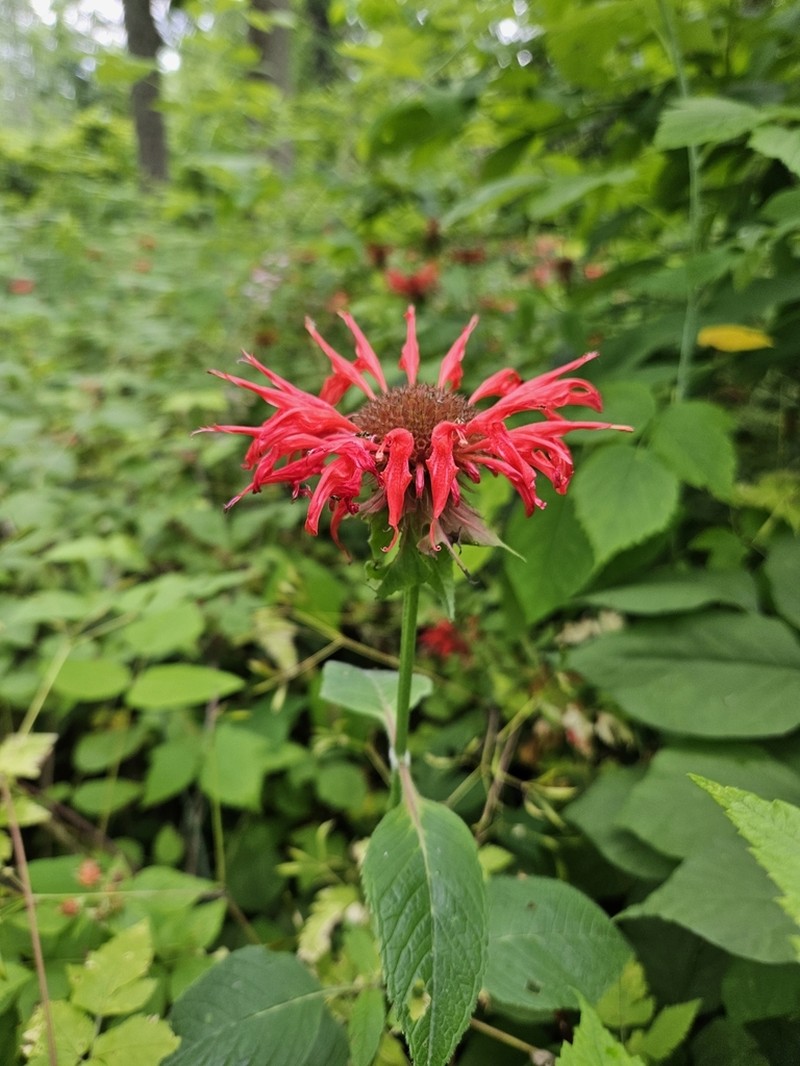
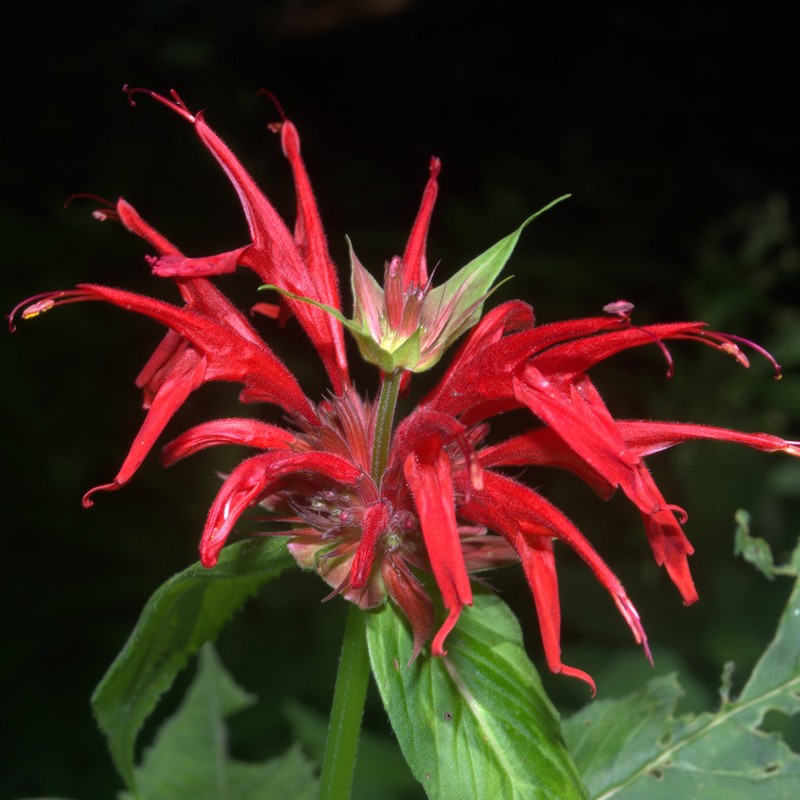
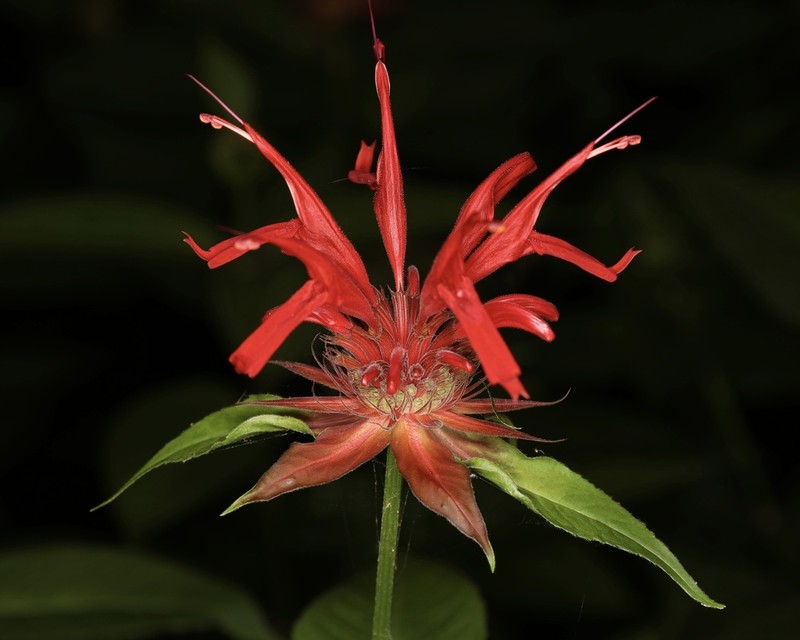
Scarlet Beebalm
Monarda didyma
- Native to:
- Canada, United States, Virgin Islands
Alex Abair (www.inaturalist.org)
Taxonomy
- Division:
- Magnoliophyta | - Flowering plants
- Family:
- Lamiaceae
- Genus:
- Monarda
- Species:
- Monarda didyma
- USDA Symbol:
- MODI
Growth Characteristics
- Life Cycle:
- Perennial
- Growth Habit:
- Forb/herb
- Height:
- 120 cm
- Light Requirements:
- Full Sun,Part Shade
- Drought Tolerance:
- Low
- Bloom Months:
- jun,jul,aug
- Bloom Colors:
- red
Wildlife Benefits
- Bees:
- ★★☆☆☆ Documented bee visitation (GBIF)
- Butterflies & Moths:
- ★☆☆☆☆ Documented Lepidoptera association (GBIF)
- Caterpillars:
- ★☆☆☆☆ Recorded caterpillar host plant (HOSTS Database)
- Hummingbirds:
- ★☆☆☆☆ Documented hummingbird visits (GBIF)
Keystone Species Ranking
- Caterpillar Keystone:
- ★★☆☆☆ Butterfly & moth species supported by this genus (NWF)
Host Plant for Caterpillars
Reported Fauna Sightings
Garden & Ecology Notes
- Wildlife Value:
- bees, butterflies, hummingbirds
- Fragrant:
- Yes
Soil Requirements
- Soil Type:
- rich, well-drained loamy soil
- pH:
- 5.5 - 7.0 (slightly acidic to neutral)
- Drainage:
- good drainage required
- Moisture:
- consistently moist
- Notes:
- Prefers fertile soils with organic matter
Propagation & Germination
- Stratification:
- Cold/moist stratification required — 30–60 days
- Germination Time:
- 10–30 days
- Notes:
- Seeds require cold stratification for 30-60 days; surface sow and keep moist at 20-22°C.
Pre-treatment: Seeds are planted into round cell greenhouse flat liners with 38 cells per flat filled with coarse processed bark and composted pine bark growing medium. Seeds are surface sown at a rate of 3-5 seeds per cell and lightly covered with starter sized, 1/16" - 1/8" diameter, granite poultry grit. Flats are lightly hand watered to slightly moisten the growing medium and cold stratified at 35 degrees Fahrenheit for a minimum of 21 days.
Establishment: Seed of Monongahela National Forest ecotype scarlet beebalm was hand harvested from existing populations within the West Virginia confines of the Monongahela National Forest. Scarlet beebalm is widely distributed throughout eastern North America.
Source: npn.rngr.net
ORGHPS Germination Guide: Sow @ 20C. Germinates within 3 months.
Where to Buy
Nationwide Seller
- Sheffield's Seed (seeds)
- Prairie Moon Nursery (nursery and seeds)
- Native Plants Nursery (nursery)
- Native Plants Nursery (nursery)