
White Sage
Salvia apiana
- Native to:
- Mexico, United States
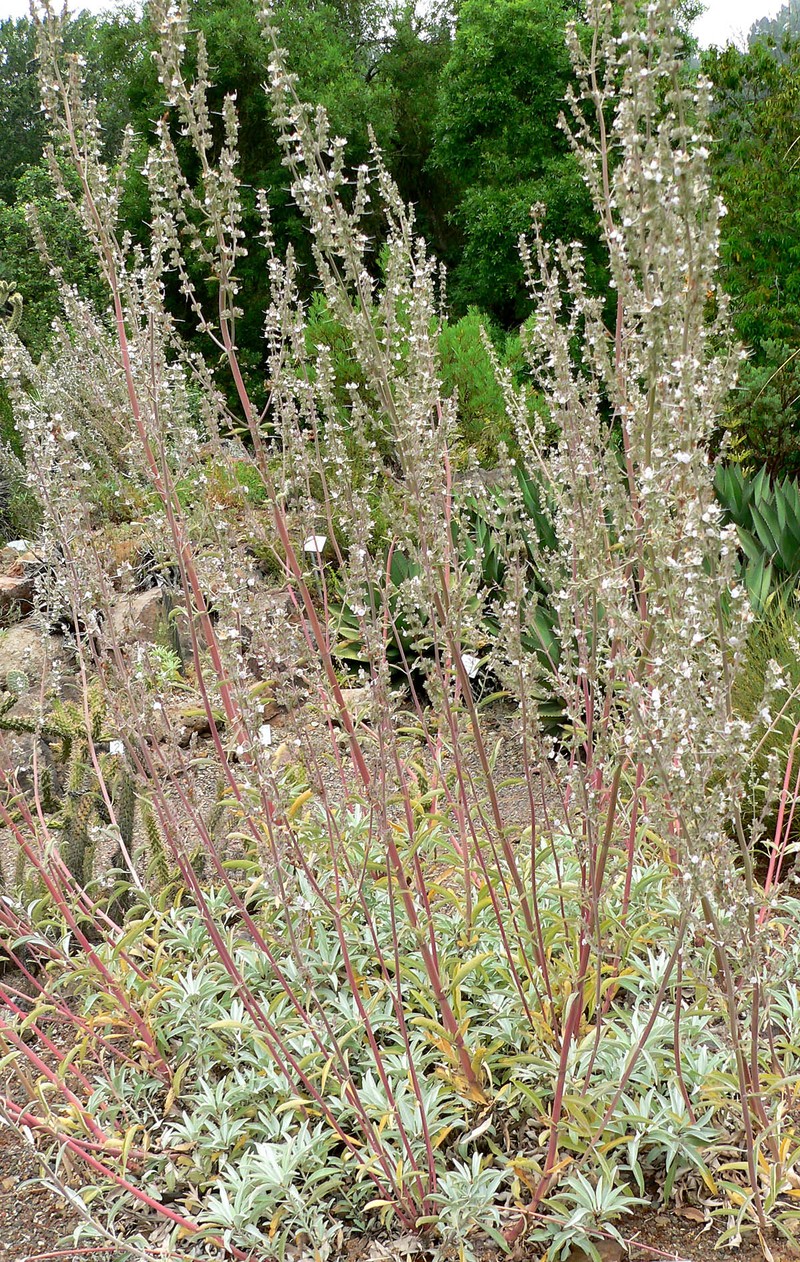
Stan Shebs
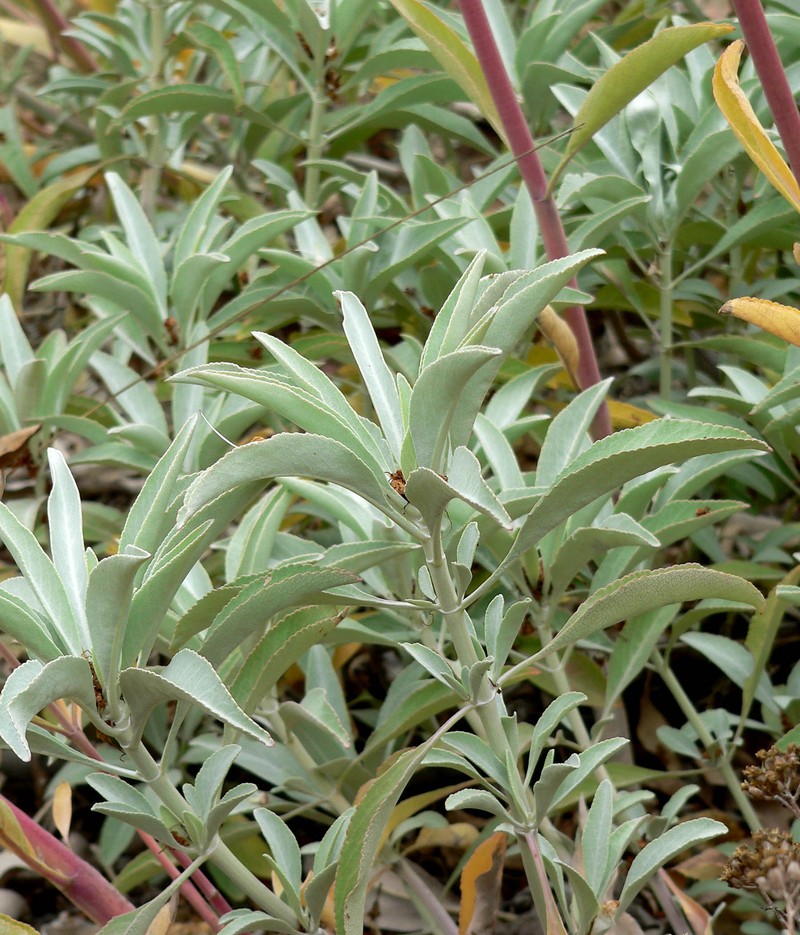
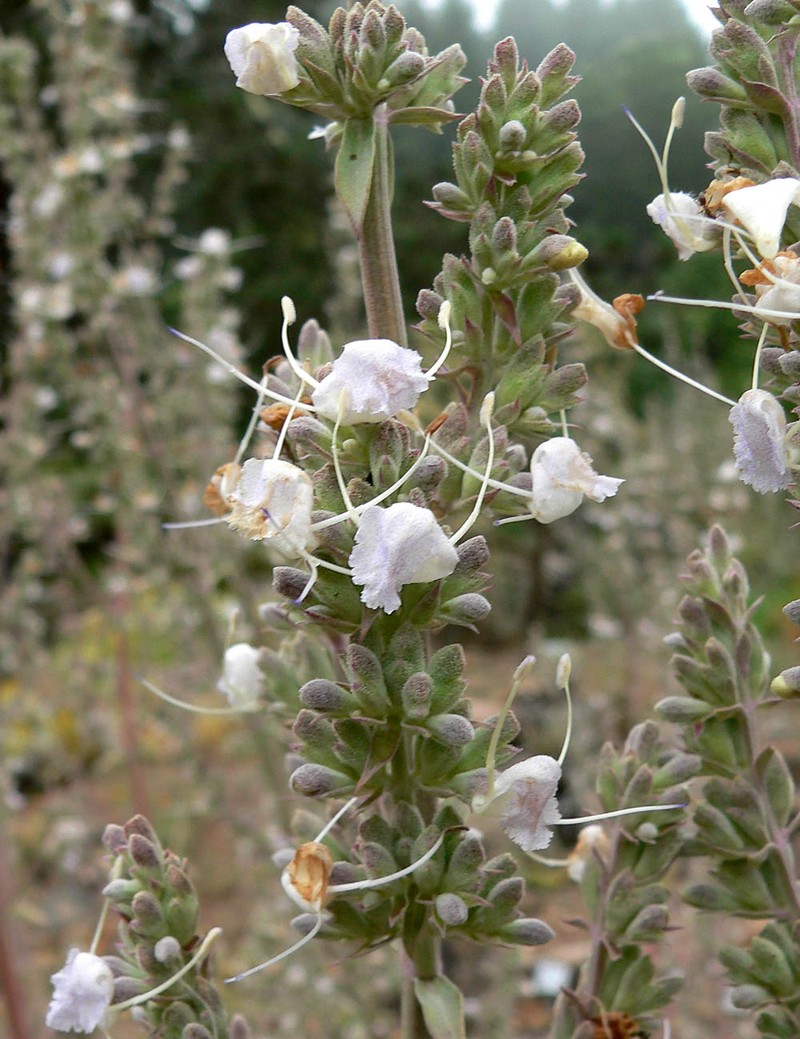
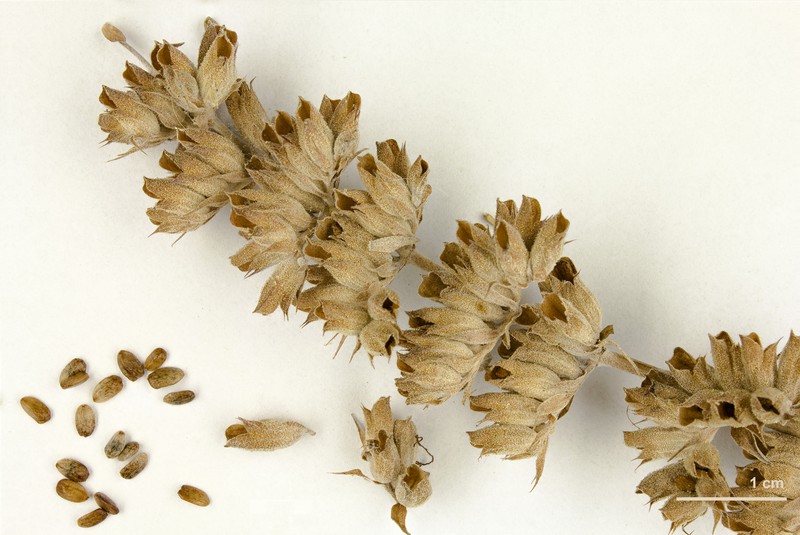
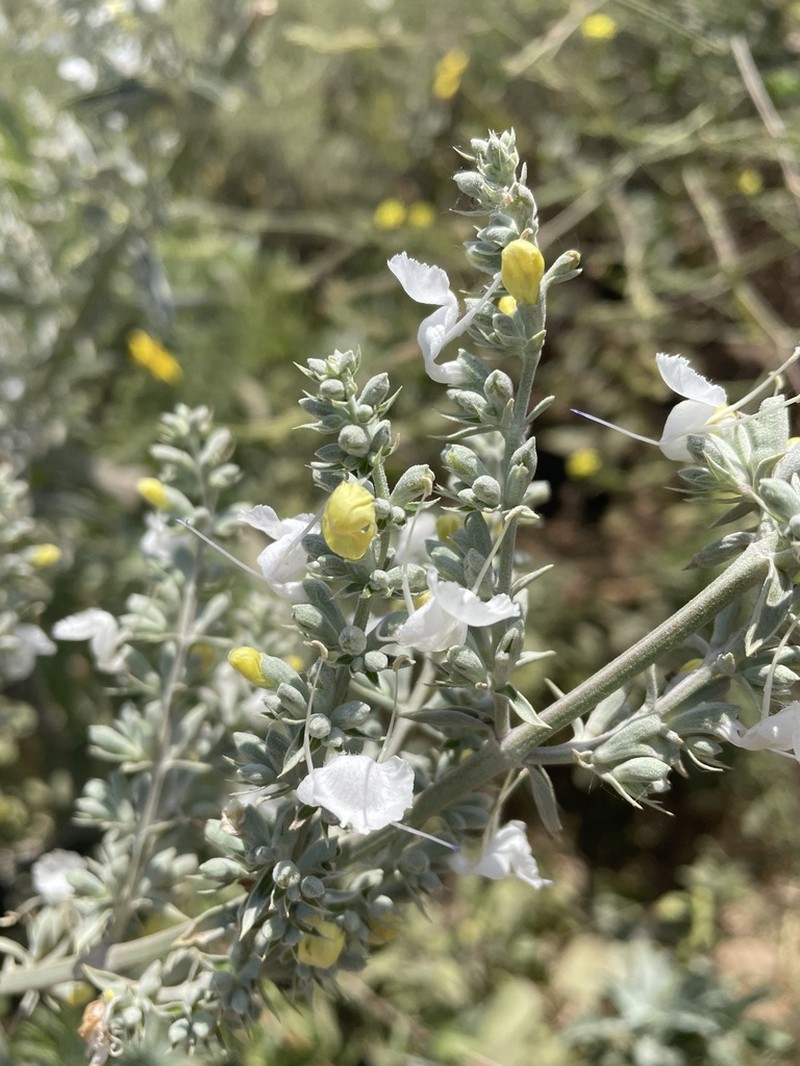
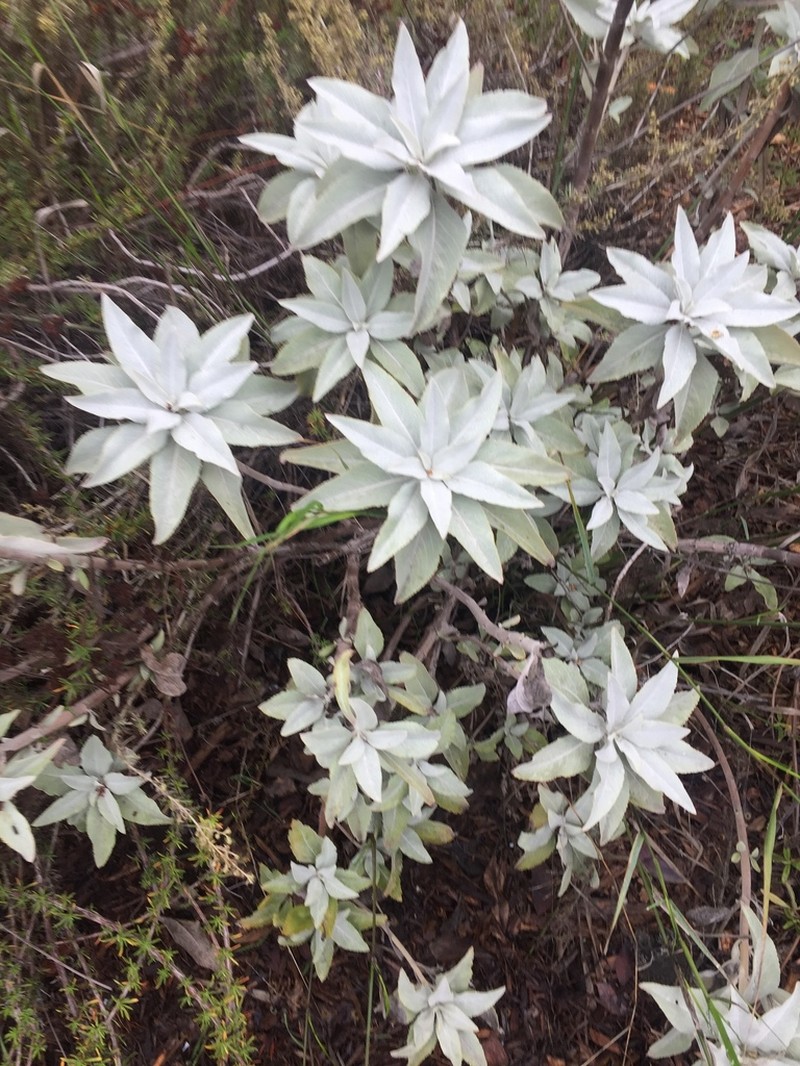
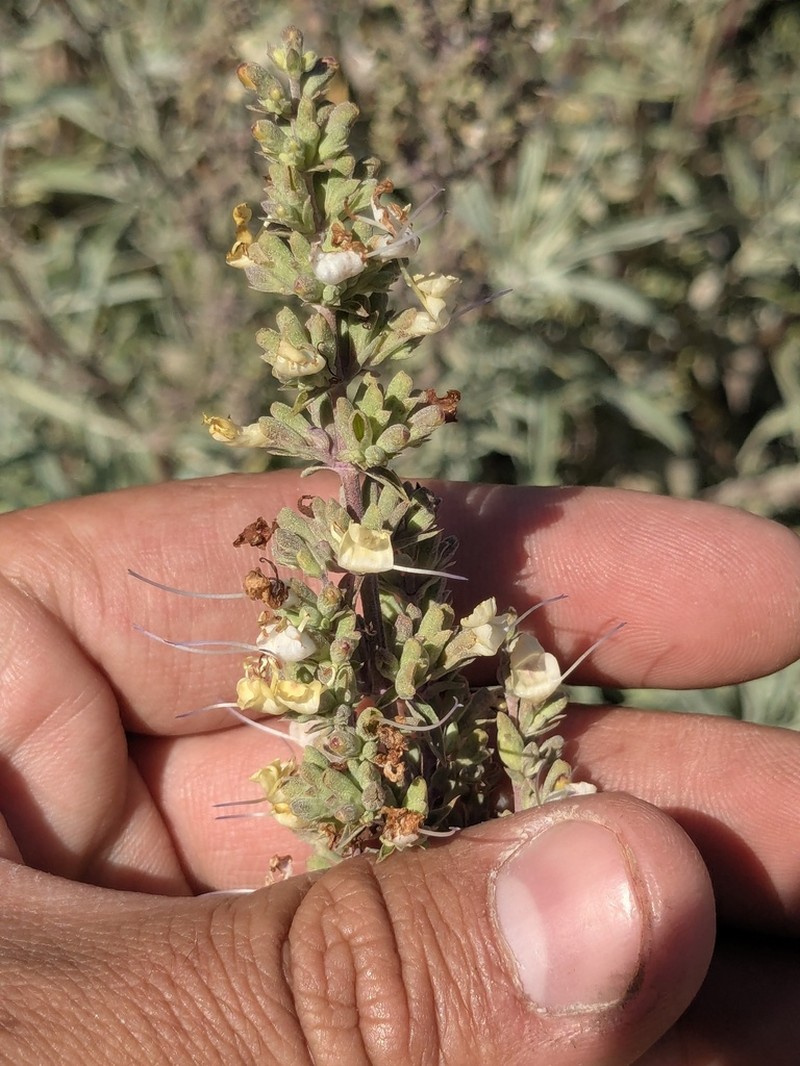
Taxonomy
- Division:
- Magnoliophyta | - Flowering plants
- Family:
- Lamiaceae
- Genus:
- Salvia
- Species:
- Salvia apiana
- USDA Symbol:
- SAAP2
Growth Characteristics
- Life Cycle:
- Perennial
- Growth Habit:
- Subshrub
- Height:
- 150 cm
- Light Requirements:
- Full Sun
- Drought Tolerance:
- High
- Bloom Months:
- apr,may,jun
- Bloom Colors:
- white, lavender
Wildlife Benefits
- Bees:
- ★★☆☆☆ Documented bee visitation (GBIF)
- Butterflies & Moths:
- ★☆☆☆☆ Documented Lepidoptera association (GBIF)
- Caterpillars:
- ★☆☆☆☆ Recorded caterpillar host plant (HOSTS Database)
- Hummingbirds:
- ★☆☆☆☆ Documented hummingbird visits (GBIF)
Host Plant for Caterpillars
Barnes' dart moth (Abagrotis barnesi), Bucculatrix taeniola
Reported Fauna Sightings
Bees: Bombus californicus, Crotch bumble (Bombus crotchii), ⚠️Western honey bee (Apis mellifera), Xylocopa californica, Xylocopa sonorina, Xylocopa tabaniformis, Yellow bumble bee (Bombus fervidus), Yellow-faced bumble (Bombus vosnesenskii) Hummingbirds: Allen's Hummingbird (Selasphorus sasin), Black-chinned Hummingbird (Archilochus alexandri), Costa's Hummingbird (Calypte costae) Moths:Pyrausta volupialis Butterflies:Fiery Skipper (Hylephila phyleus), Julia butterfly (Dione vanillae), Lon melane, ⚠️Monarch butterfly (Danaus plexippus), Mourning Cloak (Nymphalis antiopa)
Garden & Ecology Notes
- Wildlife Value:
- bees, butterflies, hummingbirds
- Deer Resistant:
- Yes
- Fragrant:
- Yes
- Fire Ecology:
- Fire adapted — tolerates or benefits from fire
- Fire Notes:
- Resprouts from root crown after fire; seeds also germinate in post-fire conditions.
Soil Requirements
- Soil Type:
- sandy, nutrient-poor, well-drained soil
- pH:
- 6.0 - 8.0 (slightly acidic to neutral)
- Drainage:
- excellent drainage required
- Moisture:
- dry to moderate
- Notes:
- Native to arid regions; prefers dry conditions
Propagation & Germination
- Stratification:
- Cold/moist stratification required — 30–60 days
- Germination Time:
- 14–30 days
- Notes:
- Seeds benefit from cold stratification; sow on surface and keep moist until germination.
Pre-treatment: For cuttings, recut at the base, remove lower leaves, dip into a Physan disinfectant, and treat with Hormex #3 rooting powder. For seeds, use a 3 minute 5% bleach solution to surface sterilize seed coats prior to sowing.
Establishment: Cuttings are collected in late April while seeds are collected when fully matured, typically in July and August. White Sage is commonly found in southern California and the Channel islands.
Source: npn.rngr.net
ORGHPS Germination Guide: Most interbreed and seed may not be what is labelled
Where to Buy
Nationwide Seller
- Sheffield's Seed (seeds)
- Native Seed Group (seeds)