
Black Sage
Salvia mellifera
- Native to:
- Mexico, United States
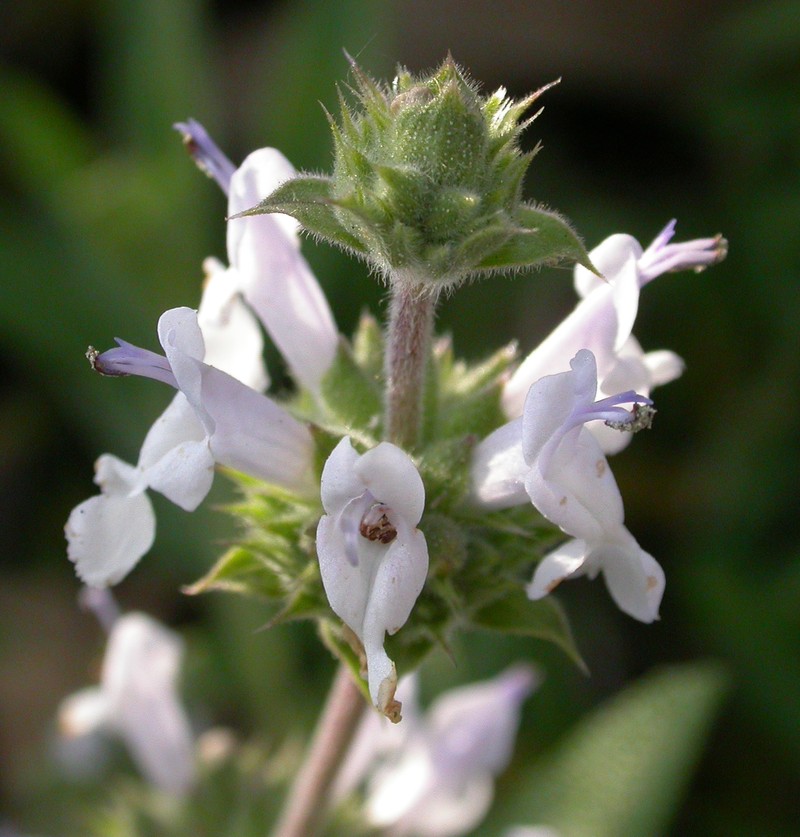
No machine-readable author provided. Curtis Clark assumed (based on copyright claims).
Taxonomy
- Division:
- Magnoliophyta | - Flowering plants
- Family:
- Lamiaceae
- Genus:
- Salvia
- Species:
- Salvia mellifera
- USDA Symbol:
- SAME3
Growth Characteristics
- Life Cycle:
- Perennial
- Growth Habit:
- Shrub , Subshrub
- Height:
- 150 cm
- Light Requirements:
- Full Sun
- Drought Tolerance:
- High
- Bloom Months:
- apr,may,jun
- Bloom Colors:
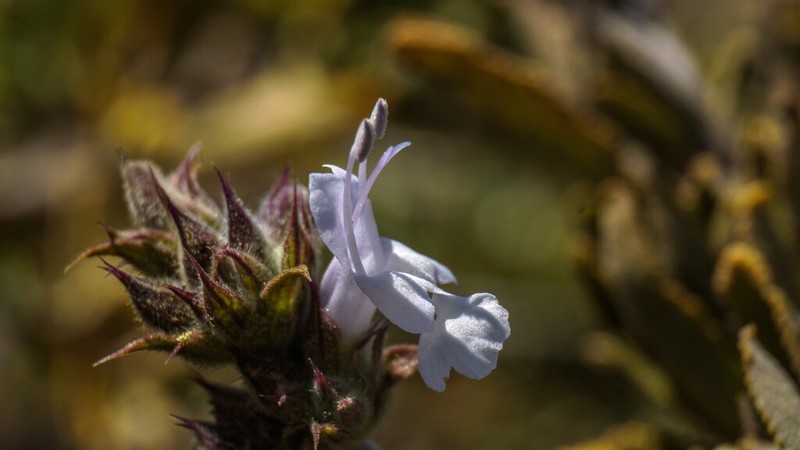
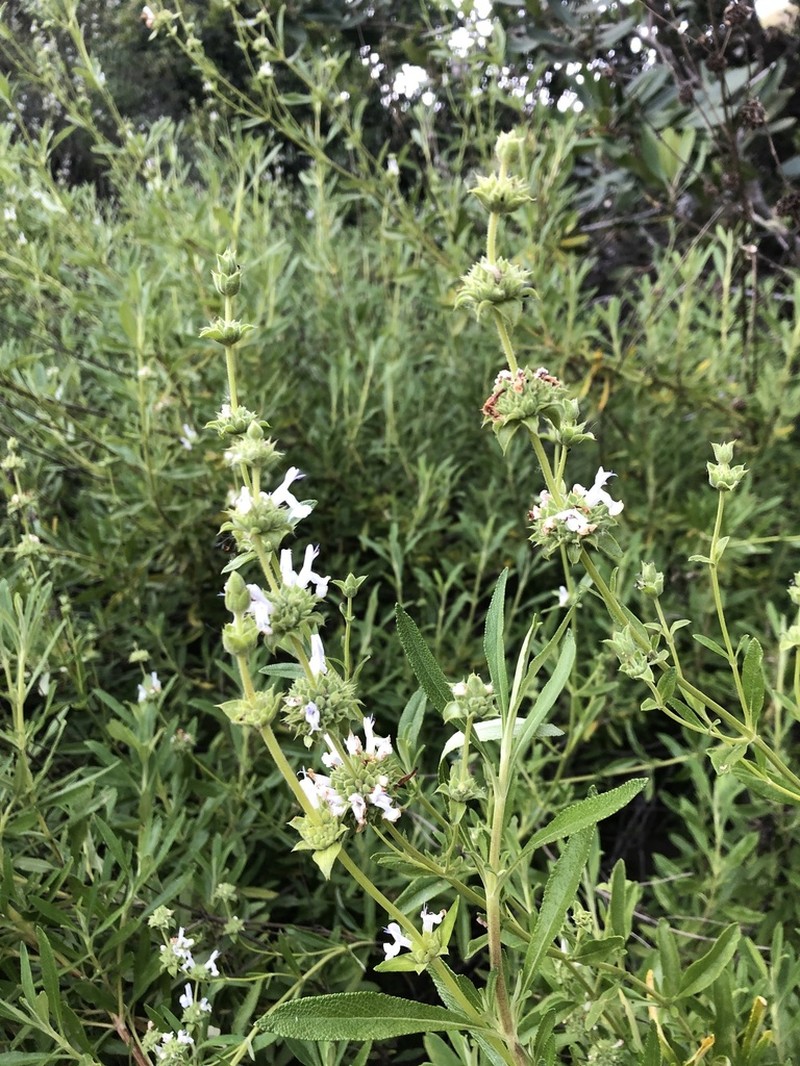
- white, pale blue, lavender
- Evergreen Shrub:
- Yes
- Landscaping Shrub:
- Yes
Wildlife Benefits
- Bees:
- ★★★☆☆ Documented bee visitation (GBIF)
- Butterflies & Moths:
- ★★★★☆ Documented Lepidoptera association (GBIF)
- Caterpillars:
- ★☆☆☆☆ Recorded caterpillar host plant (HOSTS Database)
- Hummingbirds:
- ★☆☆☆☆ Documented hummingbird visits (GBIF)
Host Plant for Caterpillars
Pherne subpunctata, Gray Hairstreak (Strymon melinus)
Reported Fauna Sightings
Bees: American bumble bee (Bombus pensylvanicus), Anthophora californica, Black-tailed bumble (Bombus melanopygus), Bombus californicus, Bombus sonorus, Habropoda depressa, Habropoda tristissima, Pyrobombus Dalla, ⚠️Western honey bee (Apis mellifera), Xylocopa californica, Xylocopa sonorina, Xylocopa tabaniformis, Yellow bumble bee (Bombus fervidus) Hummingbirds: Anna's Hummingbird (Calypte anna), Black-chinned Hummingbird (Archilochus alexandri), Costa's Hummingbird (Calypte costae) Moths:White-lined sphinx moth (Hyles lineata) Butterflies:Dusky Green Hairstreak (Callophrys dumetorum), Fiery Skipper (Hylephila phyleus), Funereal Duskywing (Erynnis funeralis), Lon melane, ⚠️Monarch butterfly (Danaus plexippus), Mournful Duskywing (Erynnis tristis), Painted Lady (Vanessa cardui), Pale Swallowtail (Papilio eurymedon), Pipevine Swallowtail (Battus philenor), Sara Orangetip (Anthocharis sara), Small White (Pieris rapae), Variable checkerspot (Euphydryas chalcedona), Western Tiger Swallowtail (Papilio rutulus)
Garden & Ecology Notes
- Wildlife Value:
- bees, butterflies, birds
- Deer Resistant:
- Yes
- Fragrant:
- Yes
- Fire Ecology:
- Fire adapted — tolerates or benefits from fire
- Fire Notes:
- Resprouts from basal burl after fire; seeds also germinate in post-fire conditions.
Soil Requirements
- Soil Type:
- sandy, well-drained, nutrient-poor soil
- pH:
- 6.0 - 8.0 (slightly acidic to neutral)
- Drainage:
- excellent drainage required
- Moisture:
- dry to moderate
- Notes:
- Common in coastal sage scrub and chaparral habitats
Propagation & Germination
- Stratification:
- Cold/moist stratification required — 30–60 days
- Germination Time:
- 14–30 days
- Notes:
- Seeds benefit from cold stratification for 4-8 weeks to break dormancy; surface sow on well-drained medium.
Pre-treatment: Seed germination is stimulated by the presence of charred wood or aqueous extracts of it, resulting in a 21% increase in germination as compared to control.
Establishment: S. mellifera is found within the mattoral vegetation association of California.
Source: npn.rngr.net
ORGHPS Germination Guide: Most interbreed and seed may not be what is labelled