
Russian Sage
Salvia yangii
- Native to:
- Afghanistan, China, India, Pakistan
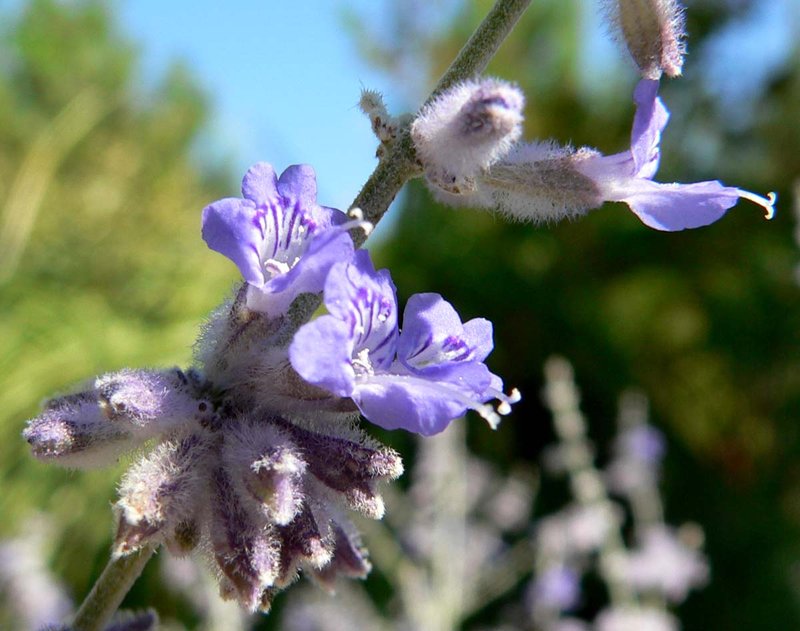
Stan Shebs,Atarax42,Atarax42,M.S. (en.wikipedia.org) del, J.N.Fitch (en.wikipedia.org) , lith.,M.S. del, J.N.Fitch, lith.,Agnieszka Kwiecień, Nova,Agnieszka Kwiecień, Nova,Agnieszka Kwiecień, Nova,Atarax42,Atarax42,Atarax42,Atarax42

Taxonomy
- Division:
- Magnoliophyta | - Flowering plants
- Family:
- Lamiaceae
- Genus:
- Salvia
- Species:
- Salvia yangii
- USDA Symbol:
- PEAT10
Growth Characteristics
- Height:
- 120 cm
- Light Requirements:
- Full Sun
- Drought Tolerance:
- High
- Bloom Months:
- jun,jul,aug,sep
- Bloom Colors:
- blue, purple
Reported Fauna Sightings
Bees: American bumble (Bombus pensylvanicus), Anthophora californica, Black and (Bombus auricomus), Central bumble bee (Bombus centralis), Eastern Carpenter Bee (Xylocopa virginica), Half-black bumble bee (Bombus vagans), Red-belted bumble bee (Bombus rufocinctus), Tri-colored bumble bee (Bombus ternarius), Two-spotted Longhorn (Melissodes bimaculatus), Western bumble bee (Bombus occidentalis), ⚠️Western honey bee (Apis mellifera), Yellow-banded bumble bee (Bombus terricola), Yellow-faced bumble bee (Bombus vosnesenskii) Hummingbirds: Ruby-throated Hummingbird (Archilochus colubris) Moths:White-lined sphinx moth (Hyles lineata) Butterflies:Gray Hairstreak (Strymon melinus), Peck's skipper (Polites peckius), Silver-spotted Skipper (Epargyreus clarus), Small White (Pieris rapae), Woodland Skipper (Ochlodes sylvanoides)
Garden & Ecology Notes
- Wildlife Value:
- bees, butterflies
- Deer Resistant:
- Yes
- Fragrant:
- Yes
Soil Requirements
- Soil Type:
- sandy, well-drained, nutrient-poor soil
- pH:
- 6.0 - 7.5 (slightly acidic to neutral)
- Drainage:
- excellent drainage required
- Moisture:
- dry to moderate
- Notes:
- native to dry, rocky regions
Propagation & Germination
- Stratification:
- Cold/moist stratification required — 30–60 days
- Germination Time:
- 14–30 days
- Notes:
- Seeds germinate best after cold stratification for 4-8 weeks at 4°C.
ORGHPS Germination Guide: Most interbreed and seed may not be what is labelled