
Northern Spicebush
Lindera benzoin
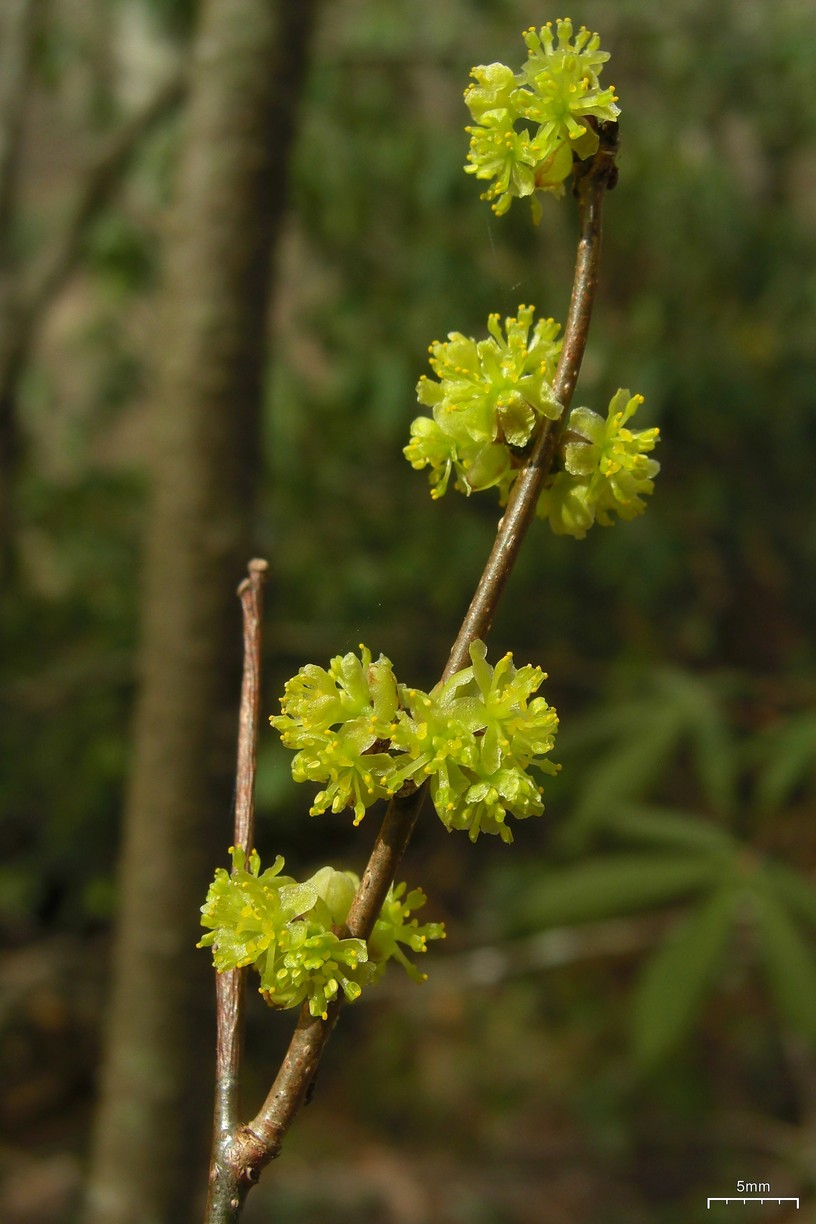
Taxonomy
- Division:
- Magnoliophyta | - Flowering plants
- Family:
- Lauraceae
- Genus:
- Lindera
- Species:
- Lindera benzoin
Growth Characteristics
- Life Cycle:
- Perennial
- Growth Habit:
- Shrub , Tree
- Height:
- 20-40 ft
- Light Requirements:
- Full Sun, Part Shade, Shade
- Drought Tolerance:
- Medium
- Bloom Months:
- mar, apr, may
- Bloom Colors:
- White, Yellow
- Evergreen Shrub:
- Yes
- Landscaping Shrub:
- Yes
Native Range
United States: Alabama, Arkansas, Connecticut, District of Columbia, Delaware, Florida, Georgia, Iowa, Illinois, Indiana, Kansas, Kentucky, Louisiana, Massachusetts, Maryland, Maine, Michigan, Missouri, Mississippi, North Carolina, New Hampshire, New Jersey, New York, Ohio, Oklahoma, Pennsylvania, Rhode Island, South Carolina, Tennessee, Texas, Virginia, Vermont, West Virginia, Canada: Ontario
Keystone Species Ranking
- Caterpillar Keystone:
- ★★★★☆ Based on number of butterfly and moth species using this genus as host plant (Source: National Wildlife Federation)
Host Plant for Caterpillars
Soil Requirements
- Soil Type:
- rich, well-drained loamy soil
- pH:
- 5.0 - 7.0 (slightly acidic to neutral)
- Drainage:
- tolerates poor drainage
- Moisture:
- consistently moist
- Notes:
- thrives in floodplain forests and wetlands
Germination Information
Pre-treatment: Seeds require a warm-cold stratification regime to germinate. Sowing in the fall permits seed to undergo warm stratification prior to winter. Alternatively, 120 days of stratification at 41°F can be used.
Establishment: Seeds are collected from various locations including Yosemite National Park, Cumberland Gap National Historical Park, and Shenandoah National Park. The plant is found in rich, moist woods and is a common deciduous understory shrub found in the eastern U.S., which grows best on moist peaty or sandy sites with pH of 4.5-6.0.
Source: npn.rngr.net