
Sassafras
Sassafras albidum
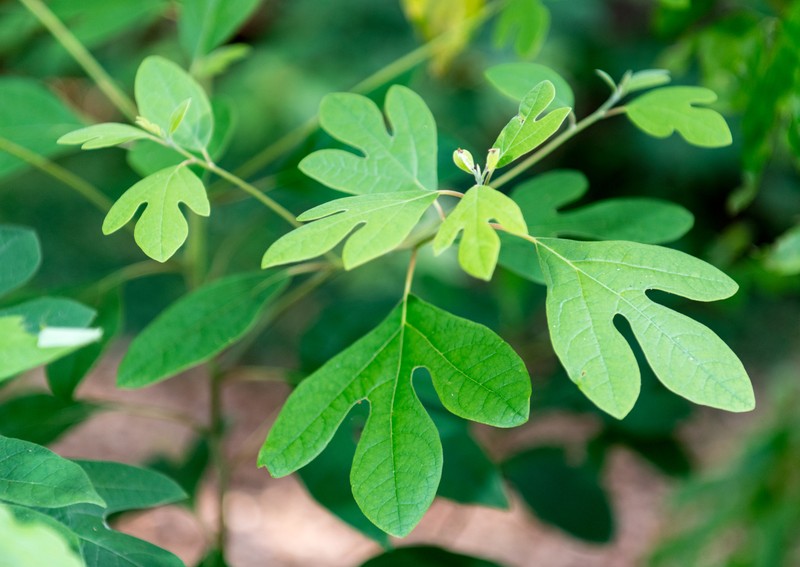
Taxonomy
- Division:
- Magnoliophyta | - Flowering plants
- Family:
- Lauraceae
- Genus:
- Sassafras
- Species:
- Sassafras albidum
Growth Characteristics
- Life Cycle:
- Perennial
- Growth Habit:
- Shrub , Tree
- Height:
- More than 40 ft
- Light Requirements:
- Full Sun, Part Shade, Shade
- Drought Tolerance:
- Medium
- Bloom Months:
- mar, apr, may
- Bloom Colors:
- Yellow, Green, Brown
- Food Forest:
- Plant contains edible parts
Native Range
United States: Alabama, Arkansas, Connecticut, District of Columbia, Delaware, Florida, Georgia, Iowa, Illinois, Indiana, Kansas, Kentucky, Louisiana, Massachusetts, Maryland, Maine, Michigan, Missouri, Mississippi, North Carolina, New Hampshire, New Jersey, New York, Ohio, Oklahoma, Pennsylvania, Rhode Island, South Carolina, Tennessee, Texas, Virginia, Vermont, Wisconsin, West Virginia, Canada: Ontario
Host Plant for Caterpillars
Reported Fauna Sightings
Soil Requirements
- Soil Type:
- rich, well-drained loamy soil
- pH:
- 4.5 - 6.5 (acidic to slightly acidic)
- Drainage:
- excellent drainage required
- Moisture:
- dry to moderate
- Notes:
- prefers forested areas with organic matter
Germination Information
Pre-treatment: Seeds are cold stratified for 120 days and germinate at 30/20 C. Pre-scarified and inoculated seeds are dusted with fungicide and hand-sown into rows. Endomycorrhizae are sprinkled over the seed before covering with soil. The beds are then mulched with aged sawdust, which is scraped back in the spring before seedling emergence.
Establishment: Fruit is collected in the GRSM in August and September, in Cumberland Gap in September. S. albidum is found from Maine to Florida in dry or rich woods, roadsides and old fields.
Source: npn.rngr.net