
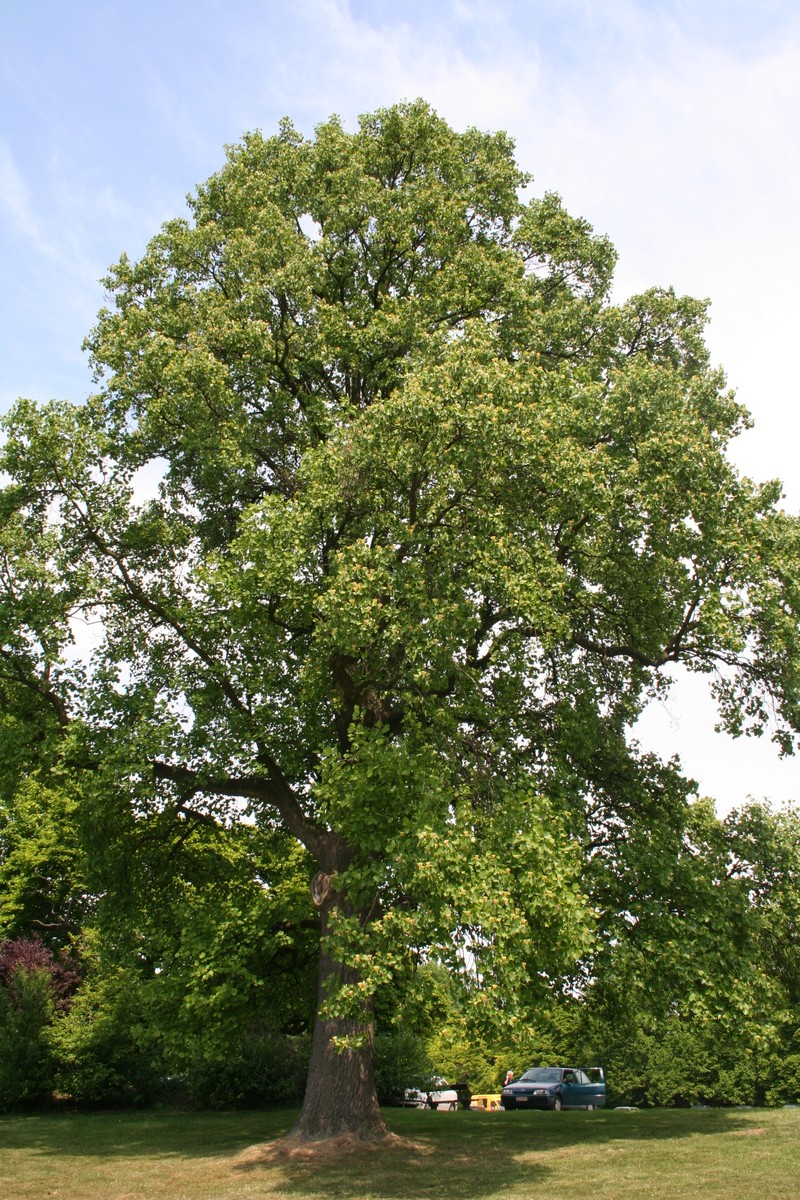
Tuliptree
Liriodendron tulipifera
Taxonomy
- Division:
- Magnoliophyta | - Flowering plants
- Family:
- Magnoliaceae
- Genus:
- Liriodendron
- Species:
- Liriodendron tulipifera
Growth Characteristics
- Life Cycle:
- Perennial
- Growth Habit:
- Tree
- Height:
- More than 40 ft
- Light Requirements:
- Full Sun, Part Shade, Shade
- Drought Tolerance:
- Medium
- Bloom Months:
- apr, may, jun
- Bloom Colors:
- Yellow, Green, Brown
Native Range
United States: Alabama, Arkansas, Connecticut, District of Columbia, Delaware, Florida, Georgia, Iowa, Illinois, Indiana, Kentucky, Louisiana, Massachusetts, Maryland, Michigan, Missouri, Mississippi, North Carolina, New Jersey, New York, Ohio, Pennsylvania, Rhode Island, South Carolina, Tennessee, Texas, Virginia, Vermont, West Virginia, Canada: Ontario
Keystone Species Ranking
- Caterpillar Keystone:
- ★★★☆☆ Based on number of butterfly and moth species using this genus as host plant (Source: National Wildlife Federation)
Host Plant for Caterpillars
Reported Fauna Sightings
Soil Requirements
- Soil Type:
- rich, well-drained loamy soil
- pH:
- 5.5 - 7.5 (slightly acidic to neutral)
- Drainage:
- good drainage preferred
- Moisture:
- consistently moist
- Notes:
- prefers deep, fertile soils
Germination Information
Pre-treatment: Seeds are either sown in outdoor nursery beds in the fall soon after collection and cleaning for natural stratification or placed in cold moist stratification for 70 days.
Establishment: Seeds are collected from various locations, including Great Smoky Mountains National Park, Cumberland Gap National Historical Park, National Capital Parks-East, Shenandoah National Park, George Washington Memorial Parkway, and local sources in south central Missouri. The general distribution of Liriodendron tulipifera ranges from Vermont to southern Michigan, Missouri and south to Florida and Louisiana, and is also found in temperate deciduous forests of the eastern United States.
Source: npn.rngr.net