
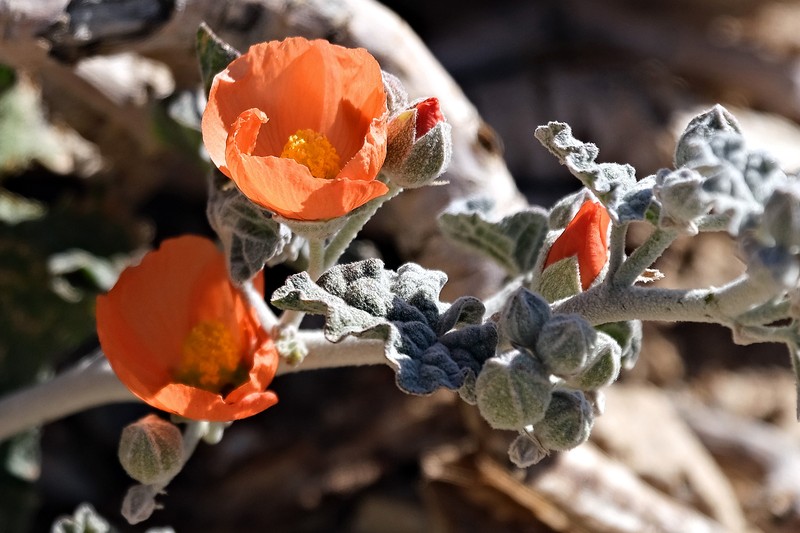
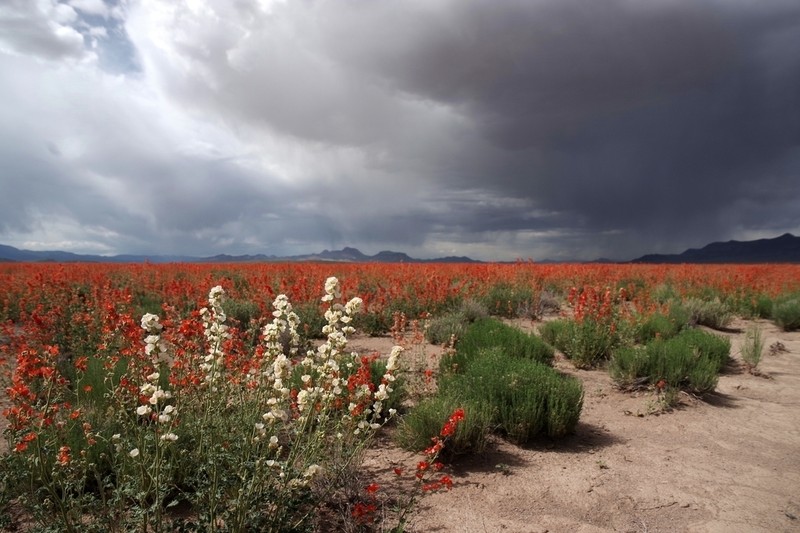
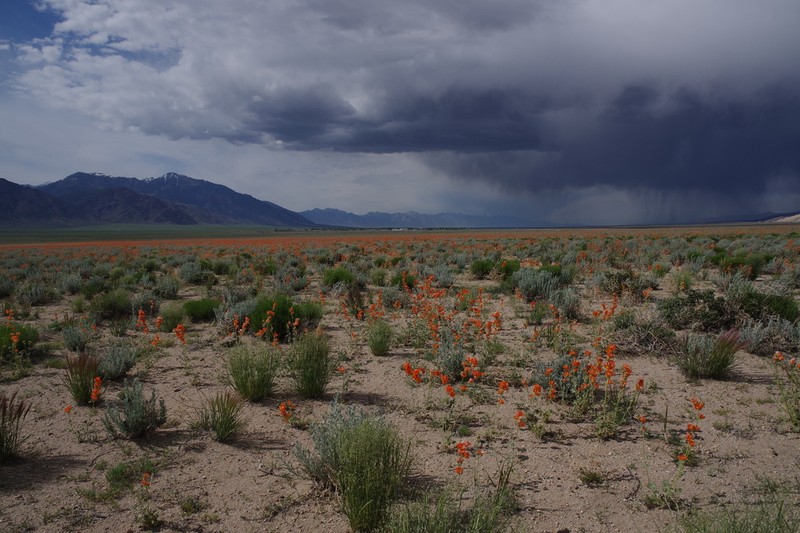
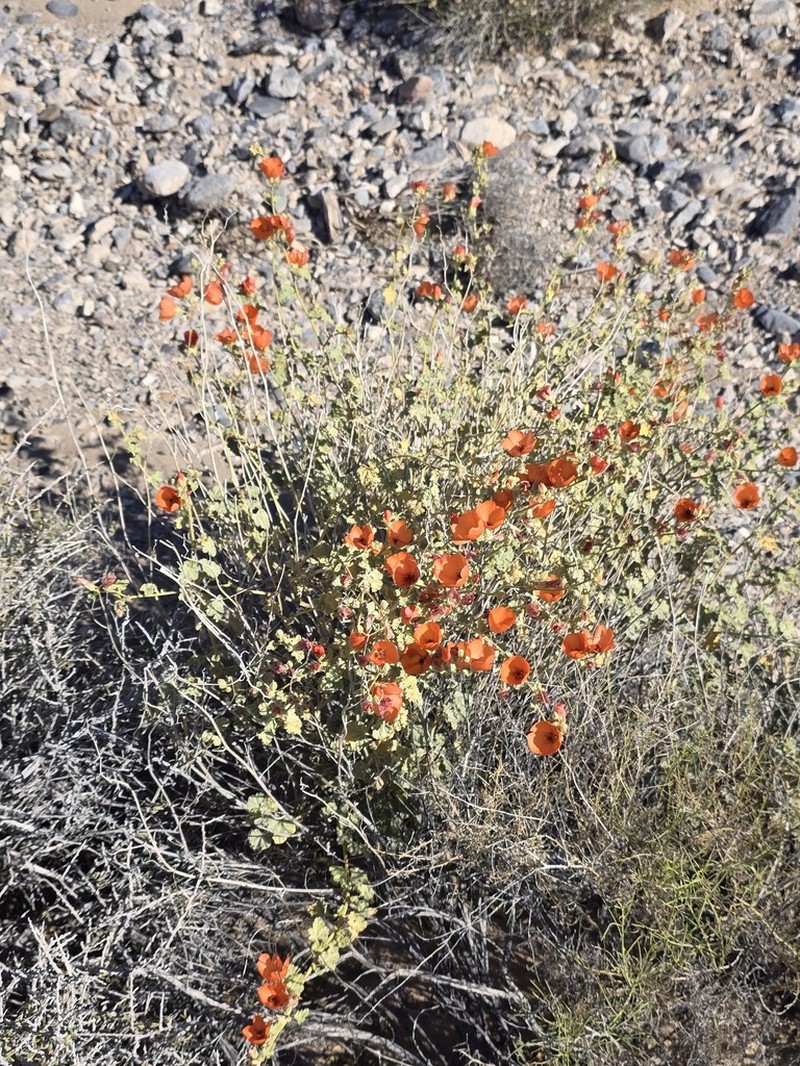
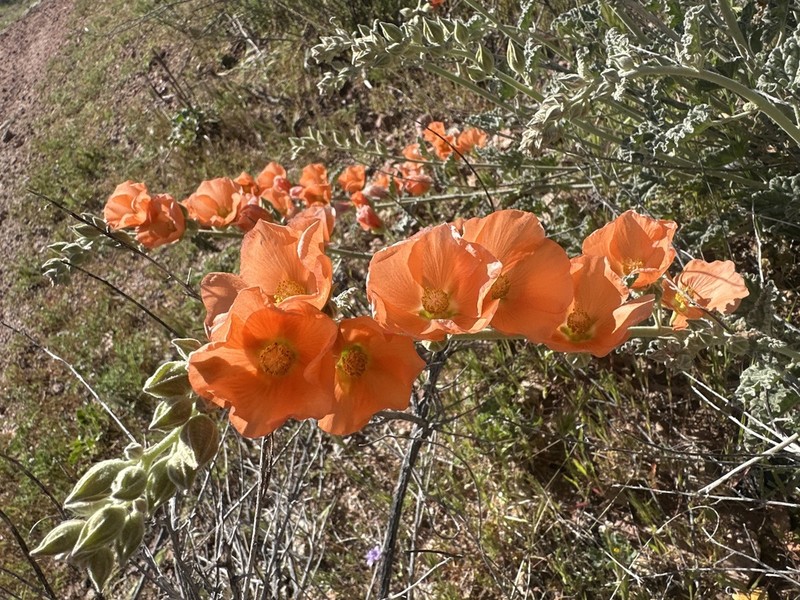
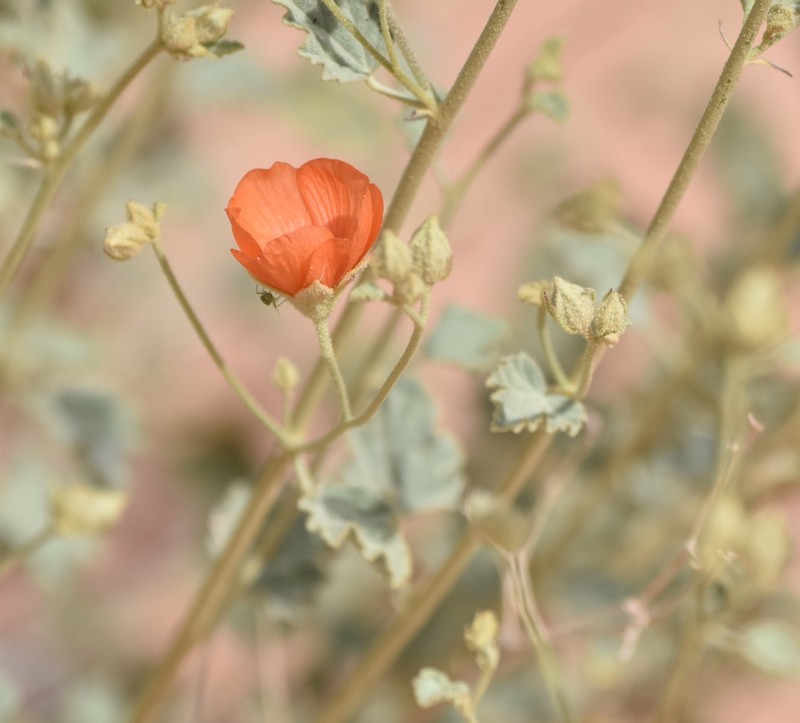
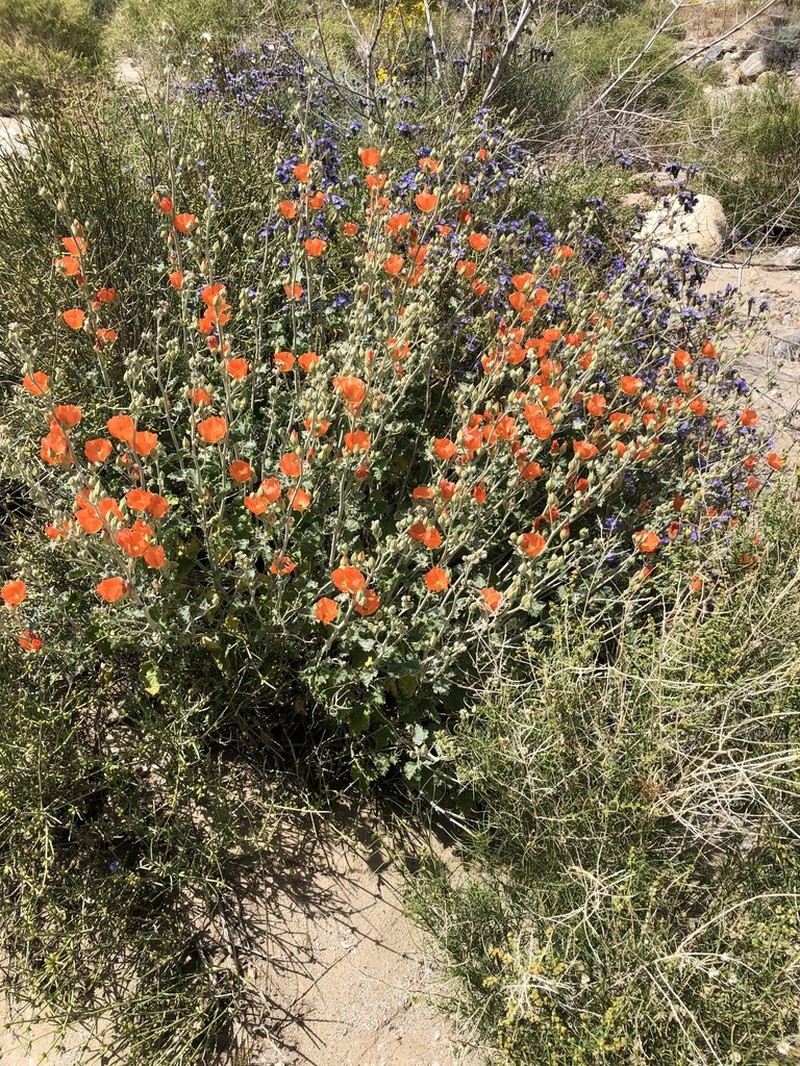
Desert Globemallow
Sphaeralcea ambigua
- Native to:
- Mexico, United States
Kevin Gepford
Taxonomy
- Division:
- Magnoliophyta | - Flowering plants
- Family:
- Malvaceae
- Genus:
- Sphaeralcea
- Species:
- Sphaeralcea ambigua
- USDA Symbol:
- SPAM2
Growth Characteristics
- Life Cycle:
- Perennial
- Growth Habit:
- Forb/herb , Subshrub
- Height:
- 91 cm
- Light Requirements:
- Full Sun
- Drought Tolerance:
- High
- Bloom Months:
- mar,apr,may,jun,jul,aug,sep
- Bloom Colors:
- orange, red, pink, purple
Wildlife Benefits
- Bees:
- ★★☆☆☆ Documented bee visitation (GBIF)
- Butterflies & Moths:
- ★★★☆☆ Documented Lepidoptera association (GBIF)
- Caterpillars:
- ★★☆☆☆ Recorded caterpillar host plant (HOSTS Database)
Keystone Species Ranking
- Pollen Specialist Bee Keystone:
- ★★★★☆ Native pollen specialist bee species supported by this genus (NWF)
Host Plant for Caterpillars
Acontia major, Zenodoxus palmii, Northern White-Skipper (Heliopetes ericetorum), Painted Lady (Vanessa cardui), Small Checkered Skipper (Pyrgus scriptura), West Coast Lady (Vanessa annabella)
Reported Fauna Sightings
Bees: Diadasia Patton, ⚠️Western honey bee (Apis mellifera) Butterflies:Northern White-Skipper (Heliopetes ericetorum), Painted Lady (Vanessa cardui)
Garden & Ecology Notes
- Wildlife Value:
- bees, butterflies, hummingbirds
- Deer Resistant:
- Yes
- Fire Ecology:
- Fire adapted — tolerates or benefits from fire
- Fire Notes:
- Resprouts from root crown after fire; benefits from post-fire conditions.
Soil Requirements
- Soil Type:
- sandy, well-drained, nutrient-poor soil
- pH:
- 6.0 - 8.0 (neutral to slightly alkaline)
- Drainage:
- excellent drainage required
- Moisture:
- dry to moderate
- Notes:
- Native to arid desert regions; prefers dry conditions
Propagation & Germination
- Stratification:
- None required
- Germination Time:
- 14–30 days
- Notes:
- Seeds germinate readily without pretreatment; sow in warm soil.
Pre-treatment: Seeds are hot water scarified by placing seeds into boiling water and immediately removing pan from heat source. Seeds soak in cooled water for 12 to 24 hours. Seeds can also be sown in open flats using a growing medium of 2 parts sand, 1 part mulch and 2 parts perlite.
Establishment: Seeds can be collected by hand by removing entire mature schizocarps from plants. They are ready for collection when they have turned light-brown and begun to open at the apex. Further treatment experiments are recommended to improve germination rates. Desert globemallow is an excellent early successional species for restoration of degraded areas, including post desert burns.
Source: npn.rngr.net
Where to Buy
Nationwide Seller
- Native Seed Group (seeds)