
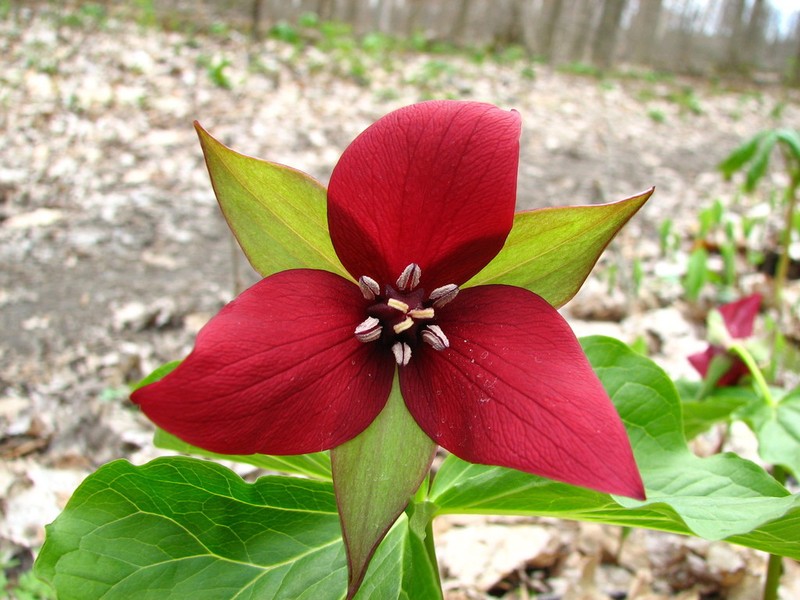
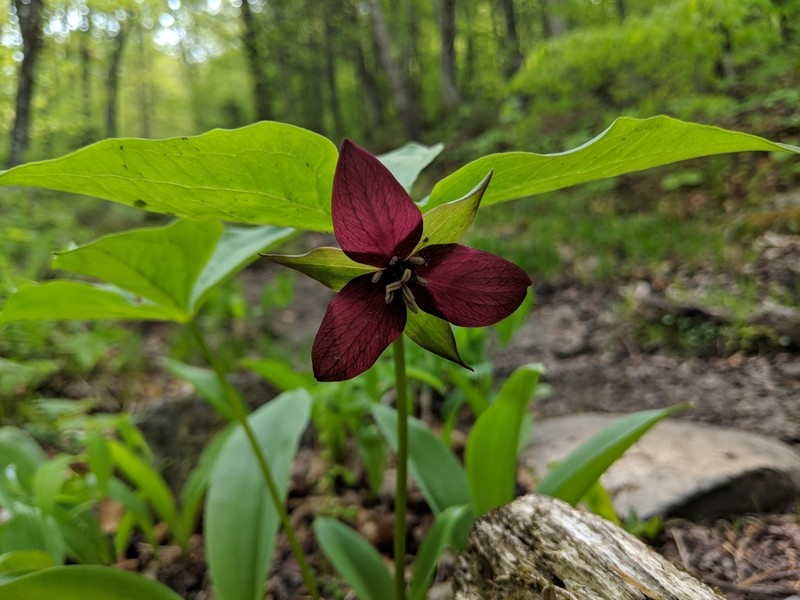
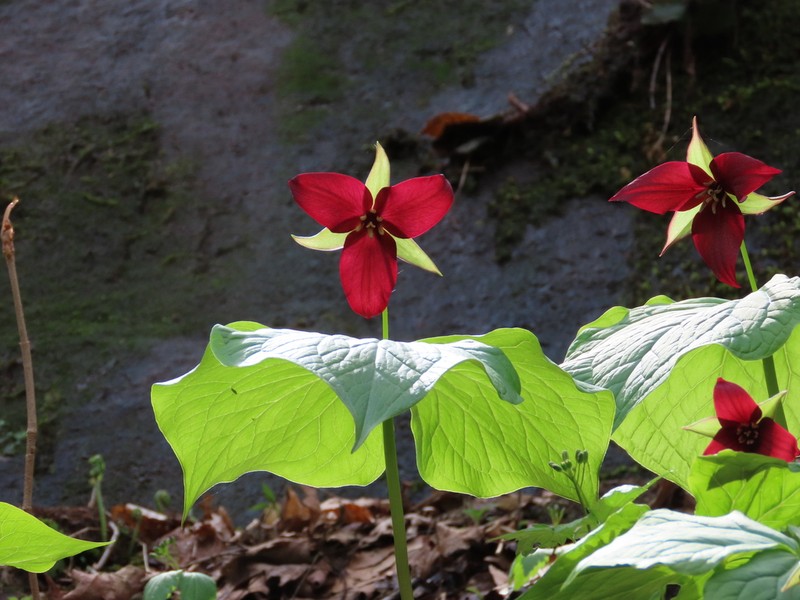
Red Trillium
Trillium erectum
- Native to:
- Canada, United States, Virgin Islands
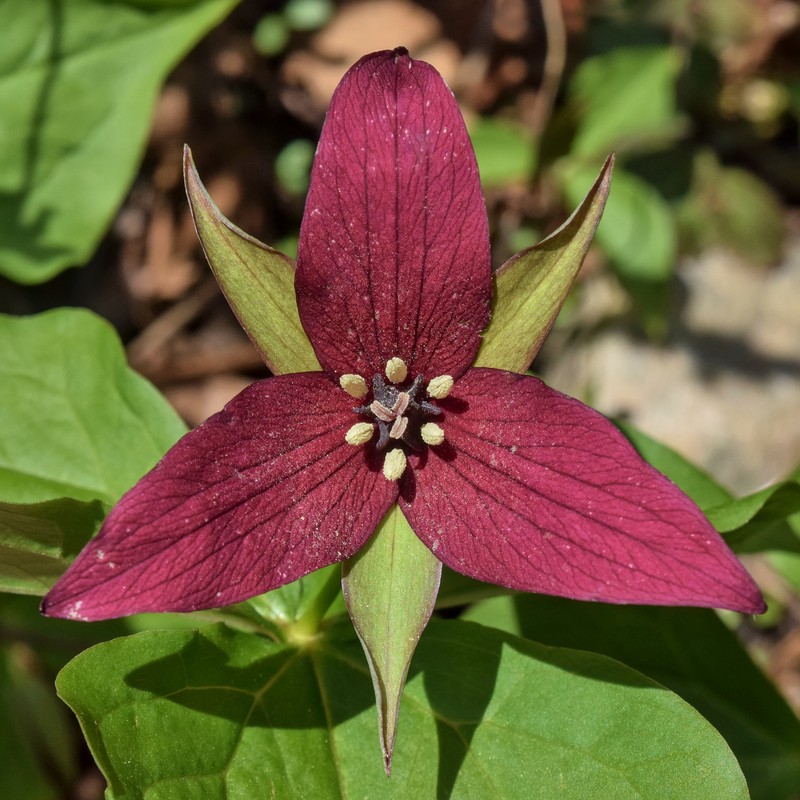
The Cosmonaut
Taxonomy
- Division:
- Magnoliophyta | - Flowering plants
- Family:
- Melanthiaceae
- Genus:
- Trillium
- Species:
- Trillium erectum
- USDA Symbol:
- TRER3
Growth Characteristics
- Life Cycle:
- Perennial
- Growth Habit:
- Geophyte
- Height:
- 60 cm
- Light Requirements:
- Part Shade
- Drought Tolerance:
- Low
- Bloom Months:
- apr,may
- Bloom Colors:
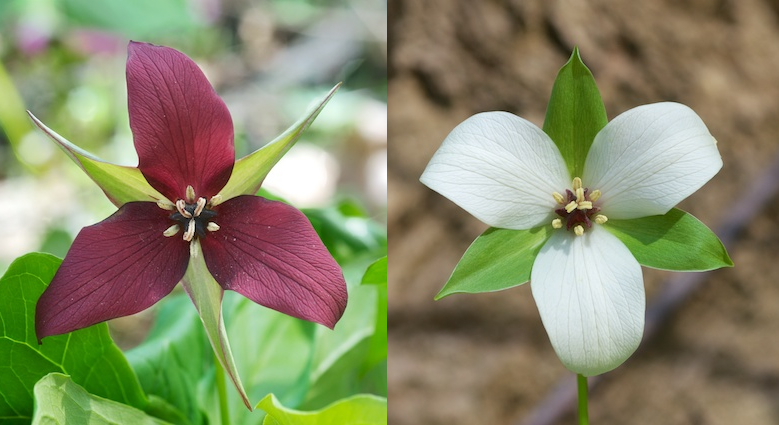
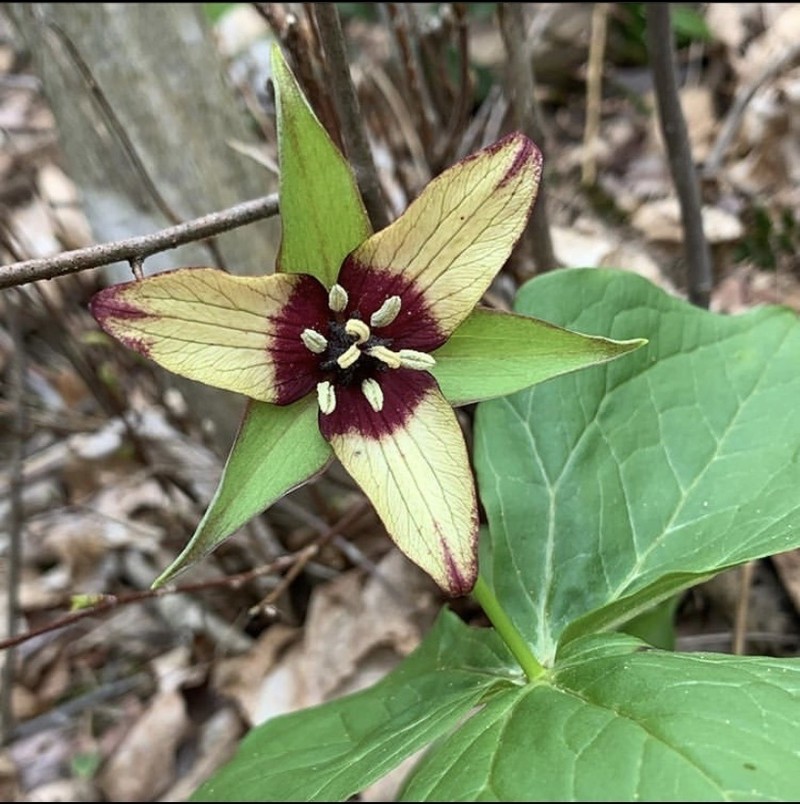
- maroon, purple, red, white
Wildlife Benefits
- Bees:
- ★☆☆☆☆ Documented bee visitation (GBIF)
- Butterflies & Moths:
- ★★☆☆☆ Documented Lepidoptera association (GBIF)
Garden & Ecology Notes
- Wildlife Value:
- bees, flies, beetles
Soil Requirements
- Soil Type:
- rich, well-drained loamy soil
- pH:
- 5.0 - 7.0 (slightly acidic to neutral)
- Drainage:
- good drainage required
- Moisture:
- consistently moist
- Notes:
- prefers shaded woodland environments
Propagation & Germination
- Stratification:
- Cold/moist stratification required — 90–120 days
- Germination Time:
- 30–90 days
- Notes:
- Seeds require cold stratification for 3-4 months; germination is often slow and may require a warm period followed by cold.
Pre-treatment: Seeds are cold-warm-cold stratified
Establishment: M. racemosum ssp. racemosum is found within temperate deciduous and coniferous forests of North America.
Source: npn.rngr.net
ORGHPS Germination Guide: Sow immediately, Either the viability of these seeds is short or the species propagates best with fresh seed. Stored seed might be coaxed into germination with temperature cycling and patience. Expose to fluctuation outdoor winter temperatures including freezing for 3 months. Gradually increase light and temperature in the spring. Germination is improved by using GA3. * seeds must be stored cold and moist; germination is unlikely after storage >6 months; if seeds are received dry, try hydrating in damp paper towel @ 20°C for 1 week; during 3 months @ 20° a radicle is formed; then 4°C for at least 86 days will trigger emergence of a cotyledon which will appear as the temperature increases in spring; no more leaves are formed that year; if sown early enough, a cotyledon may emerge first spring but usually not until second spring; keep seeds in pots for 2 years
Where to Buy
Nationwide Seller
- Vermont Wildflower Farm (nursery and seeds)