
Oneseed Pussypaws
Calyptridium monospermum
- Native to:
- Mexico, United States
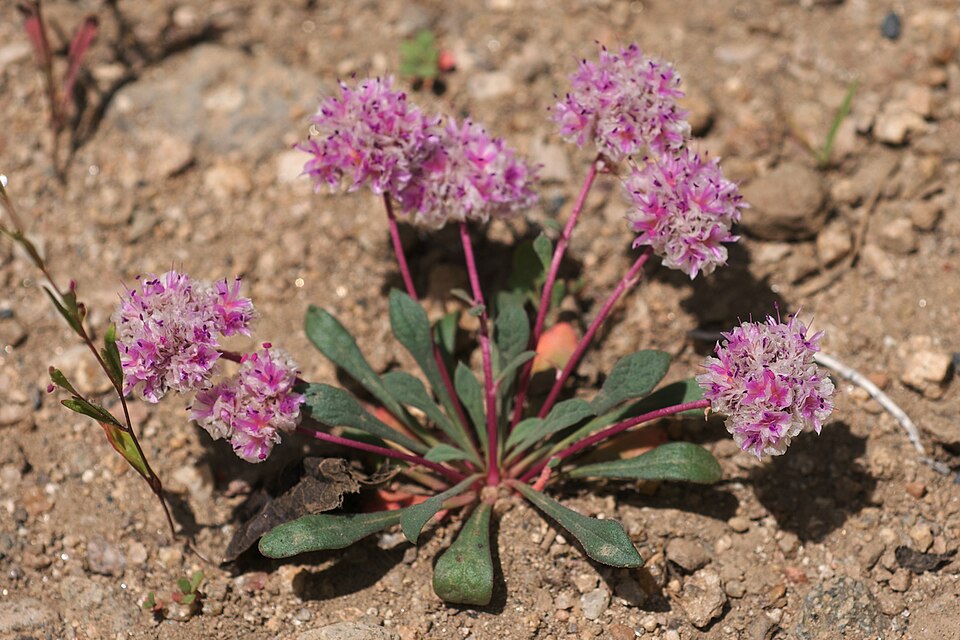
Eric in SF
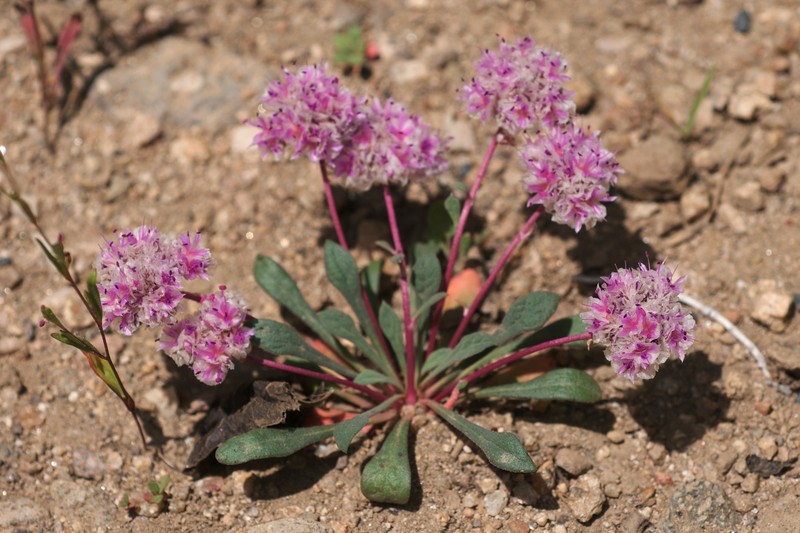
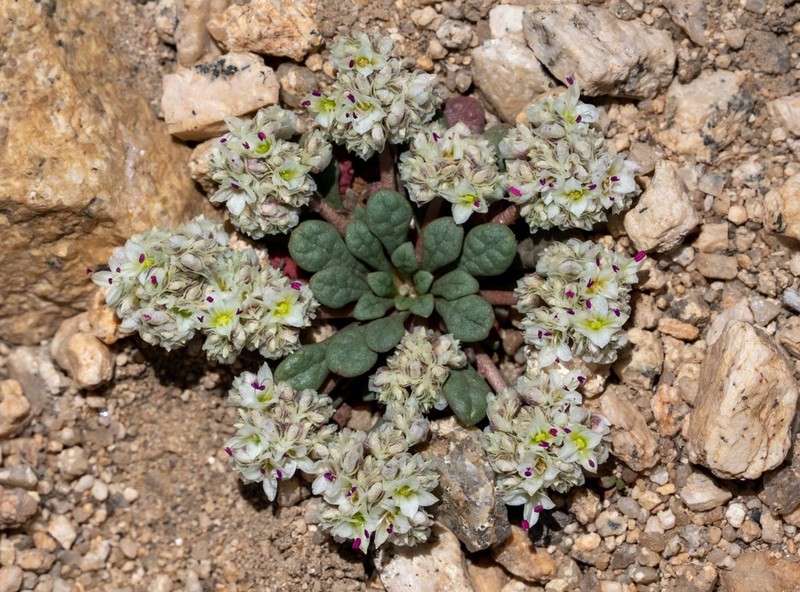
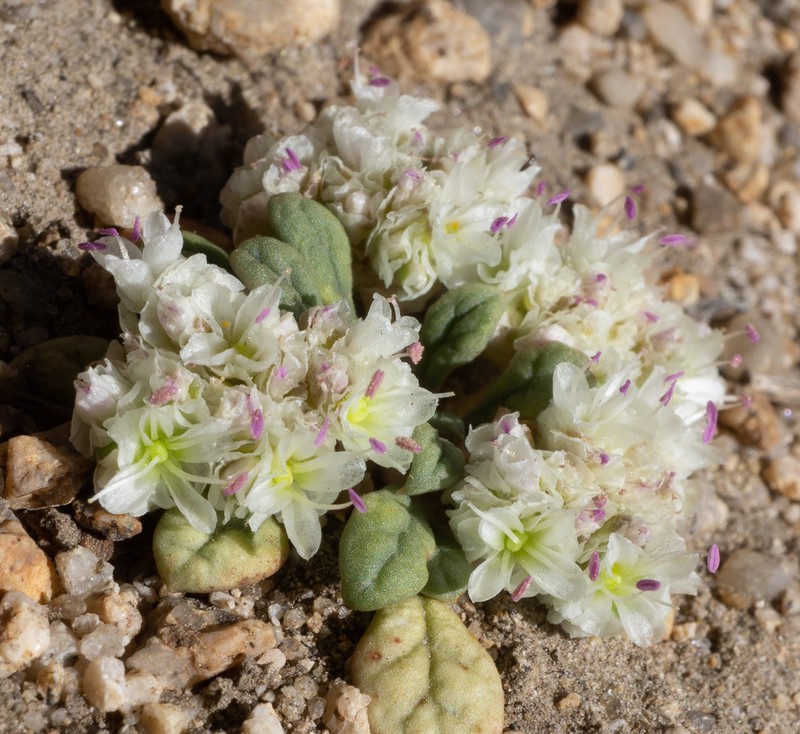
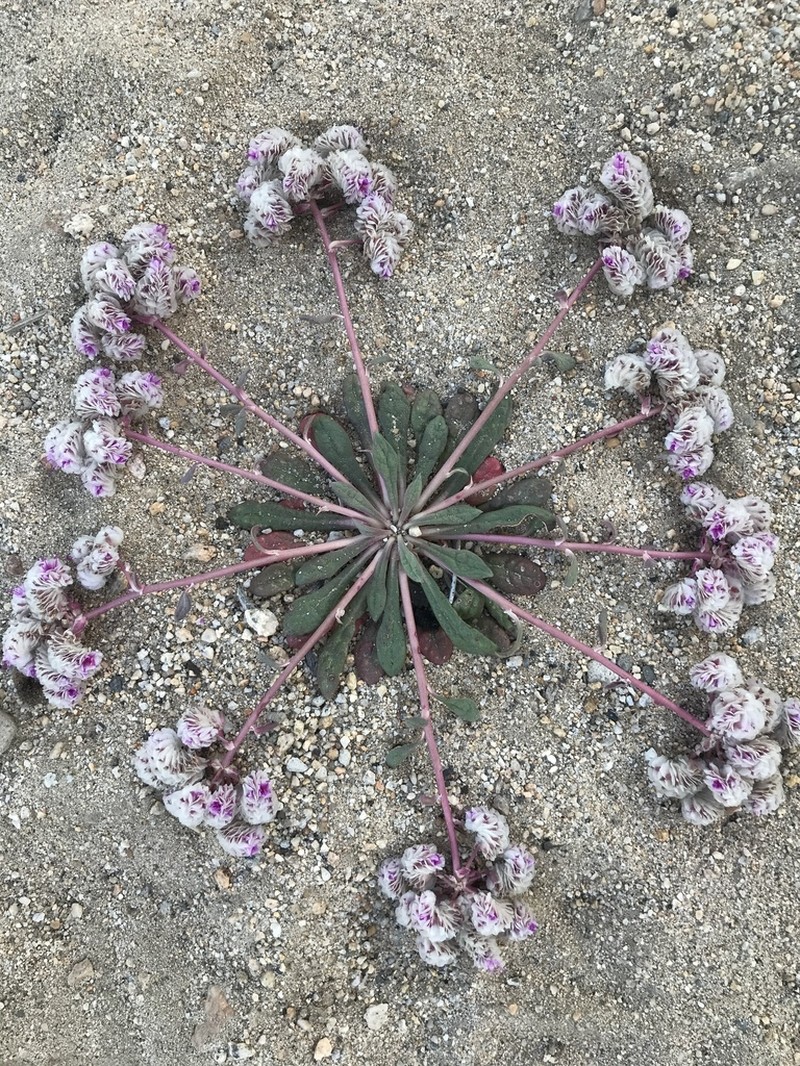
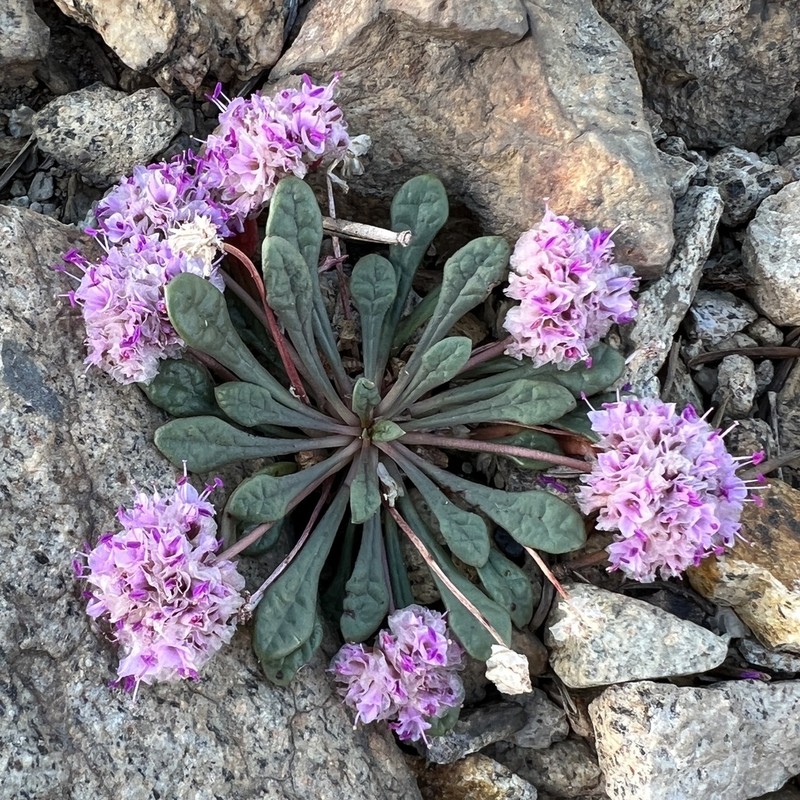
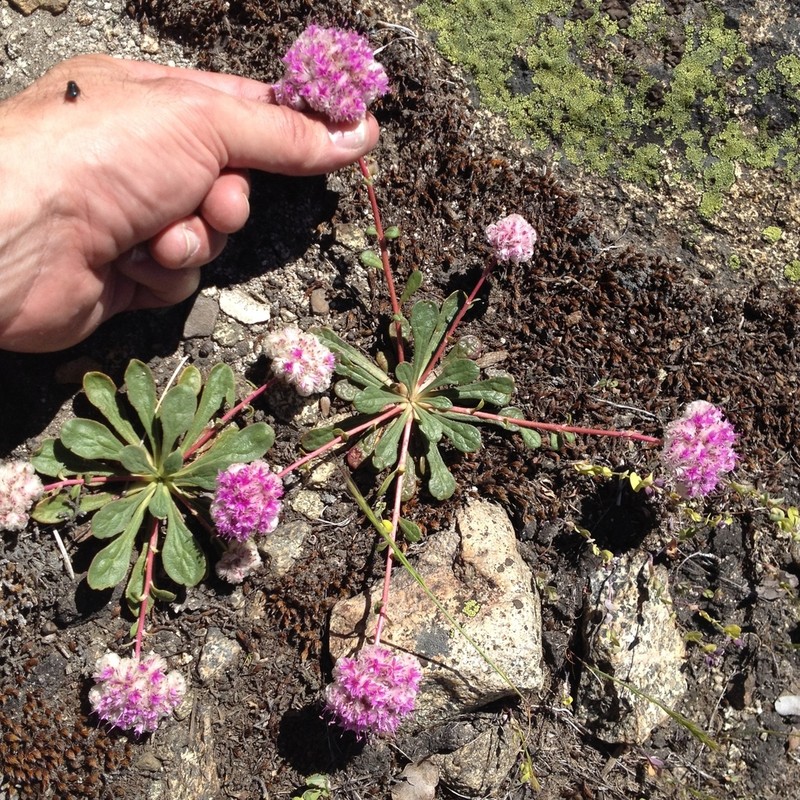
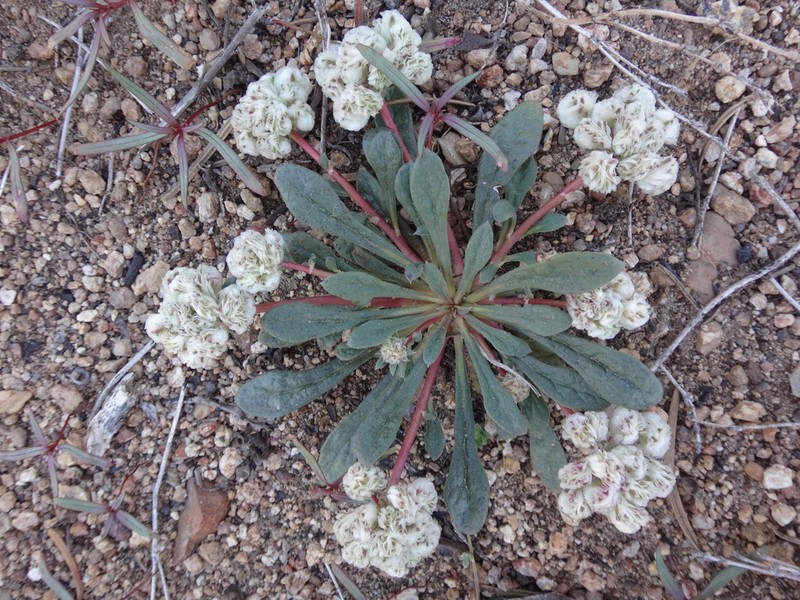
Taxonomy
- Division:
- Magnoliophyta | - Flowering plants
- Family:
- Montiaceae
- Genus:
- Calyptridium
- Species:
- Calyptridium monospermum
- USDA Symbol:
- CIMO5
Growth Characteristics
- Life Cycle:
- Annual
- Growth Habit:
- Forb/herb
- Height:
- 30 cm
- Light Requirements:
- Full Sun
- Drought Tolerance:
- High
- Bloom Months:
- apr,may,jun,jul,aug
- Bloom Colors:
- pink, white
- Ground Cover:
- Yes
Wildlife Benefits
- Bees:
- ★☆☆☆☆ Documented bee visitation (GBIF)
- Butterflies & Moths:
- ★☆☆☆☆ Documented Lepidoptera association (GBIF)
Reported Fauna Sightings
Bees: Two-form bumble bee (Bombus bifarius), Yellow-faced bumble bee (Bombus vosnesenskii)
Garden & Ecology Notes
- Wildlife Value:
- bees, butterflies
- Deer Resistant:
- Yes
Soil Requirements
- Soil Type:
- sandy, well-drained, nutrient-poor soil
- pH:
- 5.5 - 7.0 (slightly acidic to neutral)
- Drainage:
- excellent drainage required
- Moisture:
- dry to moderate
- Notes:
- native to rocky slopes and alpine regions
Propagation & Germination
Pre-treatment: Sow seeds into trays filled with stabilized medium plugs (Q-plugs). Seal trays inside plastic bags and refrigerate at 1 to 3 °C for 60 days. Check trays weekly and keep moist. Treat with 1% hydrogen peroxide if mold is evident.
Establishment: Plants are quite small for an extended period of time after germination. Grows in a variety of habitats including forests and woodlands but is mostly found in open, sandy or gravelly soils in sun or part shade. Found in the western US in Oregon, Nevada, and California.
Source: npn.rngr.net