
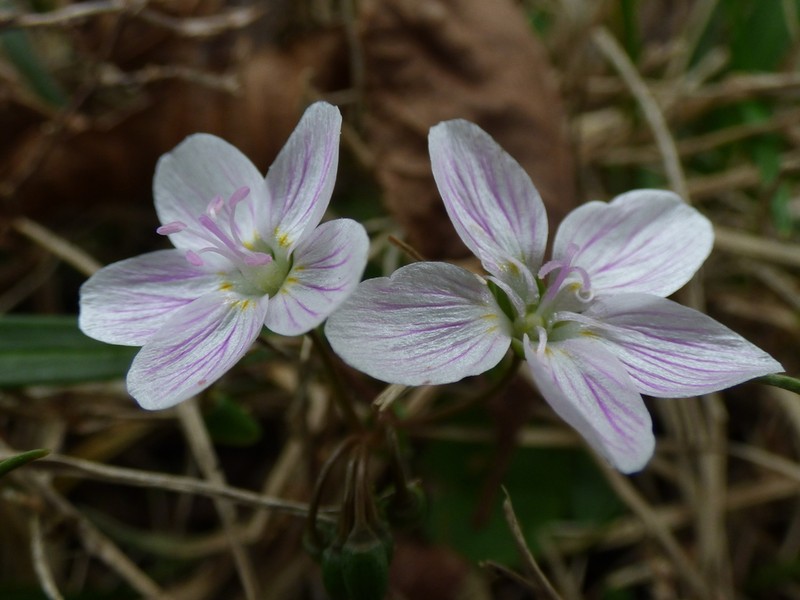
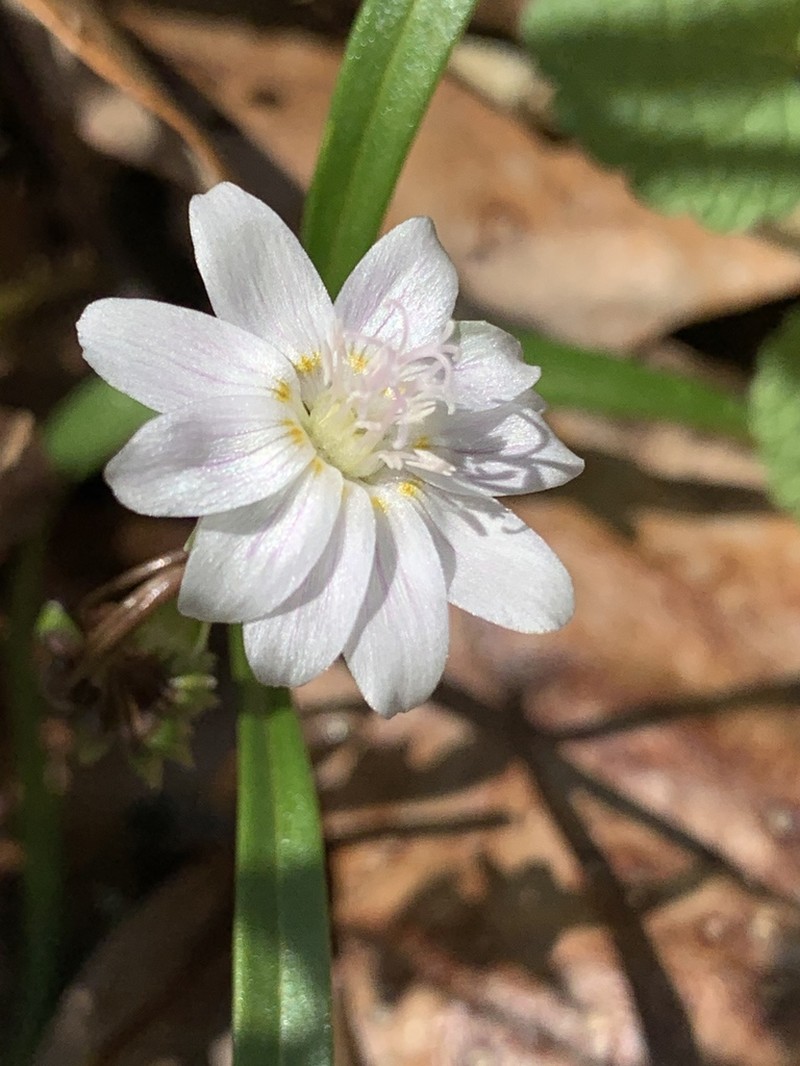
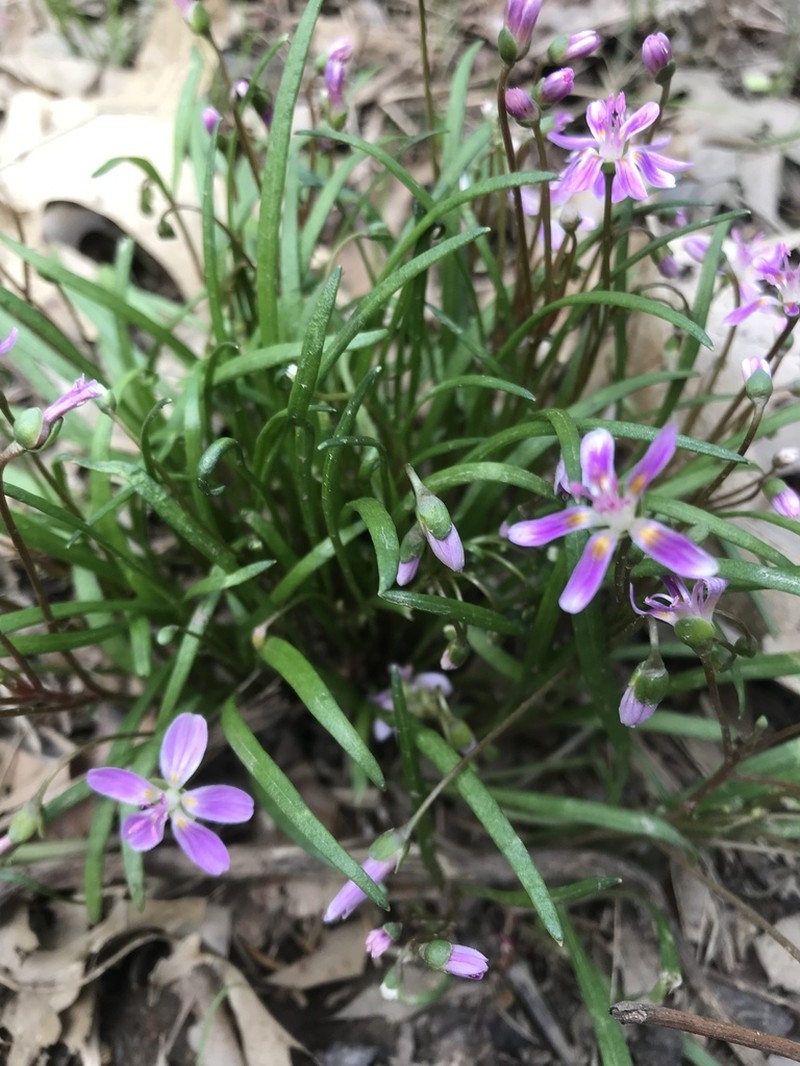
Virginia Springbeauty
Claytonia virginica
- Native to:
- Canada, United States, Virgin Islands
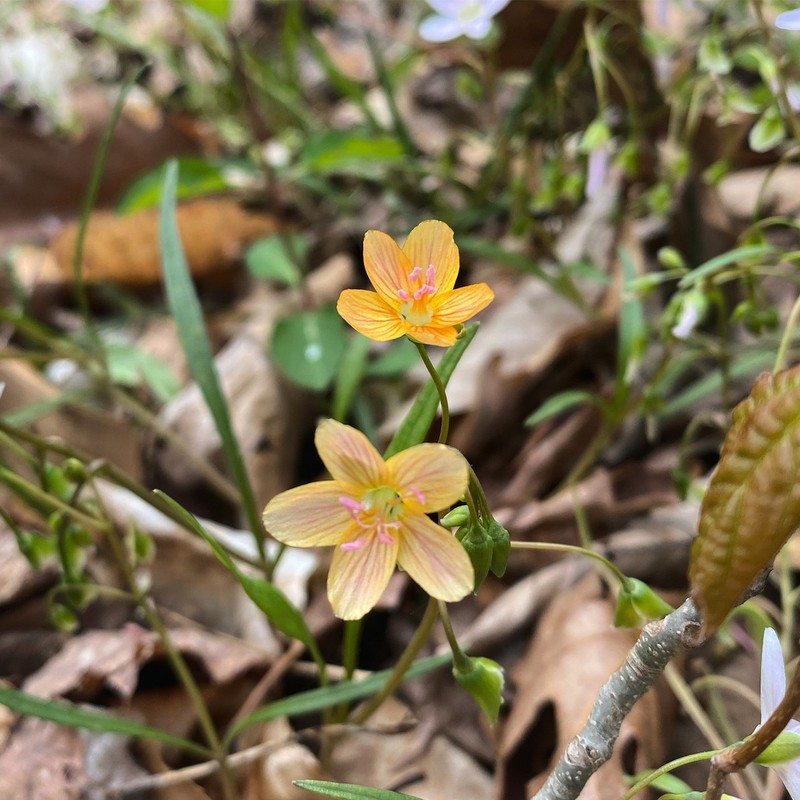
iNaturalist: © victoriaelizabe (iNaturalist #75274135)
Taxonomy
- Division:
- Magnoliophyta | - Flowering plants
- Family:
- Montiaceae
- Genus:
- Claytonia
- Species:
- Claytonia virginica
- USDA Symbol:
- CLVI3
Growth Characteristics
- Life Cycle:
- Perennial
- Growth Habit:
- Forb/herb
- Height:
- 30 cm
- Light Requirements:
- Part Shade
- Drought Tolerance:
- Low
- Bloom Months:
- mar,apr,may
- Bloom Colors:
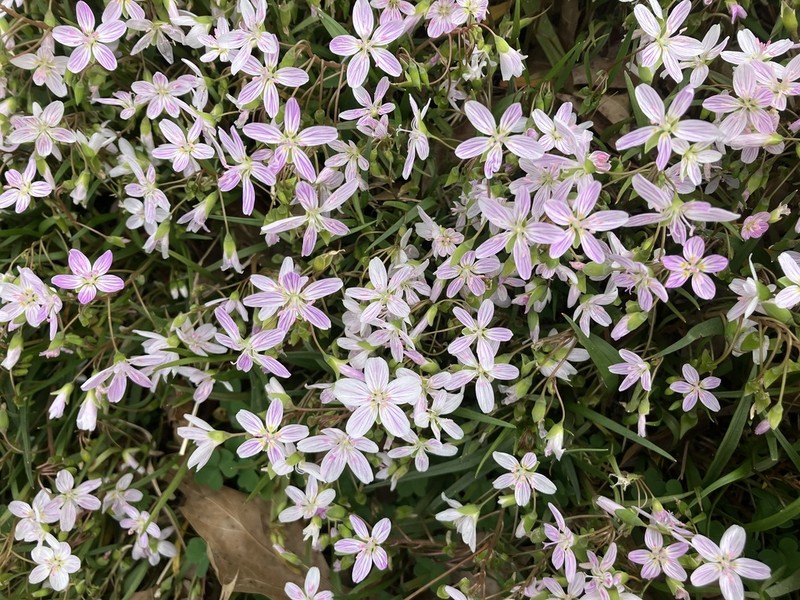
- white, pink
- Ground Cover:
- Yes
- Lawn Substitute:
- Yes
Wildlife Benefits
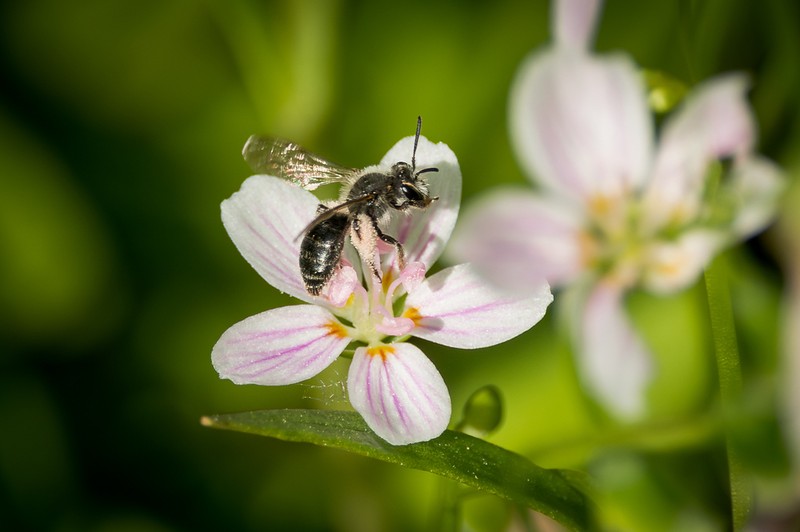
- Bees:
- ★★☆☆☆ Documented bee visitation (GBIF)
- Butterflies & Moths:
- ★☆☆☆☆ Documented Lepidoptera association (GBIF)
Reported Fauna Sightings
Bees: Two-spotted bumble (Bombus bimaculatus), ⚠️Western honey bee (Apis mellifera) Butterflies:Falcate Orangetip (Anthocharis midea)
Garden & Ecology Notes
- Wildlife Value:
- bees, butterflies
Soil Requirements
- Soil Type:
- rich, well-drained loamy soil
- pH:
- 5.5 - 7.0 (slightly acidic to neutral)
- Drainage:
- excellent drainage required
- Moisture:
- consistently moist
- Notes:
- Prefers woodland settings with leaf litter
Propagation & Germination
- Stratification:
- Cold/moist stratification required — 60–90 days
- Germination Time:
- 14–30 days
- Notes:
- Seeds require cold stratification for 60-90 days; sow in fall or after cold treatment.
Pre-treatment: Cold-moist stratification for 30 days at 1–5°C (34–41°F).; then Light required for germination; do not cover seed.
Notes: Seeds require light for germination; do not cover.
Source: Claude AI
ORGHPS Germination Guide: Sow immediately, Either the viability of these seeds is short or the species propagates best with fresh seed. Stored seed might be coaxed into germination with temperature cycling and patience. Sow @ 20°C for 3 months, then place @ 4°C for 3 months. * hydrophilic; peat based medium
Where to Buy
Nationwide Seller
- Prairie Moon Nursery (nursery and seeds)
- Vermont Wildflower Farm (nursery and seeds)
- Pizzo Native Plant Nursery (wholesale nursery)