
Osage-Orange
Maclura pomifera
- Native to:
- United States
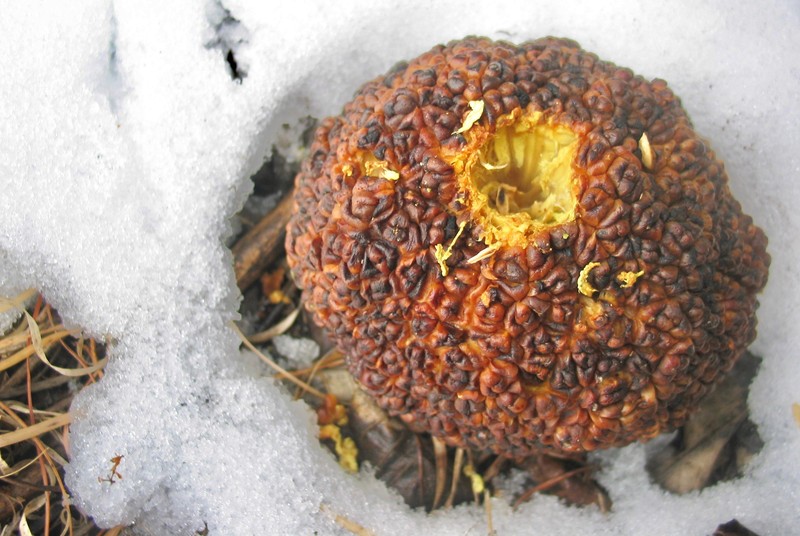
Source: Wikimedia; Credit: Cbarlow https://commons.wikimedia.org/wiki/User:Cbarlow
Taxonomy
- Division:
- Magnoliophyta | - Flowering plants
- Family:
- Moraceae
- Genus:
- Maclura
- Species:
- Maclura pomifera
- USDA Symbol:
- MAPO
Growth Characteristics
- Life Cycle:
- Perennial
- Growth Habit:
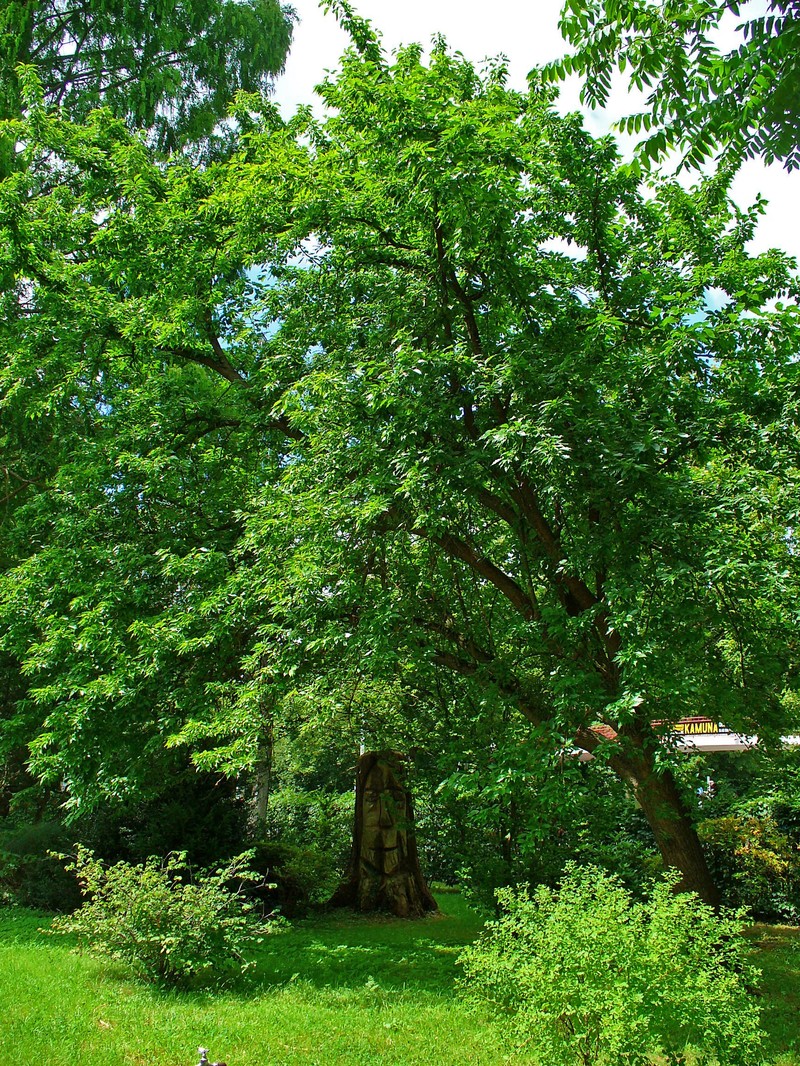
- Shrub , Tree
- Height:
- 1500 cm
- Drought Tolerance:
- High
- Bloom Months:
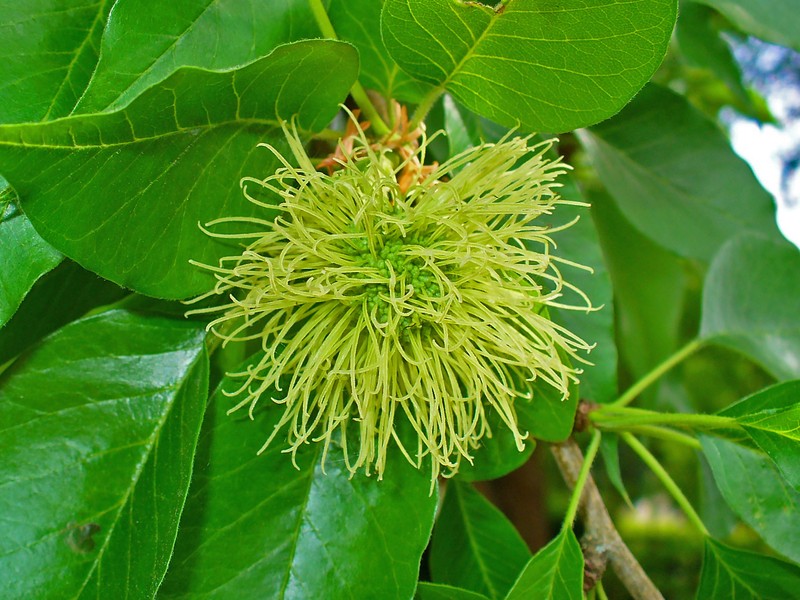
- may,jun
- Bloom Colors:
- green
Wildlife Benefits
- Butterflies & Moths:
- ★★★☆☆ Documented Lepidoptera association (GBIF)
- Caterpillars:
- ★★☆☆☆ Recorded caterpillar host plant (HOSTS Database)
Host Plant for Caterpillars
Reported Fauna Sightings
Garden & Ecology Notes
- Wildlife Value:
- birds, small mammals
- Salt Tolerant:
- Yes
- Fall Color:
- yellow
Propagation & Germination
- Stratification:
- Cold/moist stratification required — 30–60 days
- Scarification:
- Seed coat scarification required before sowing
- Germination Time:
- 14–30 days
- Notes:
- Seeds require scarification (mechanical or acid) followed by cold stratification for 30-60 days.
Pre-treatment: Seeds are planted in late October using a Love seeder set at 2nd gear at 9 setting into prepared field beds.
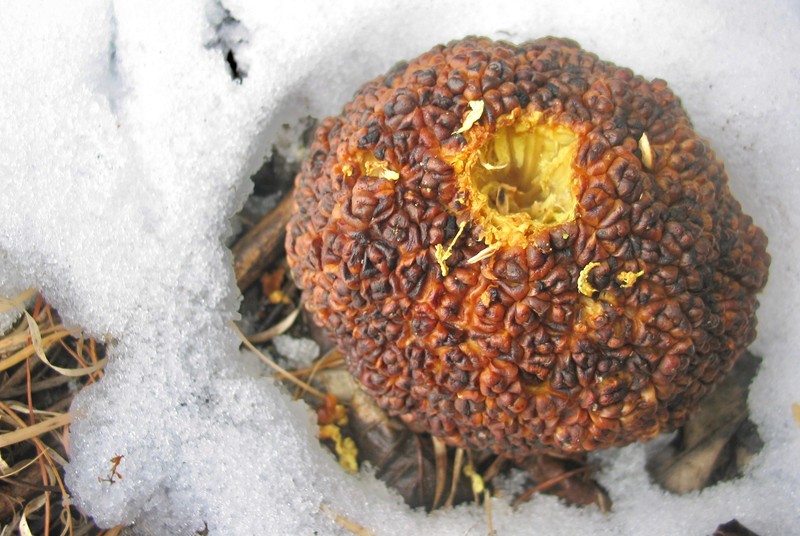
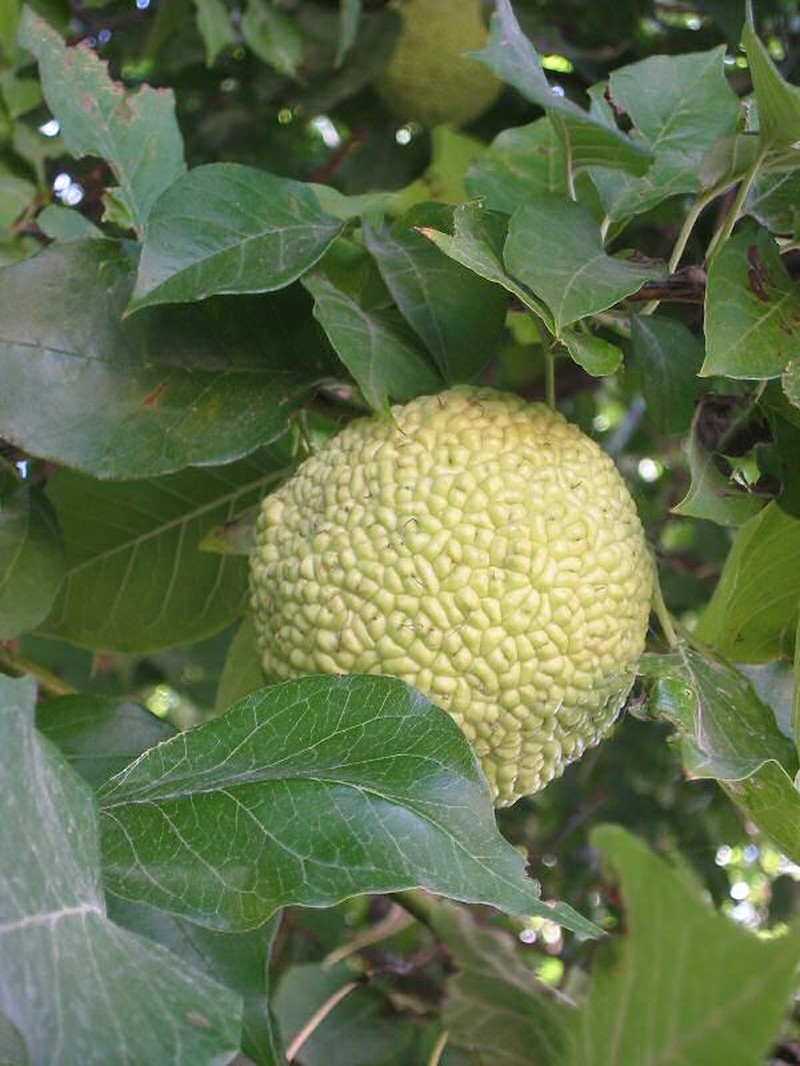
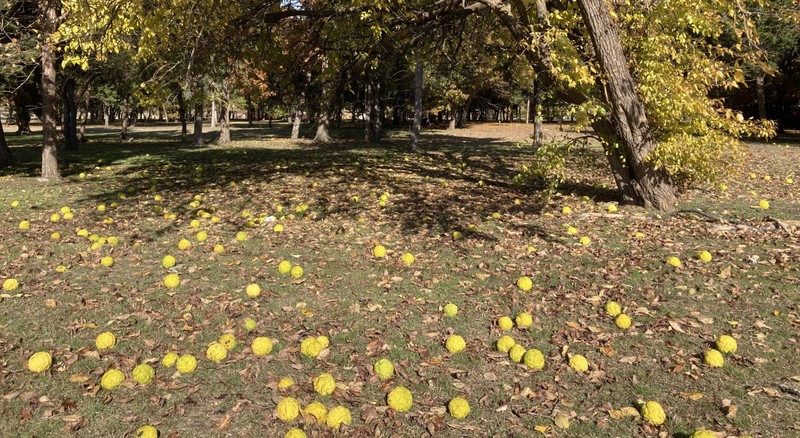
Establishment: Seeds are purchased from local people who collect within a 50 mile radius of the nursery. The fruit is a large yellow-green fruit containing many seeds. Osage orange is native to the bottomlands of southern Arkansas, eastern Oklahoma and eastern Texas. It is widely planted as living fences and for its ornamental traits, and is widely naturalized in areas outside its natural range.
Source: npn.rngr.net
ORGHPS Germination Guide: Sow @ 20°C. Seed germinates within 3 months Pulpy coat inhibits germination. Remove by soaking and rinsing in clean water for approximately 7 days. Discard water. * wash and rinse daily in clean water for 1-5 days, then in detergent daily for about 2-5 days
Where to Buy
Nationwide Seller
- Sheffield's Seed (seeds)
- Native Plants Nursery (nursery)