
Red Mulberry
Morus rubra
- Native to:
- Canada, United States, Virgin Islands
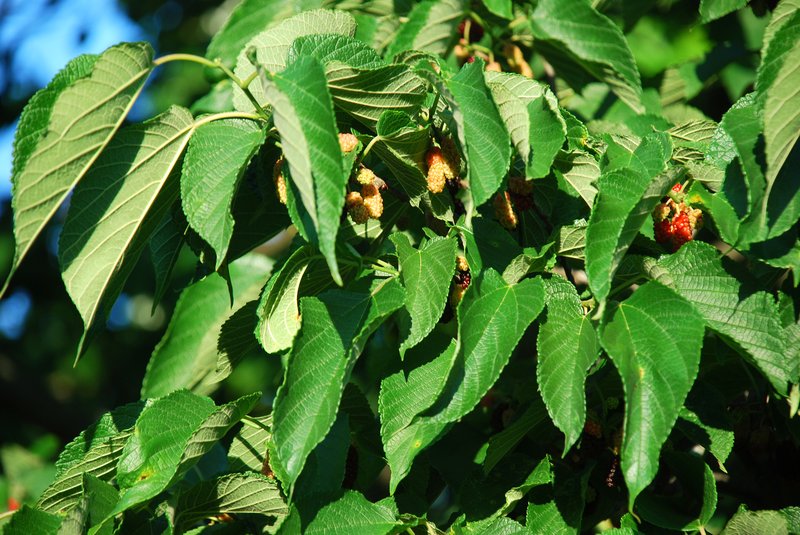
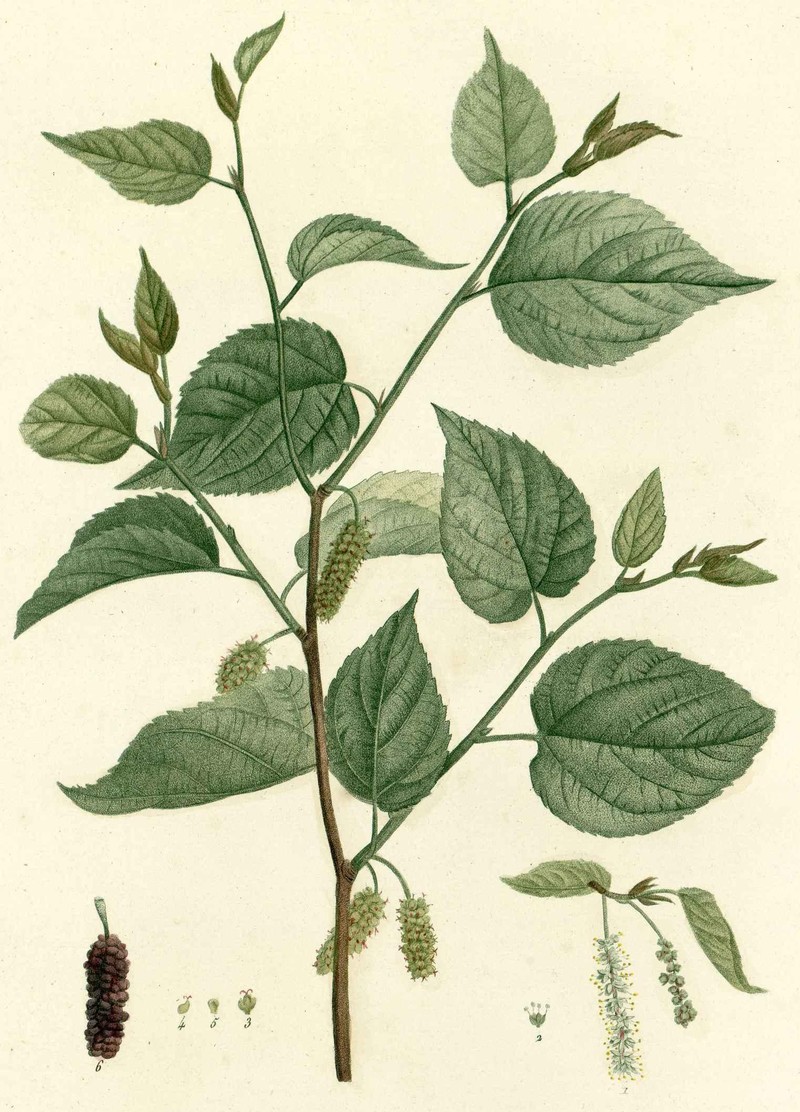
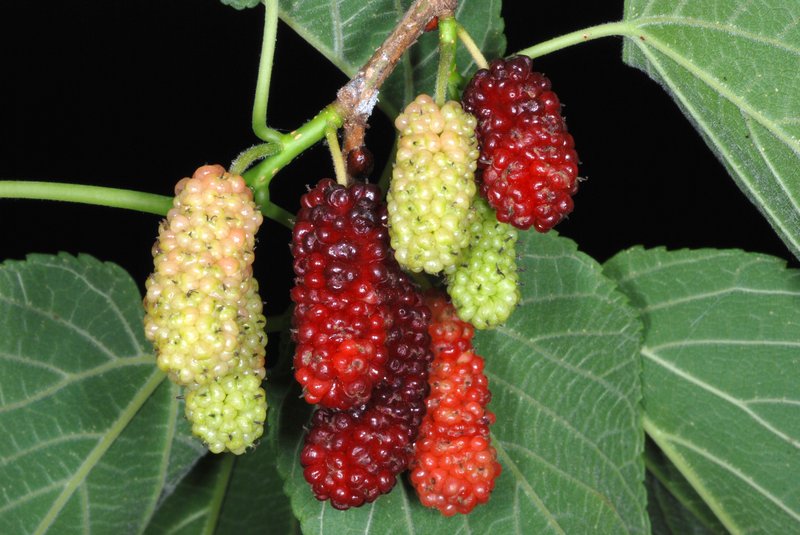
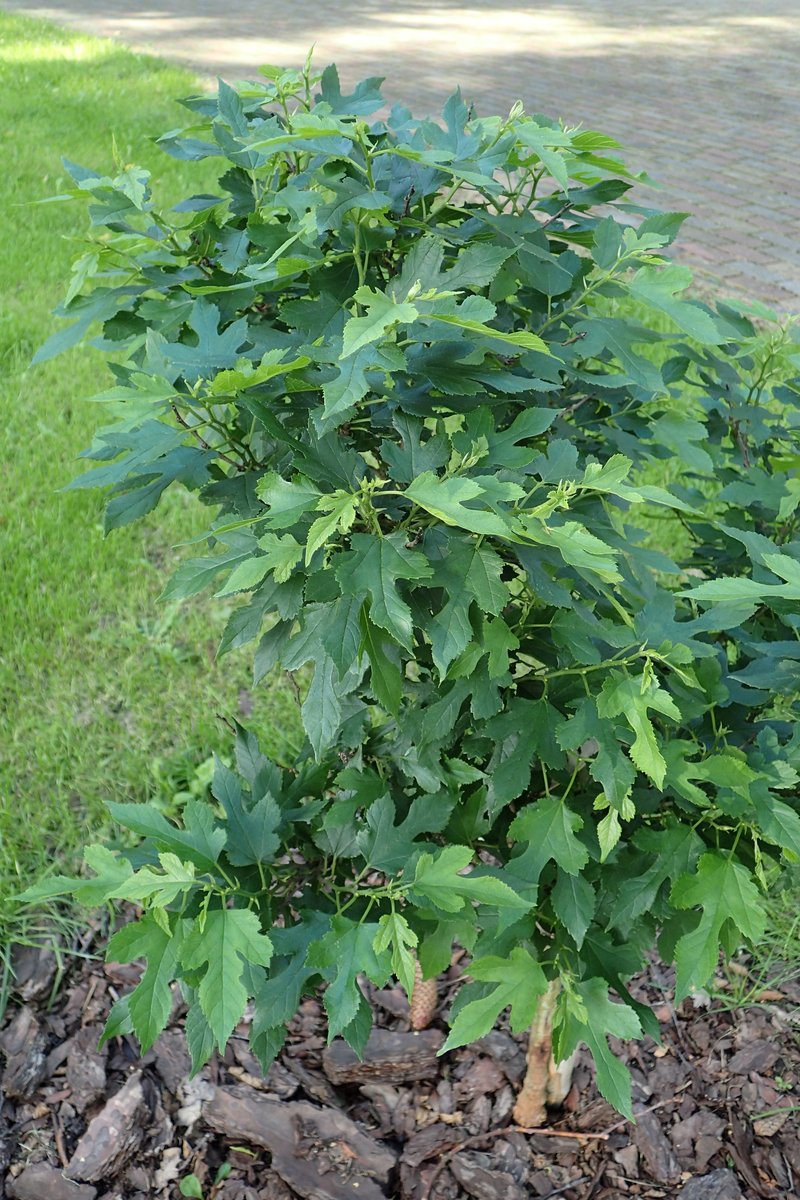
C.E. Faxon, P. Bessa, Helen Sharp, E. Rowan, P.J. Redouté
Taxonomy
- Division:
- Magnoliophyta | - Flowering plants
- Family:
- Moraceae
- Genus:
- Morus
- Species:
- Morus rubra
- USDA Symbol:
- MORU2
Growth Characteristics
- Life Cycle:
- Perennial
- Growth Habit:
- Tree
- Height:
- 1830 cm
- Light Requirements:
- Full Sun,Part Shade,Shade
- Drought Tolerance:
- Medium
- Bloom Months:
- mar,apr,may
- Bloom Colors:
- greenish, yellow
Wildlife Benefits
- Bees:
- ★☆☆☆☆ Documented bee visitation (GBIF)
- Butterflies & Moths:
- ★★★★★ Documented Lepidoptera association (GBIF)
- Caterpillars:
- ★☆☆☆☆ Recorded caterpillar host plant (HOSTS Database)
Host Plant for Caterpillars
Fall webworm (Hyphantria cunea), mulberry leaftier moth (Glyphodes sibillalis)
Reported Fauna Sightings
Moths:Fall webworm (Hyphantria cunea)
Garden & Ecology Notes
- Wildlife Value:
- birds, mammals
- Fall Color:
- yellow
Soil Requirements
- Soil Type:
- rich, well-drained loamy soil
- pH:
- 5.5 - 7.0 (slightly acidic to neutral)
- Drainage:
- tolerates poor drainage
- Moisture:
- consistently moist
- Notes:
- prefers fertile floodplain areas
Propagation & Germination
- Stratification:
- Cold/moist stratification required — 60–90 days
- Germination Time:
- 30–60 days
- Notes:
- Seeds benefit from cold stratification for 60-90 days to break dormancy.
Pre-treatment: Seeds are cold, moist stratified in 1:1 (v:v) sawdust to seeds in a cooler at 36 F for 3 months.
Source: npn.rngr.net
ORGHPS Germination Guide: Repeated cycles of 4C then 20C, 3 months each. Very prolonged. Requires soaking 24-48 hrs; discard floaters.
Where to Buy
Nationwide Seller
- Sheffield's Seed (seeds)