
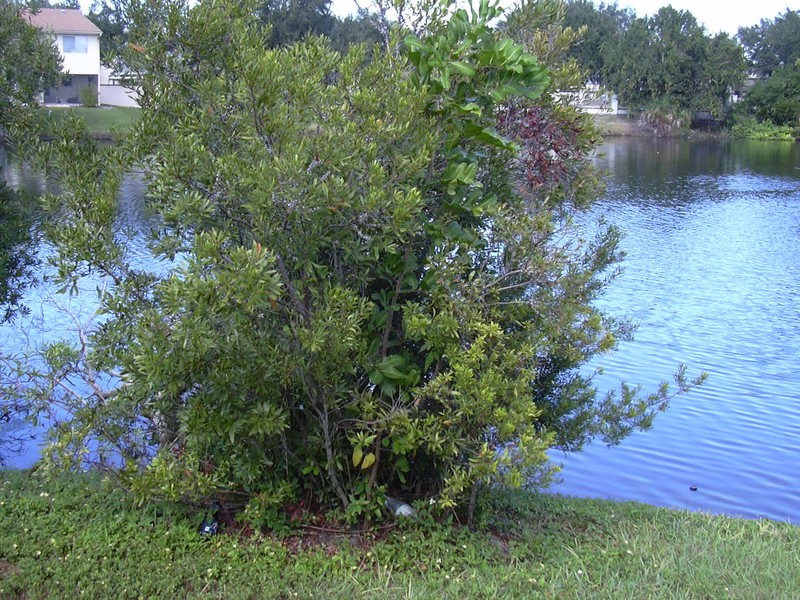
Wax Myrtle
Myrica cerifera
Taxonomy
- Division:
- Magnoliophyta | - Flowering plants
- Family:
- Myricaceae
- Genus:
- Myrica
- Species:
- Myrica cerifera
Growth Characteristics
- Life Cycle:
- Perennial
- Growth Habit:
- Shrub , Subshrub , Tree
- Height:
- 12-20 ft
- Light Requirements:
- Full Sun
- Drought Tolerance:
- High
- Bloom Months:
- mar, apr, may
- Bloom Colors:
- green, yellow, yellow-green
- Landscaping Shrub:
- Yes
Native Range
United States: Alabama, Arkansas, Delaware, Florida, Georgia, Hawaii, Louisiana, Maryland, Mississippi, North Carolina, New Jersey, Oklahoma, Puerto Rico, South Carolina, Texas, Virginia, West Virginia
Host Plant for Caterpillars
Acrobasis cirroferella, Apical Prominent (Schizura apicalis), Apple Sphinx (Sphinx gordius), Apple Sphinx (Sphinx "gordius"), Argent and sable (Rheumaptera hastata), Bay underwing (Catocala badia), Bayberry Leafroller Moth (Strepsicrates smithiana), Caloptilia flavella, Cameraria obstrictella, Cecropia moth (Hyalophora cecropia), Chain-lined geometer moth (Cingilia catenaria), Clostera apicalis, Dogwood borer (Synanthedon scitula), Imperial Moth (Eacles imperialis), Io moth (Automeris io), Isa textula, little wife underwing (Catocala muliercula), Phrudocentra centrifugaria, Polyphemus moth (Antheraea polyphemus), Red-humped caterpillar moth (Schizura concinna), red-lined emerald (Nemoria rubrolinearia), Slosson's roadside skipper (Alarodia slossoniae), Spotted Apatelodes (Apatelodes torrefacta), Stigmella myricafoliella, Red-banded Hairstreak (Calycopis cecrops)
Soil Requirements
- Soil Type:
- sandy, acidic, nutrient-poor soil
- pH:
- 4.5 - 6.5 (acidic to slightly acidic)
- Drainage:
- excellent drainage required
- Moisture:
- dry to moderate
- Notes:
- Commonly found in coastal and wetland areas
Germination Information
Pre-treatment: Clean seed
Source: npn.rngr.net