
Northern Bayberry
Myrica pensylvanica
- Native to:
- Canada, Prince Edward I., United States, Virgin Islands
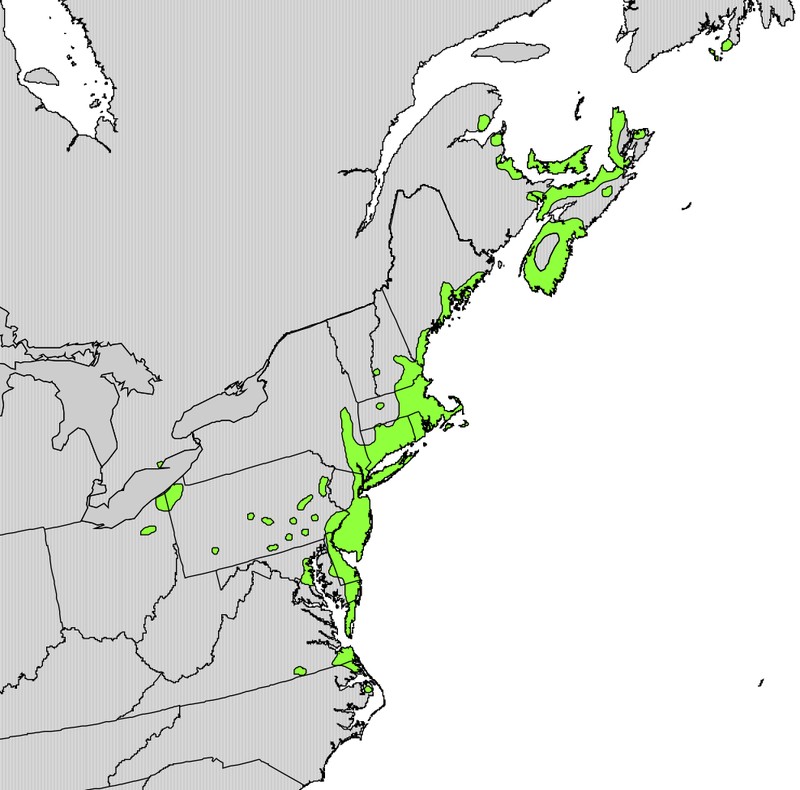
Wikimedia: U.S. Geological Survey
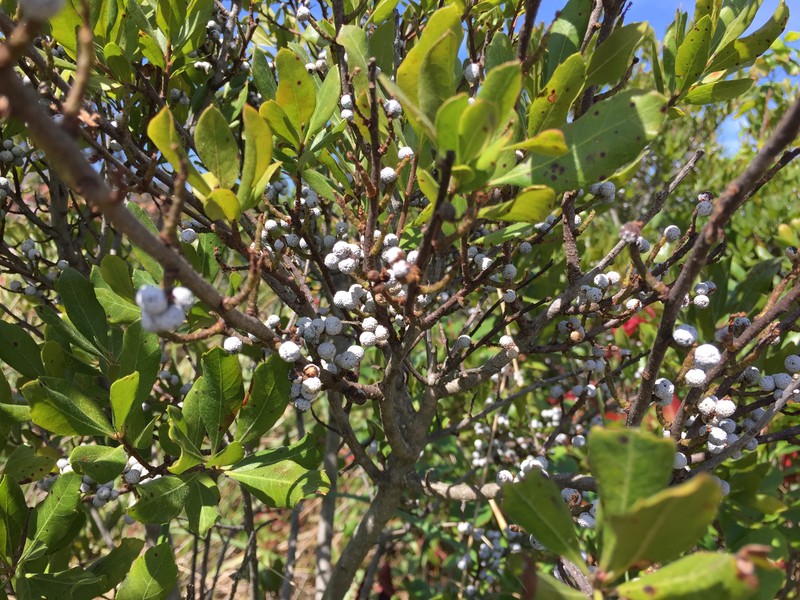
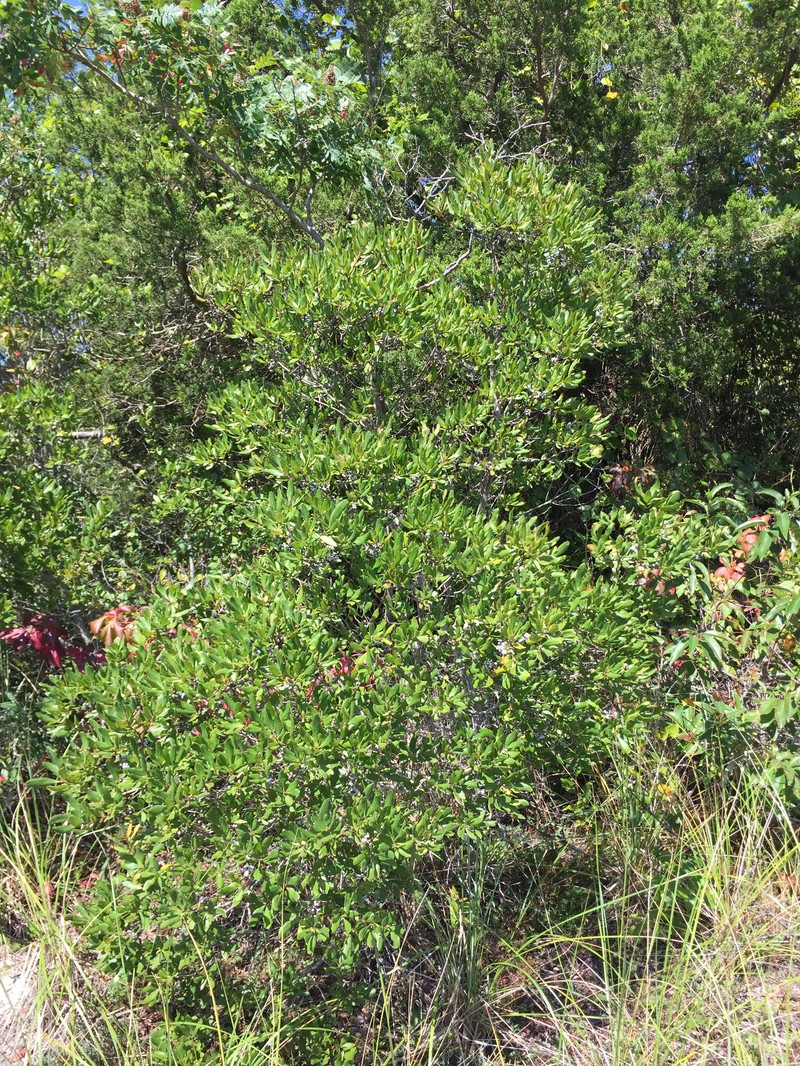
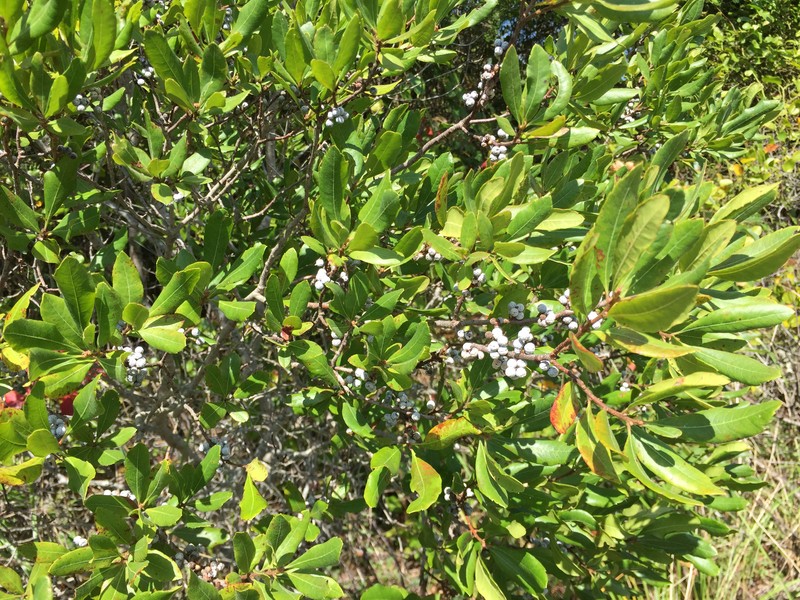
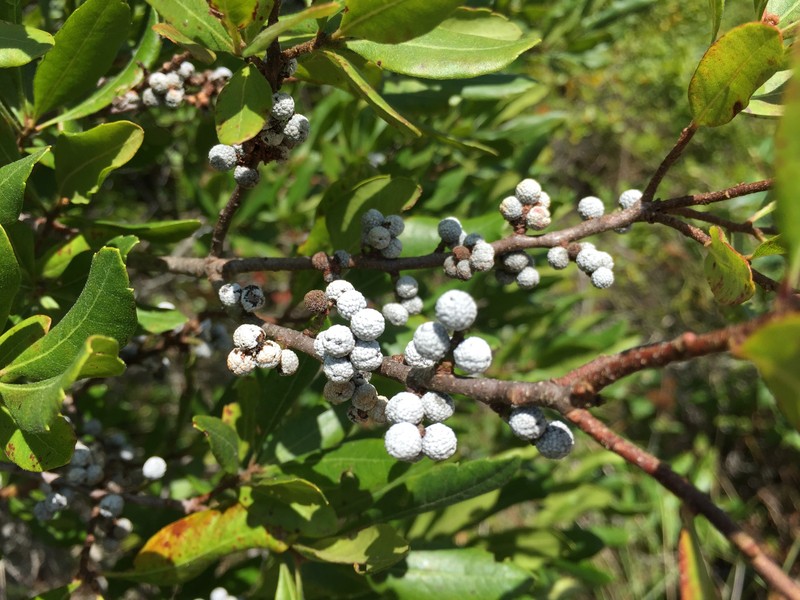
Taxonomy
- Division:
- Magnoliophyta | - Flowering plants
- Family:
- Myricaceae
- Genus:
- Myrica
- Species:
- Myrica pensylvanica
- USDA Symbol:
- MOPE6
Growth Characteristics
- Life Cycle:
- Perennial
- Growth Habit:
- Shrub , Tree
- Height:
- 300 cm
- Light Requirements:
- Full Sun
- Drought Tolerance:
- High
- Bloom Months:
- apr,may,jun
- Bloom Colors:
- green
- Landscaping Shrub:
- Yes
Wildlife Benefits
- Butterflies & Moths:
- ★★★☆☆ Documented Lepidoptera association (GBIF)
Keystone Species Ranking
- Caterpillar Keystone:
- ★★★★★ Butterfly & moth species supported by this genus (NWF)
Host Plant for Caterpillars
Agonopterix walsinghamella, Allen's Aphelia (Aphelia alleniana), Ancylis subaequana, Apple Sphinx (Sphinx "gordius"), Apple Sphinx (Sphinx gordius), Archips myricana, Argent and sable (Rheumaptera hastata), Argyrotaenia repertana, Bay underwing (Catocala badia), Bayberry Leafroller Moth (Strepsicrates smithiana), black-and-white leafroller (Syndemis afflictana), black-dotted leaftier moth (Psilocorsis cryptolechiella), Brown-tail moth (Euproctis chrysorrhoea), Caloptilia flavella, Cameraria picturatella, Chain-lined geometer moth (Cingilia catenaria), Clematis Sphinx (Sphinx luscitiosa), Coelebs Underwing (Catocala coelebs), Columbia silk moth (Hyalophora columbia), Dichomeris bipunctella, Dogwood borer (Synanthedon scitula), Gypsy moth (Lymantria dispar), Io moth (Automeris io), lanceolate dagger moth (Acronicta lanceolaria), Melanchra assimilis, Olethreutes valdanum, Promethea silkmoth (Callosamia promethea), Red-bordered Emerald (Nemoria lixaria), Red-fronted Emerald (Nemoria rubrifrontaria), Red-humped caterpillar moth (Schizura concinna), Rheumaptera sp., skiff moth (Prolimacodes badia), Spotted Apatelodes (Apatelodes torrefacta), stinging rose caterpillar (Parasa indetermina), sweetfern geometer (Cyclophora pendulinaria), sweetfern leaf casebearer (Acrobasis comptoniella), white-fringed emerald (Nemoria mimosaria), White-marked Tussock Moth (Orgyia leucostigma)
Reported Fauna Sightings
Moths:Cameraria picturatella, Polyphemus moth (Antheraea polyphemus)
Garden & Ecology Notes
- Wildlife Value:
- birds, small mammals
- Deer Resistant:
- Yes
- Salt Tolerant:
- Yes
- Fragrant:
- Yes
- Fire Ecology:
- Fire adapted — tolerates or benefits from fire
- Fire Notes:
- Resprouts vigorously from root crown after fire; often increases in density following burns.
Propagation & Germination
- Stratification:
- Cold/moist stratification required — 60–90 days
- Germination Time:
- 14–60 days
- Notes:
- Wax coating on seeds may inhibit germination; removal of waxy fruit coating improves germination rates.
Pre-treatment: Clean seed
Establishment: The plant is found on dry and wet sandy coastal sites from Nova Scotia to Florida and west to Louisiana, and along the shores of Lake Erie. Inland bogs of northern New Jersey and Pennsylvania also have populations of this species growing. The seeds were collected in the Yosemite National Park.
Source: npn.rngr.net
ORGHPS Germination Guide: Sow immediately, Either the viability of these seeds is short or the species propagates best with fresh seed. Stored seed might be coaxed into germination with temperature cycling and patience. Sow at 4°C for 3 months, then place @ 20°C for 3 months. * remove wax from seeds
Where to Buy
Nationwide Seller
- Sheffield's Seed (seeds)