
Blackgum
Nyssa sylvatica
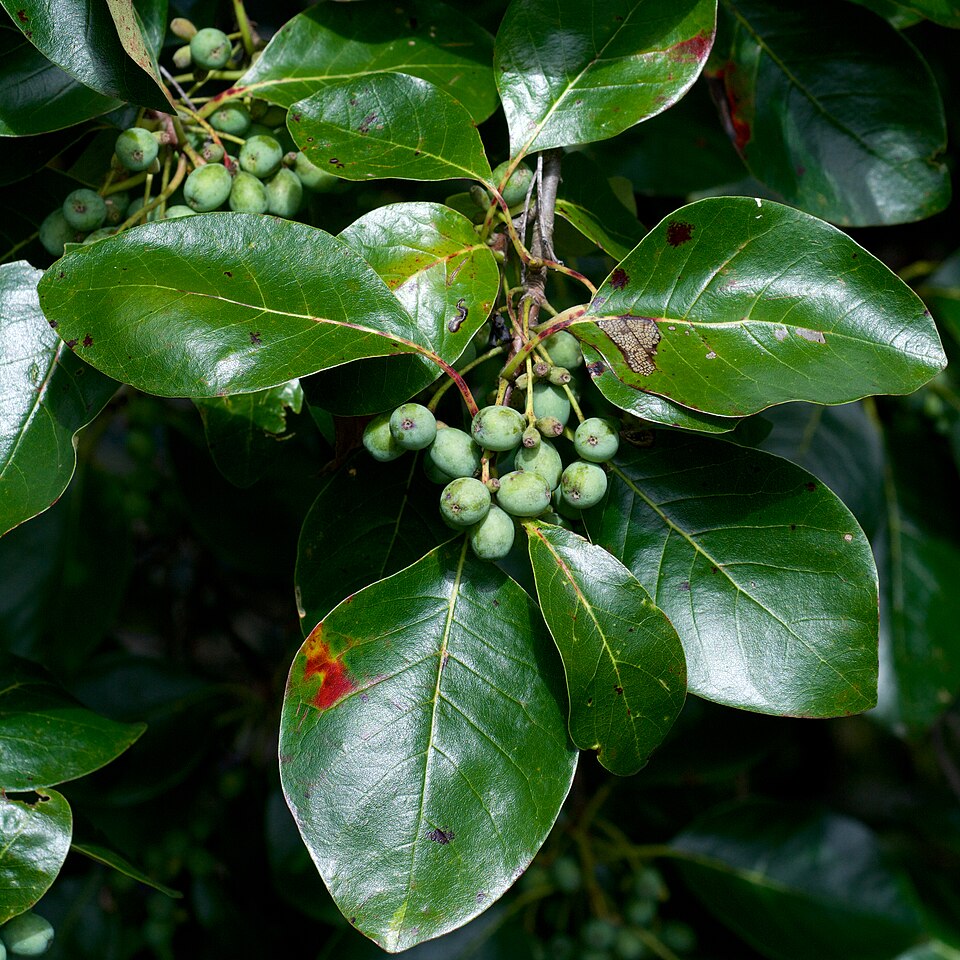
Taxonomy
- Division:
- Magnoliophyta | - Flowering plants
- Family:
- Nyssaceae
- Genus:
- Nyssa
- Species:
- Nyssa sylvatica
Growth Characteristics
- Life Cycle:
- Perennial
- Growth Habit:
- Tree
- Height:
- More than 40 ft
- Light Requirements:
- Full Sun, Part Shade, Shade
- Drought Tolerance:
- Medium
- Bloom Months:
- apr, may, jun
- Bloom Colors:
- White, Green, Brown
Native Range
United States: Alabama, Arkansas, Connecticut, District of Columbia, Delaware, Florida, Georgia, Illinois, Indiana, Kansas, Kentucky, Louisiana, Massachusetts, Maryland, Maine, Michigan, Missouri, Mississippi, North Carolina, New Hampshire, New Jersey, New York, Ohio, Oklahoma, Pennsylvania, Rhode Island, South Carolina, Tennessee, Texas, Virginia, Vermont, Wisconsin, West Virginia, Canada: Ontario
Keystone Species Ranking
- Caterpillar Keystone:
- ★★★☆☆ Based on number of butterfly and moth species using this genus as host plant (Source: National Wildlife Federation)
Host Plant for Caterpillars
Soil Requirements
- Soil Type:
- rich, well-drained loamy soil
- pH:
- 5.0 - 6.5 (acidic to slightly acidic)
- Drainage:
- tolerates poor drainage
- Moisture:
- consistently moist
- Notes:
- Prefers bottomlands and swampy areas
Germination Information
Pre-treatment: Seeds are sown in late October using a Love seeder set at 2nd gear @5 setting.
Establishment: Seeds are purchased from local people who collect within a 50 mile radius of the nursery. Fruits are blue-black, fleshy drupes that ripen in the fall. Black gum is found throughout the eastern US: from the northeastern and Upper Midwestern states south to eastern Texas and Florida. Seed sources are from south central Missouri.
Source: npn.rngr.net